Light is not optional
Air plants can look decorative, but they are still living plants that need enough light to grow. A dark shelf may look nice for a few days but is not a good long-term location.
Direct sun is not always safe
Some Tillandsia can handle gentle direct sun, especially in cooler morning light. Strong afternoon sun through glass can overheat or scorch leaves.
A practical indoor placement
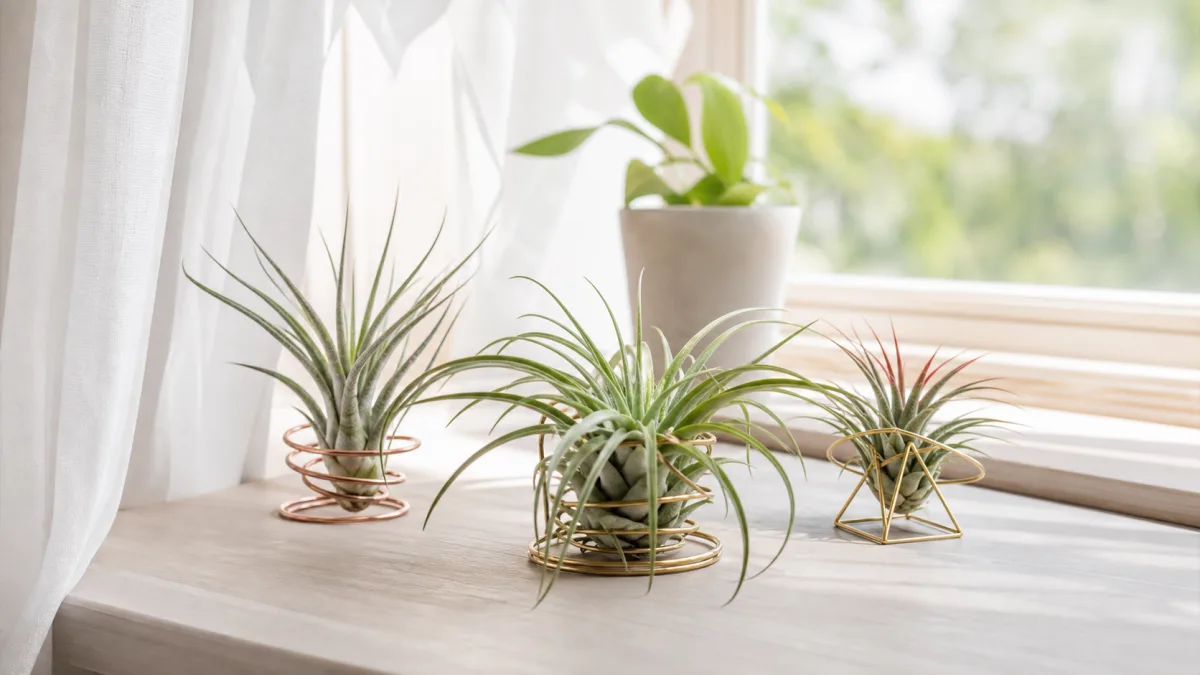
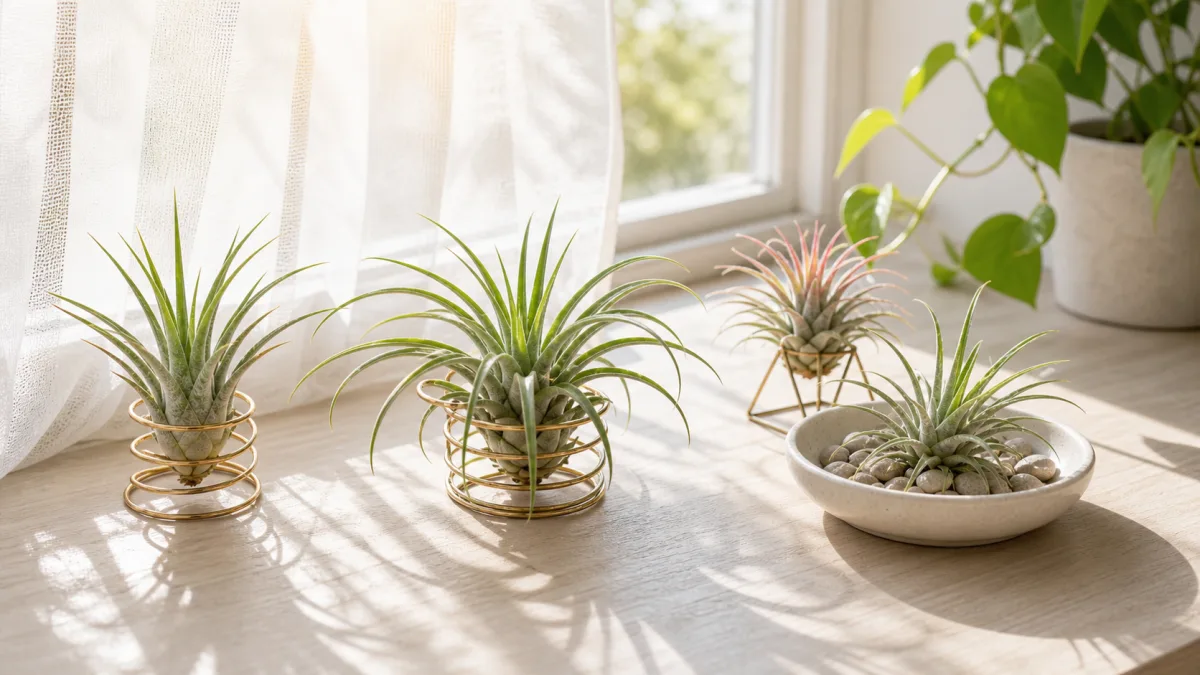
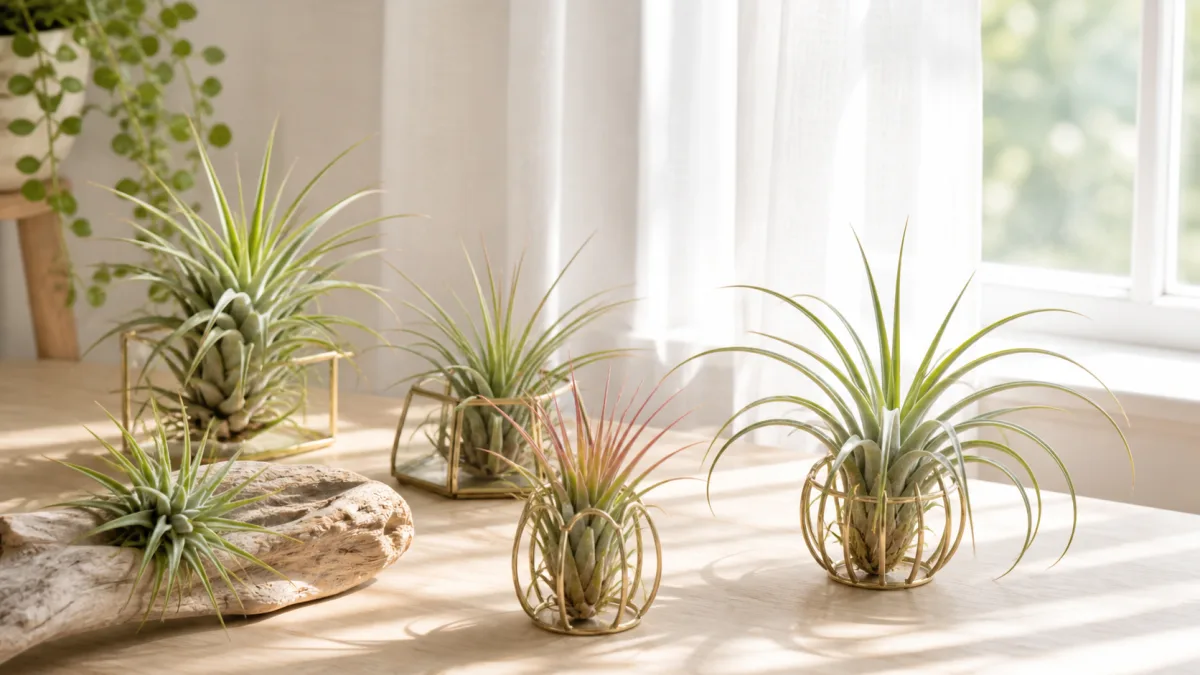
Start near a bright window with filtered light. If the plant fades, stretches, or slowly declines, move it brighter. If it gets crispy patches, move it back from direct sun.
Bright indirect light is the target
For most indoor homes, useful sunlight means a bright room, filtered window, or grow light rather than constant direct sunbeams. The plant should be bright without feeling hot.
Match water to light
More light usually means faster drying and a stronger need to watch hydration. Low light plus frequent watering can make rot more likely.
Watch the plant response
Bleached patches, crispy exposed leaves, or fast browning can mean too much harsh sun. Weak color, slow decline, or stretching can mean too little light.
Know the difference
Sunlight means useful plant light, not necessarily direct sunbeams. For most indoor air plants, bright filtered light is the practical target.
Use grow lights when sunlight is poor
If your best display spot is dim, use a proper grow light instead of hoping the plant adapts. Air plants can tolerate decor flexibility only when their light needs are still met.