Outdoor air plants can work
Air plants can live outside because Tillandsia naturally grow without soil on trees, rocks, and other supports. Outdoors can give them brighter light and better airflow than many indoor rooms, but only if the weather stays within a safe range.
Temperature is the first limit
Most indoor air plants should be protected from cold nights. If temperatures approach the low 50s F, move them indoors or to a warmer sheltered spot. Frost or freezing weather can damage leaves quickly and may kill the plant.
Use bright shade, not harsh sun
Outdoor light is much stronger than window light. Choose bright filtered light, morning sun, or a shaded porch. hot midday sun can bleach leaves, crisp tips, and dry plants faster than your normal routine can handle.
Rain can help or hurt
Clean rain can hydrate air plants, but repeated soaking without drying raises rot risk. After rain, check whether the crown, base, and mount are drying within a few hours. Covered patios and open shelves are often safer than exposed locations.
Watering changes outdoors
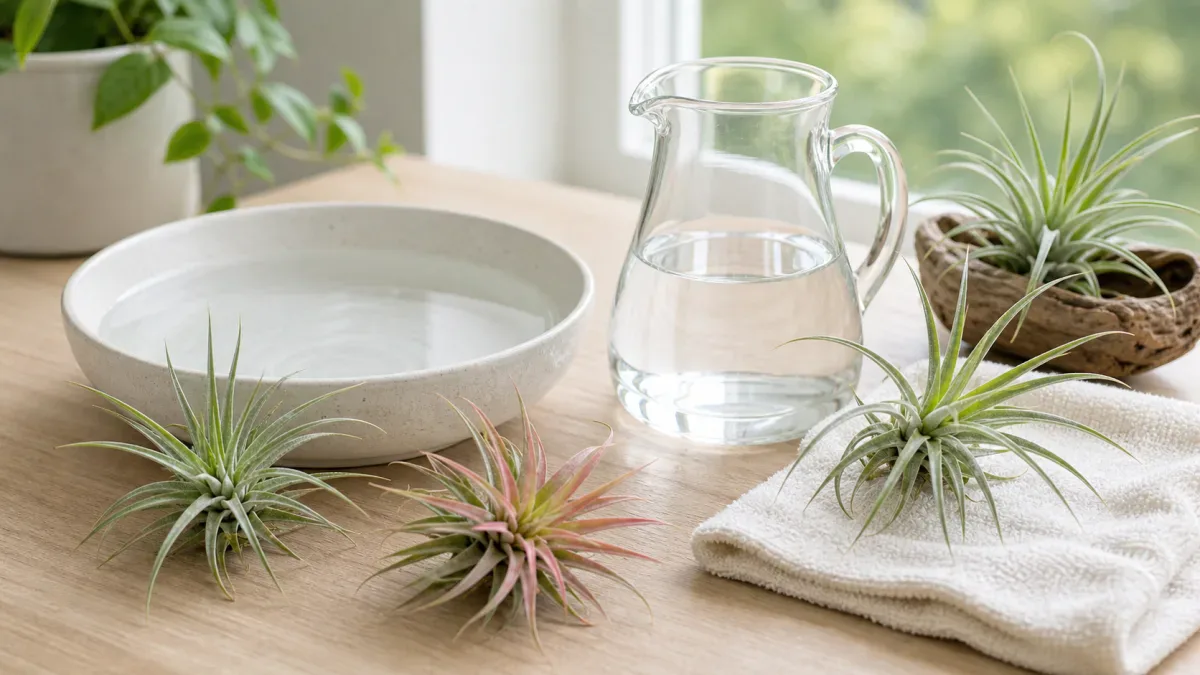
Outdoor plants may need more water in hot, dry, windy weather and less hand watering during humid rainy weeks. Do not water only by calendar. Check leaf firmness, curl, weather, and drying speed before soaking or misting.
Protect mounted displays
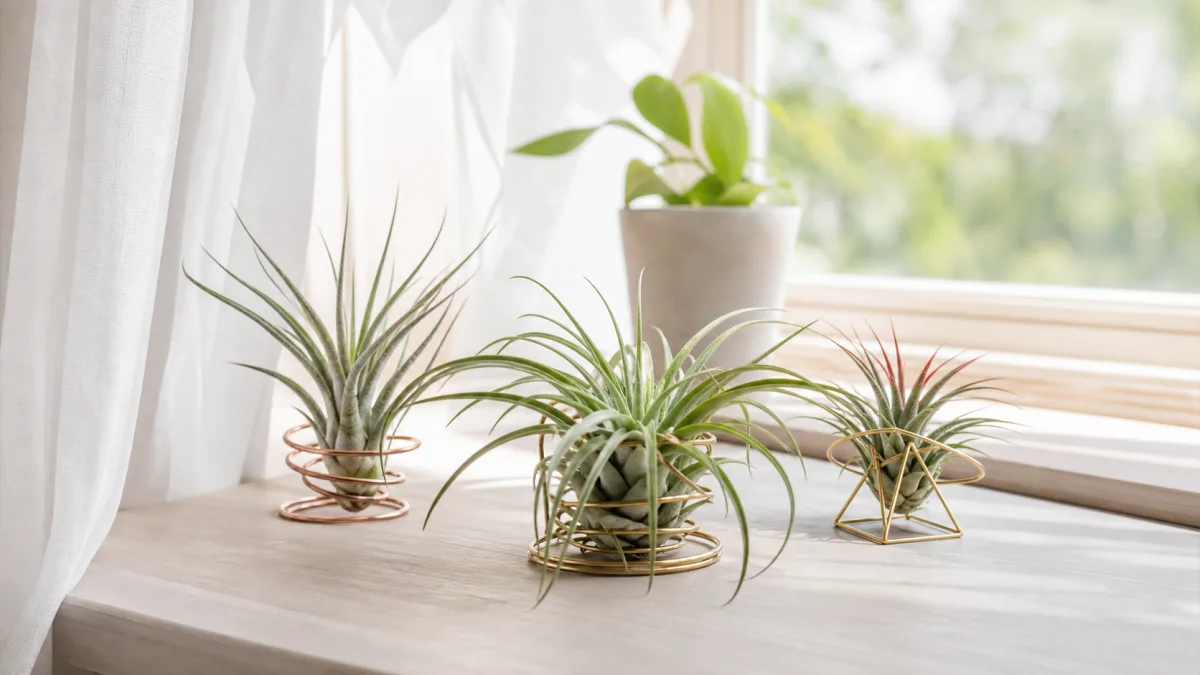
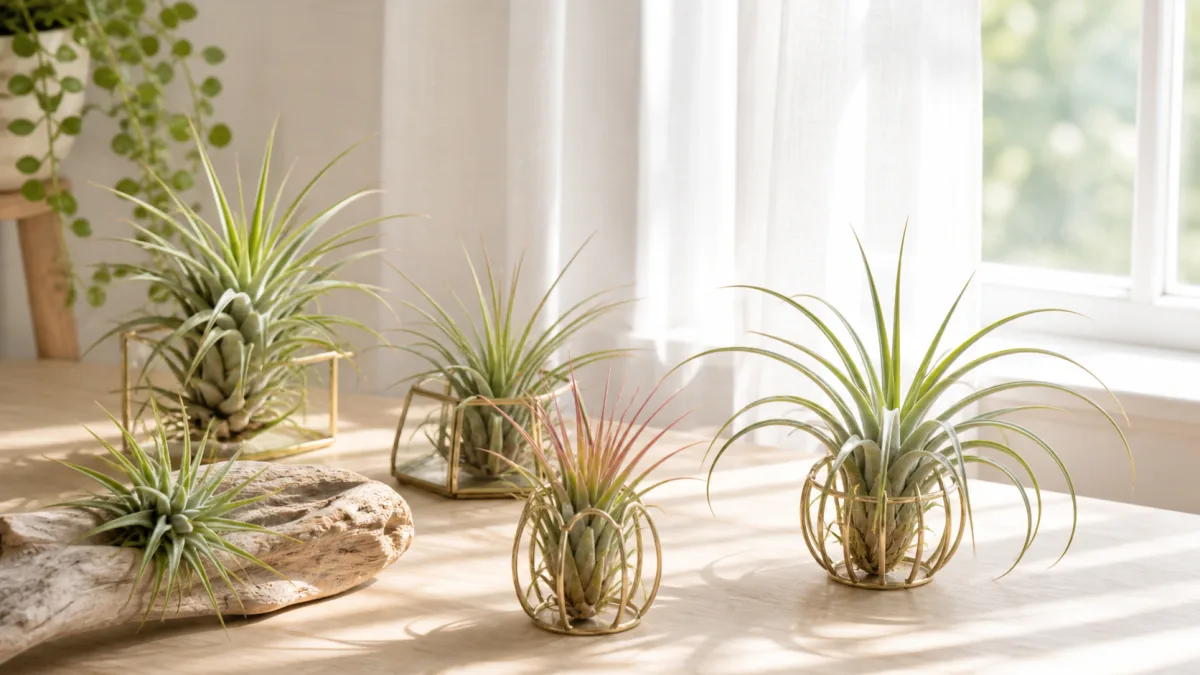
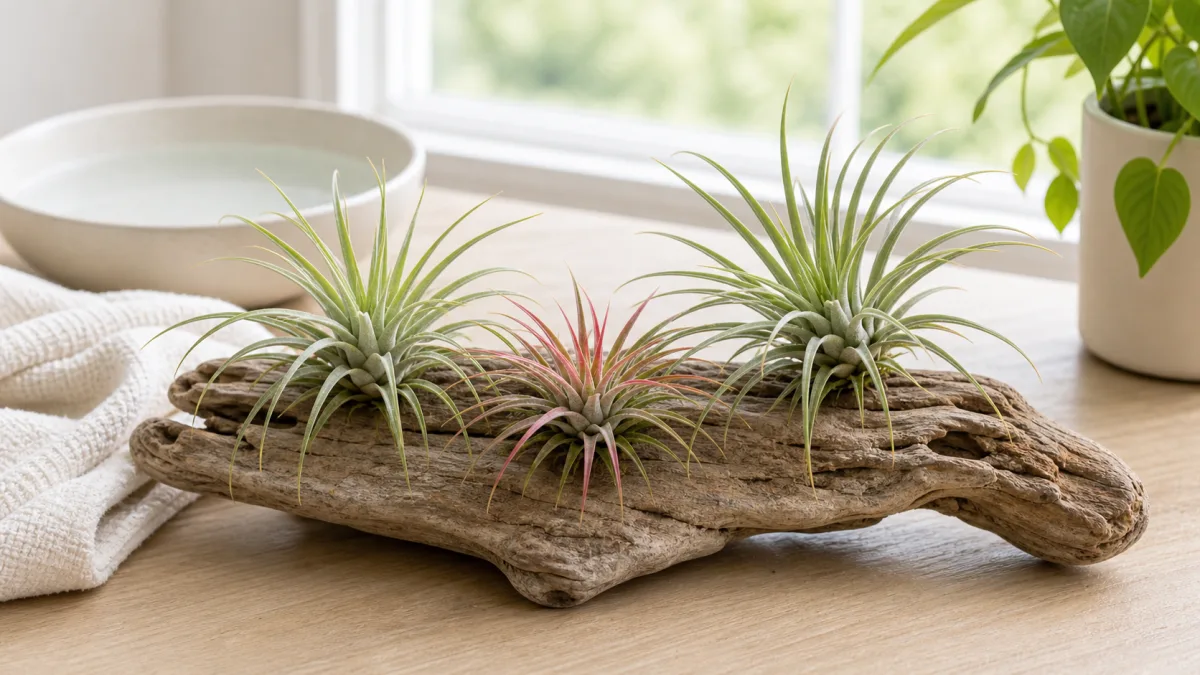
Driftwood, cork bark, wire holders, and hanging displays can work outdoors if they do not trap water around the base. Avoid moss-packed containers, deep shells, or glued displays that stay wet after rain.
Watch for pests and debris
Outdoor air plants can collect pollen, dust, insects, and leaf litter. Rinse gently when needed, inspect the base, and avoid placing plants where sprinklers, soil splash, or garden chemicals can reach them.
When to bring them inside
Bring air plants inside before frost, heat waves, storms, long wet spells, pesticide spraying, or travel periods when nobody can check them. Treat outdoor growing as seasonal unless your climate is reliably mild and frost-free.