Look for exposed damage
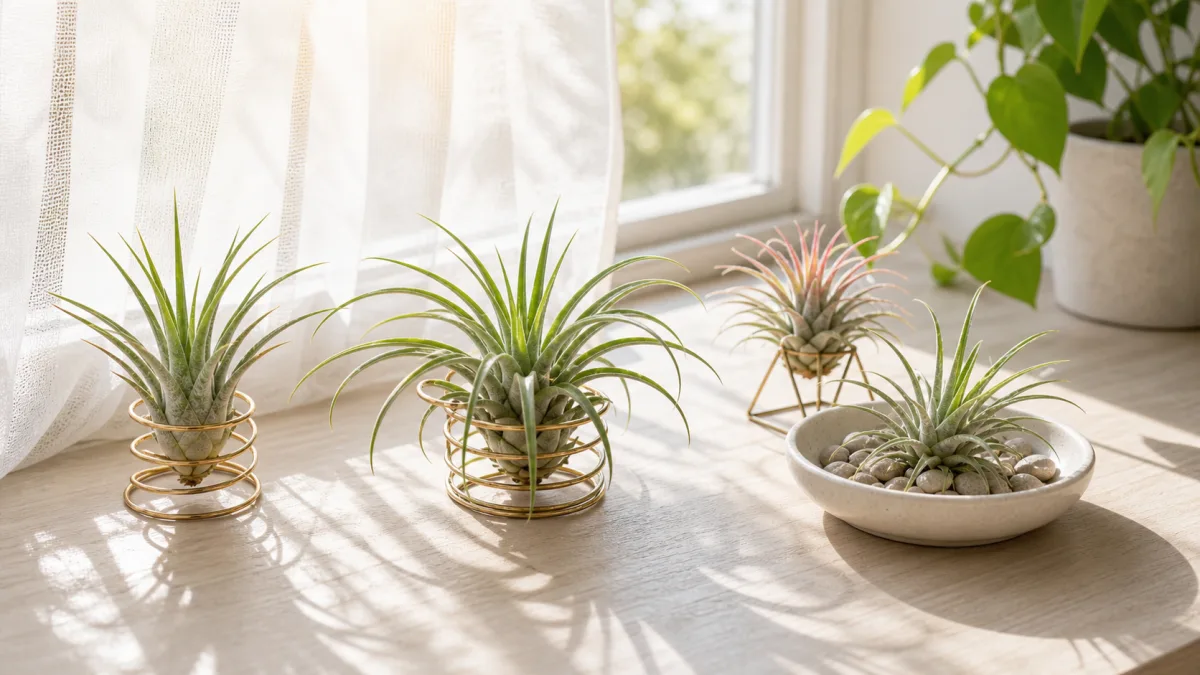
Sun stress often appears on the side facing the window. Bleached, crispy, or brown patches do not usually turn green again, so watch new growth after moving the plant.
Check heat
Glass can intensify heat. A sunny windowsill may become much hotter than the rest of the room, especially in afternoon sun or during summer.
Move back from the window
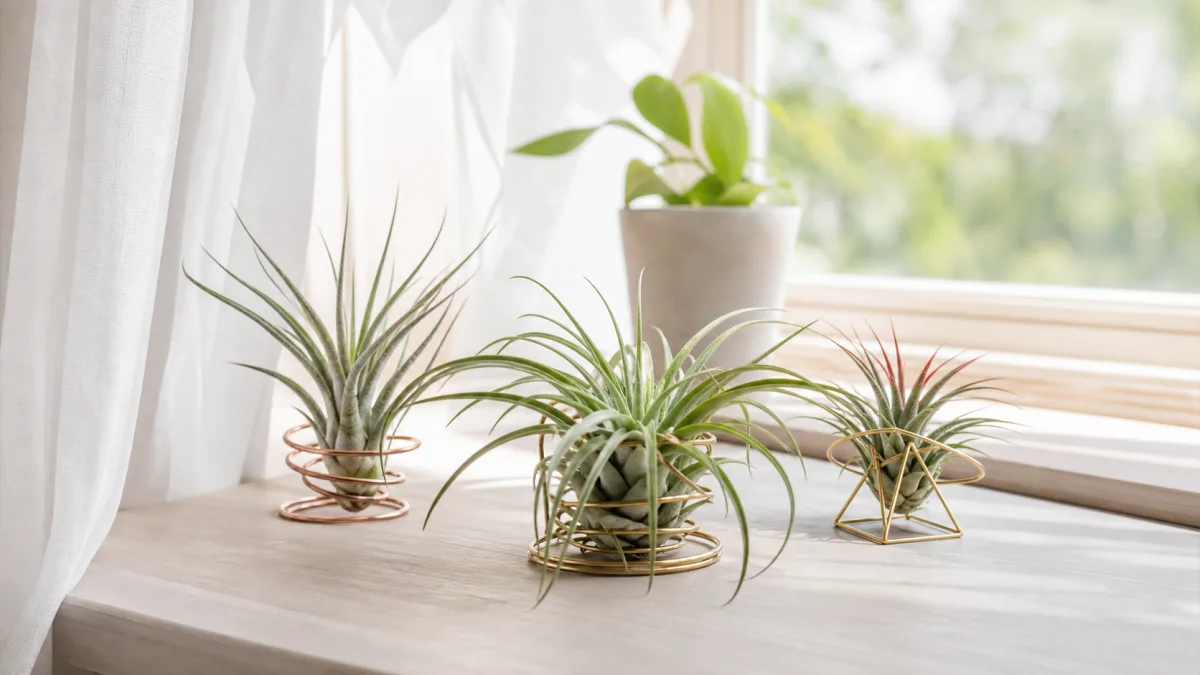
Try bright indirect light, a sheer curtain, or a spot with gentle morning sun instead of harsh afternoon sun. Move gradually so the plant does not swing from too bright to too dim.
Compare color changes
Some air plants blush naturally near bloom time, but sun stress usually looks bleached, dry, or patchy. Healthy color change should not come with crispy tissue or rapid browning.
Adjust watering carefully
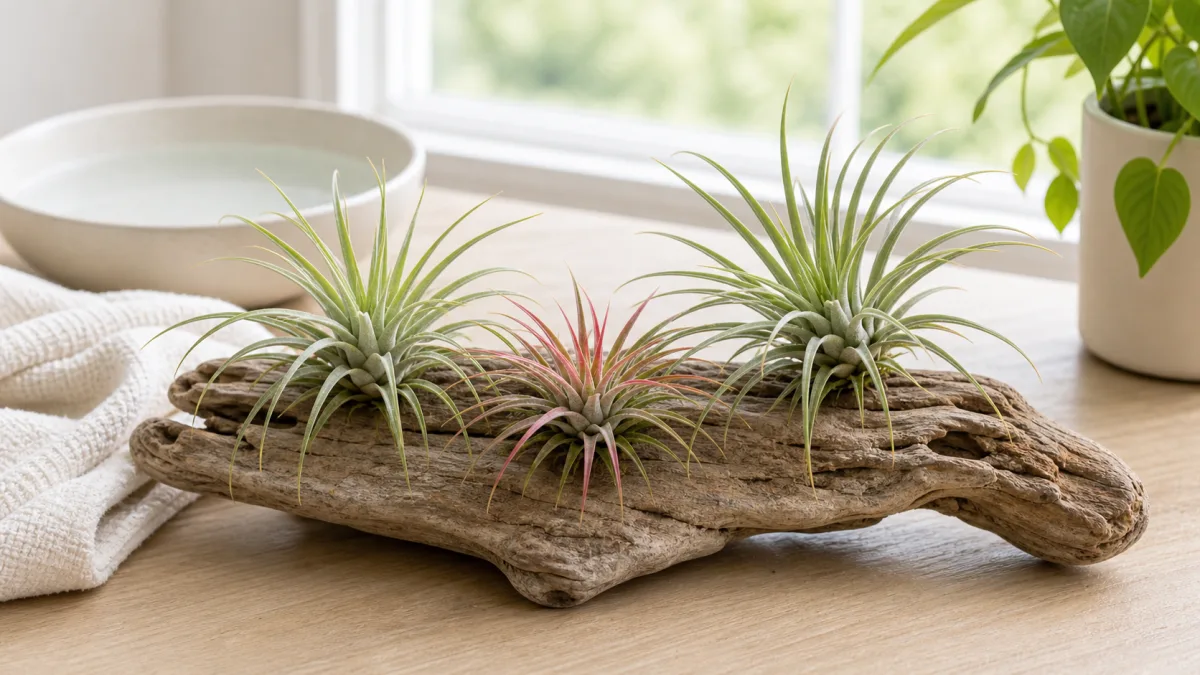
A sun-stressed plant may need better hydration, but it still must dry fully after watering. Extra water without better placement can create a new rot problem.
Check the display material
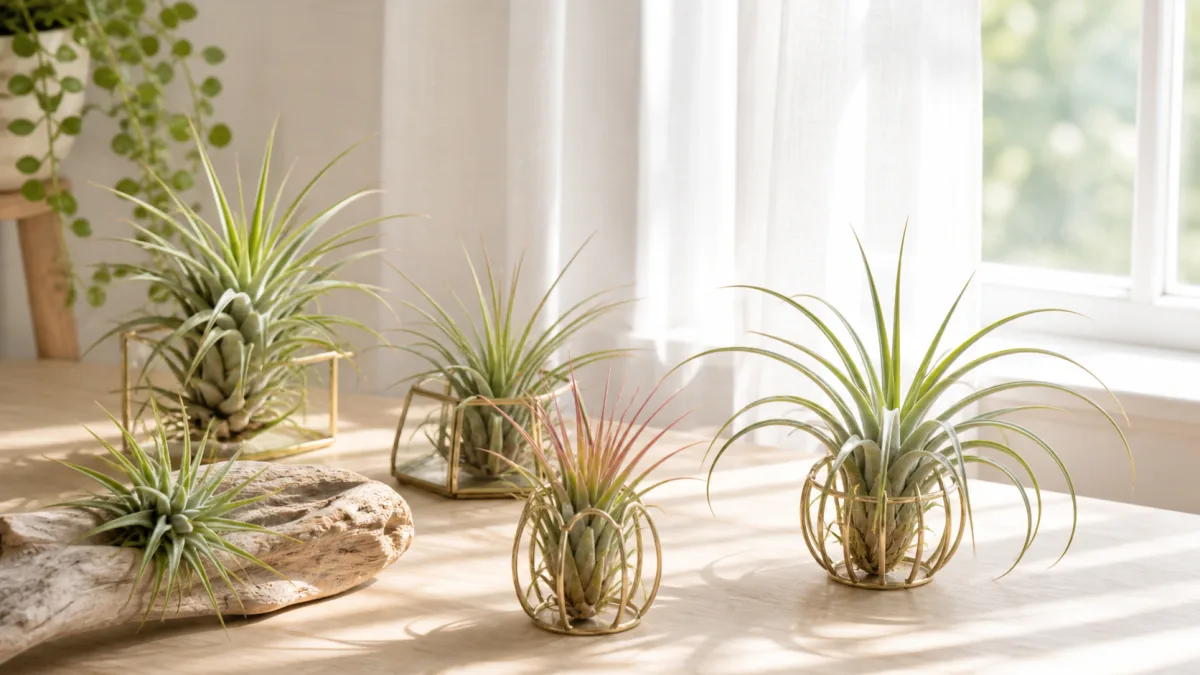
Glass globes, metal holders, and dark shelves near windows can heat up around the plant. The display may be part of the sun problem, not just the window.
Compare drying speed
If the plant dries much faster than others in your collection, sun and heat may be pushing it too hard. A slightly cooler bright spot is often safer than a hot windowsill.
Judge recovery by new damage
Scorched areas may stay marked permanently. The goal is to stop new bleaching, crisping, and browning while the plant stays firm.