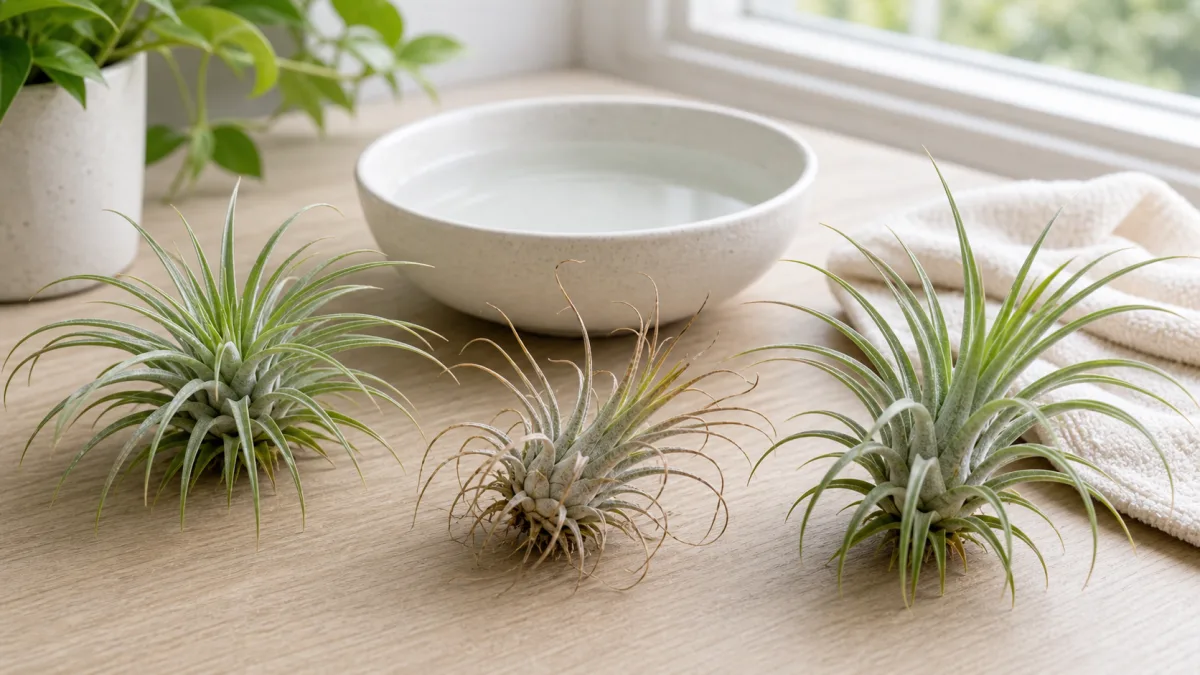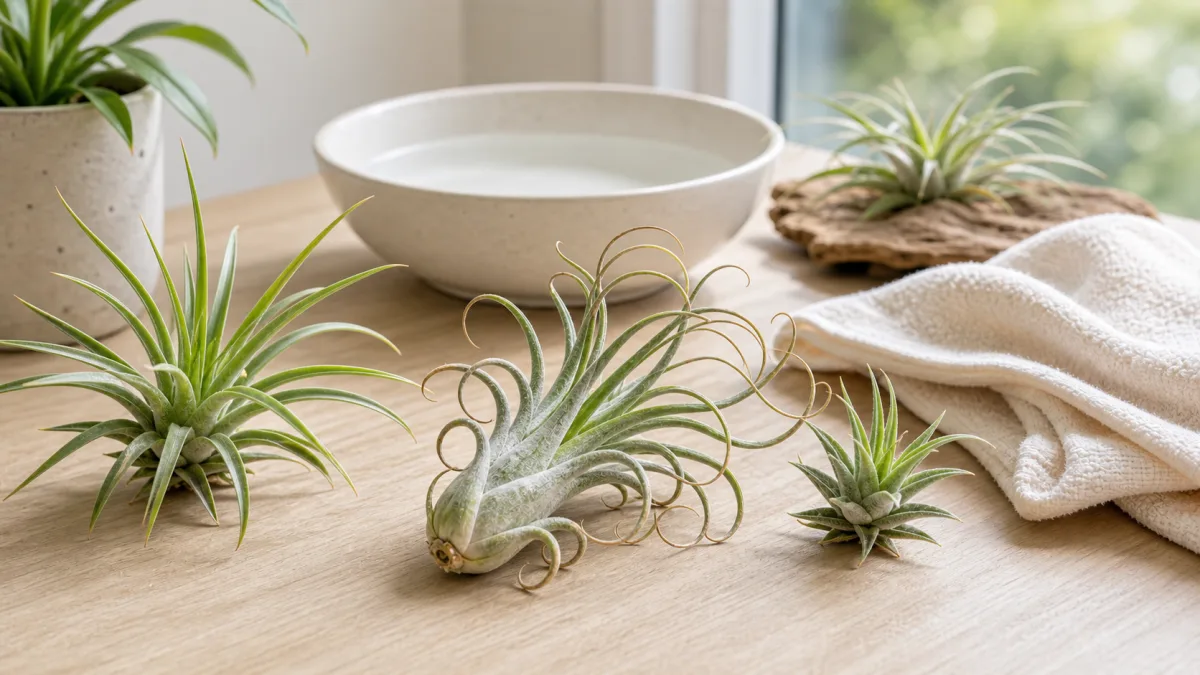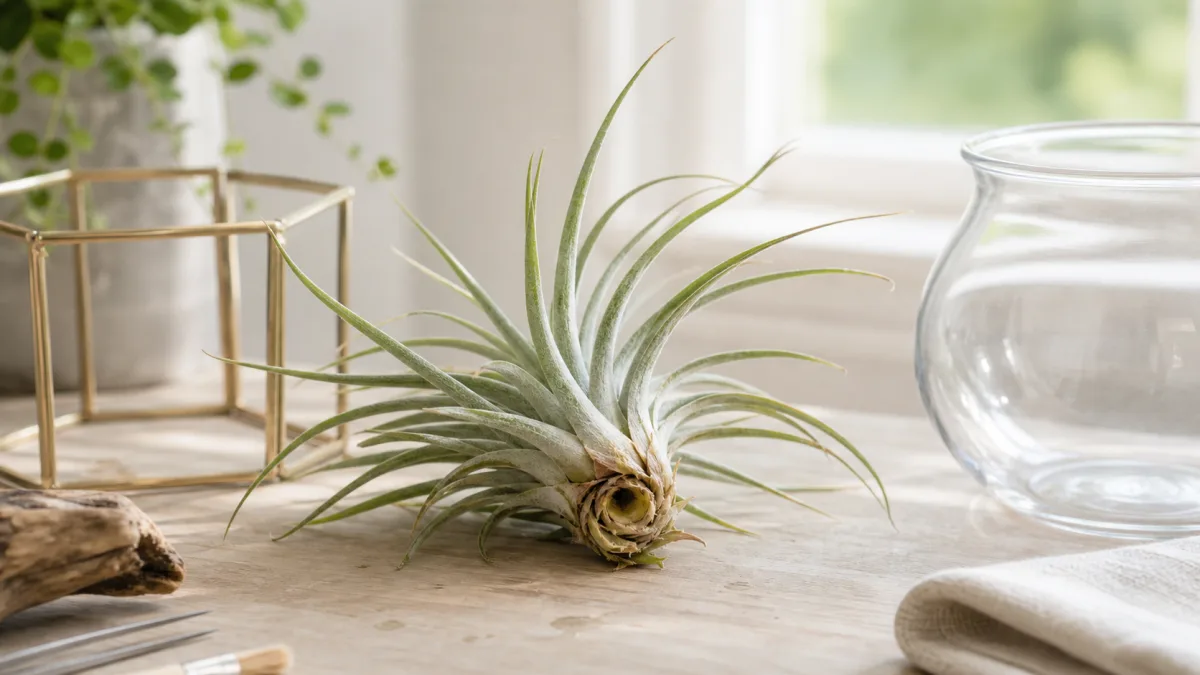
What rot can look like
Rot often starts at the base or crown. The plant may feel soft, smell unpleasant, turn dark, or fall apart when handled.
Why it happens
The usual pattern is not simply too much water. It is water plus poor drying. closed glass containers, shells, tight holders, and low airflow can keep moisture trapped.
What to do first
Remove the plant from its display, stop soaking until you inspect it, and let it dry in bright airflow. If the base is collapsing, recovery may not be possible.
Check nearby plants
If several plants share a wet display or watering bowl, inspect all of them. One rotting plant is often a sign that the whole routine or display is too damp.
Prevent the repeat
Water the plant outside the display, shake out trapped water, dry it fully, and choose an open holder that does not cup moisture around the base.
Separate rot from dryness
Dry plants are usually crisp, curled, and papery. Rot is soft, dark, loose, or sour-smelling. The treatment is different, so inspect before adding more water.
When to give up
If the center pulls apart, the base smells sour, or most tissue is mushy, the plant may be past recovery. Use the failure to adjust the display and protect nearby plants.
Build a safer routine
After a rot problem, shorten soaks, improve drying position, and stop returning wet plants to holders. Prevention is much more reliable than rescue.