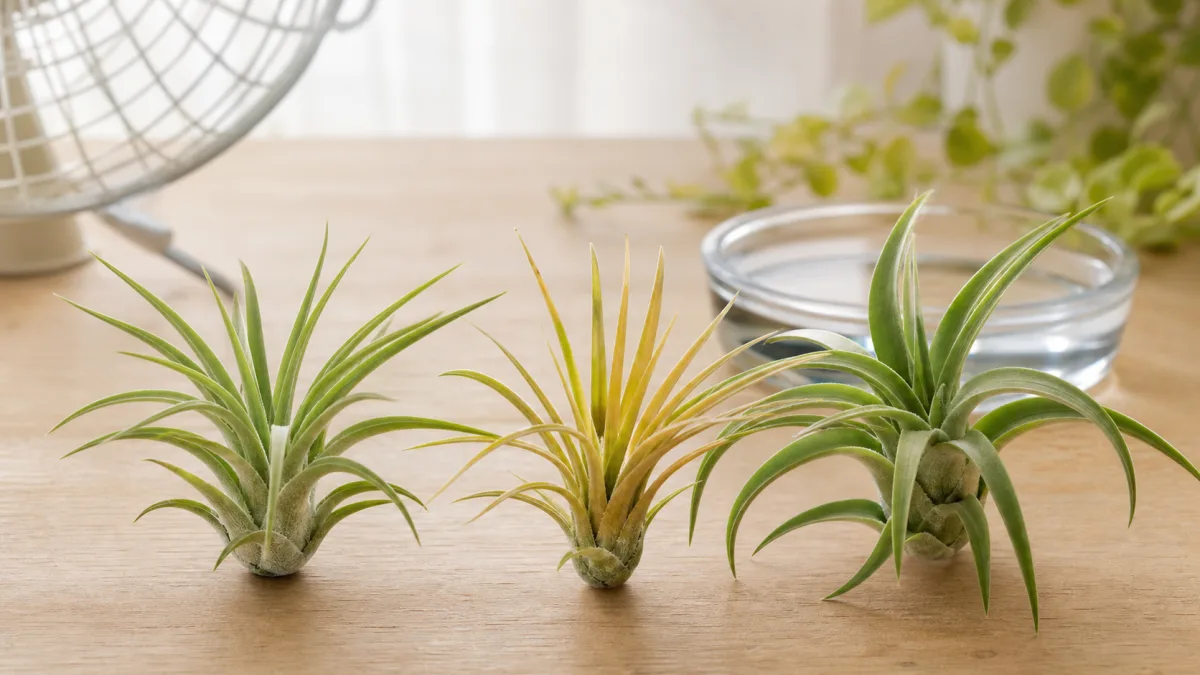
Look at the pattern
One older lower leaf yellowing is less concerning than the whole plant fading. Widespread yellowing means the routine needs a closer look.
Check light exposure
Too much direct sun can bleach or yellow leaves before they brown. Move the plant into bright indirect light and watch new growth.
Check moisture and drying
Yellowing with a soft base suggests the plant may be staying wet too long. Review the watering method, drying position, and display airflow.
Compare yellow with normal blush
Some air plants blush red, pink, or brighter green near bloom time. Yellow that looks weak, patchy, translucent, or paired with softness is more likely stress.
Inspect the base and inner leaves
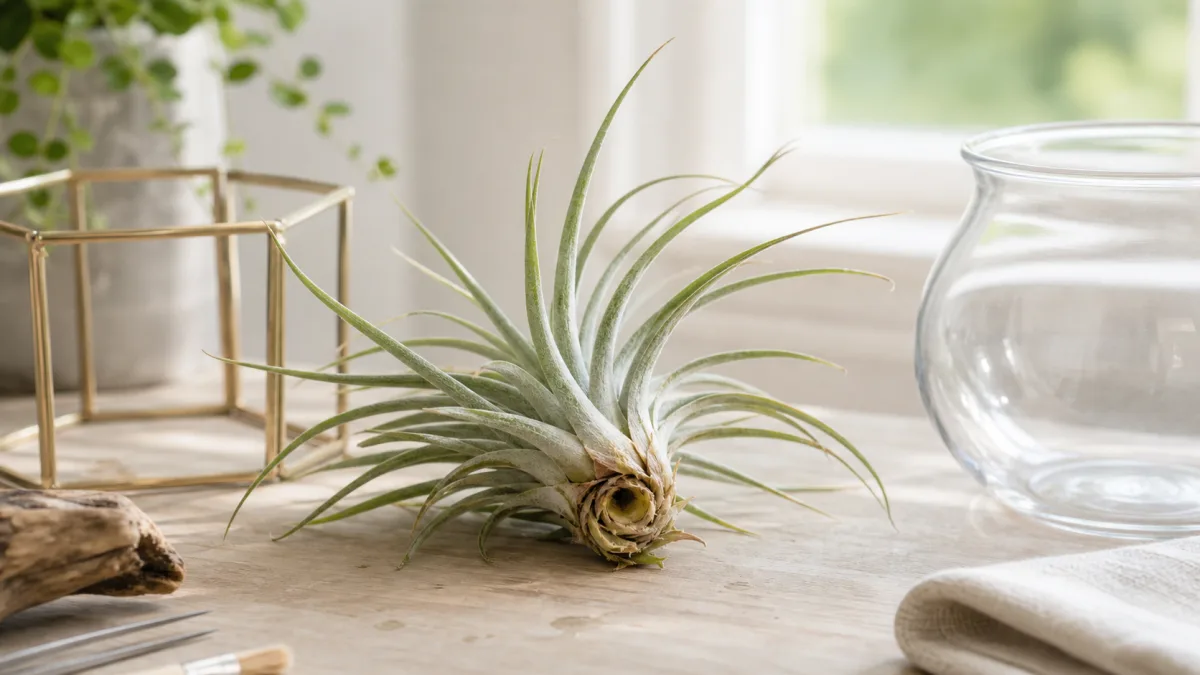
Gently look where the leaves meet the base. A firm base with one aging leaf is usually manageable, while loose inner leaves or a sour smell point toward rot.
Consider stress and age
Shipping stress, a new location, or natural older leaves can cause limited yellowing. The key is whether the plant remains firm and stable.
Avoid quick overcorrection
Do not respond by soaking daily or moving the plant into darkness. Make one care change at a time so you can see what helps.
Track the next two weeks
Yellow leaves may not turn green again, so judge progress by whether new yellowing stops. Keep notes on light, watering depth, and drying time.
Quick diagnosis
Start by checking the base. A firm base with one or two older yellow leaves usually points to stress, age, or light adjustment. A soft base, loose inner leaves, or a sour smell points toward rot and needs a much more cautious response.
What to change first
If the plant is firm, move it to bright indirect light and keep watering steady while you watch new growth. If it has been in harsh sun, reduce direct exposure. If it dries slowly, improve airflow before watering more often.
When yellowing is urgent
Yellowing is urgent when it spreads quickly, turns translucent, comes with softness, or follows repeated wet displays. In that case, remove the plant from the holder, let it dry in open air, and stop heavy soaking until the base is stable.
Yellow air plant quick checklist
Check the base first, then look at the pattern. One older yellow lower leaf is usually less urgent. Widespread yellowing, translucent tissue, loose inner leaves, or a sour smell means the plant needs a rot and drying check.
Yellow from sun or light stress
Yellowing after a move to a brighter window often points to light stress. Move the plant to bright indirect light, avoid harsh afternoon sun, and keep watering steady while you watch whether new yellowing stops.
Yellow from water or rot stress
Yellowing with a soft base, slow drying, or a damp holder points toward trapped moisture. Remove the plant from the display, improve airflow, and avoid another soak until the base feels stable.
What recovery looks like
Yellow leaves may not turn green again. A better recovery sign is no new yellowing, a firm base, and steady new growth over the next few weeks.