Decide whether it is dry or rotten
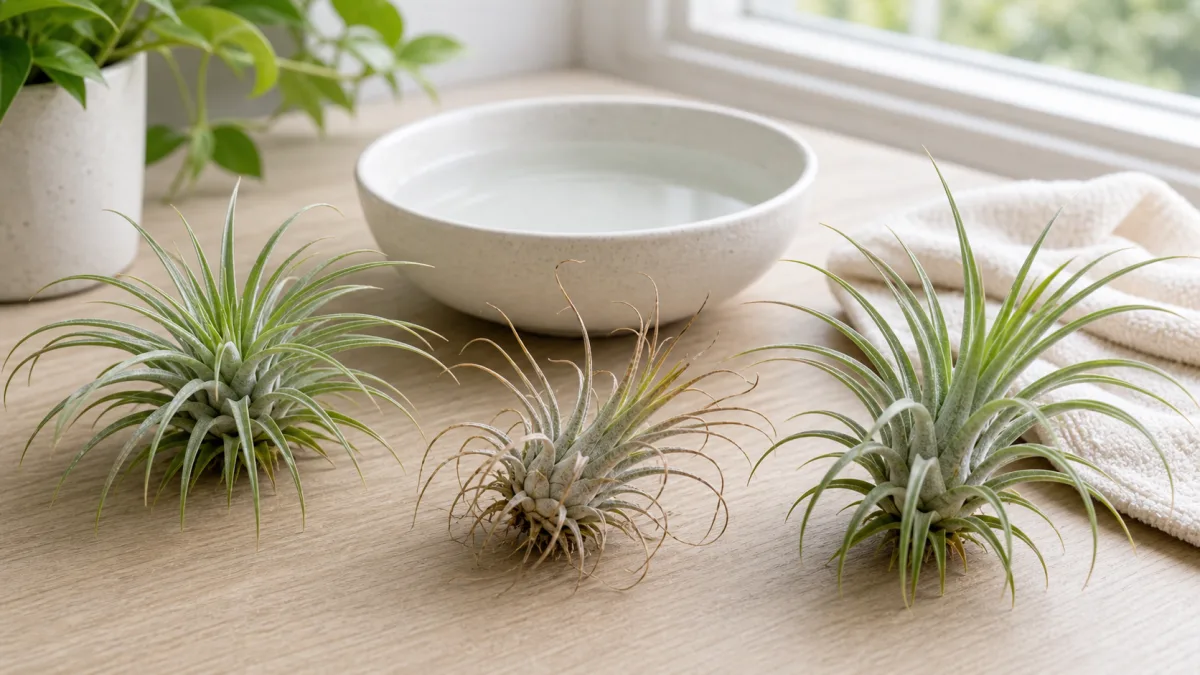
A crispy, curled plant may be dehydrated. A soft, dark, falling-apart base points toward rot. These problems need opposite responses, so inspect before watering more.
If it is dry
Give the plant a careful soak or rinse, then dry it completely. Repeat only after you see how the plant responds over the next few days.
If it is wet or soft
Remove it from the display and let it dry in airflow. Do not keep soaking a plant that may already be rotting or falling apart from the center.
Remove the display variable
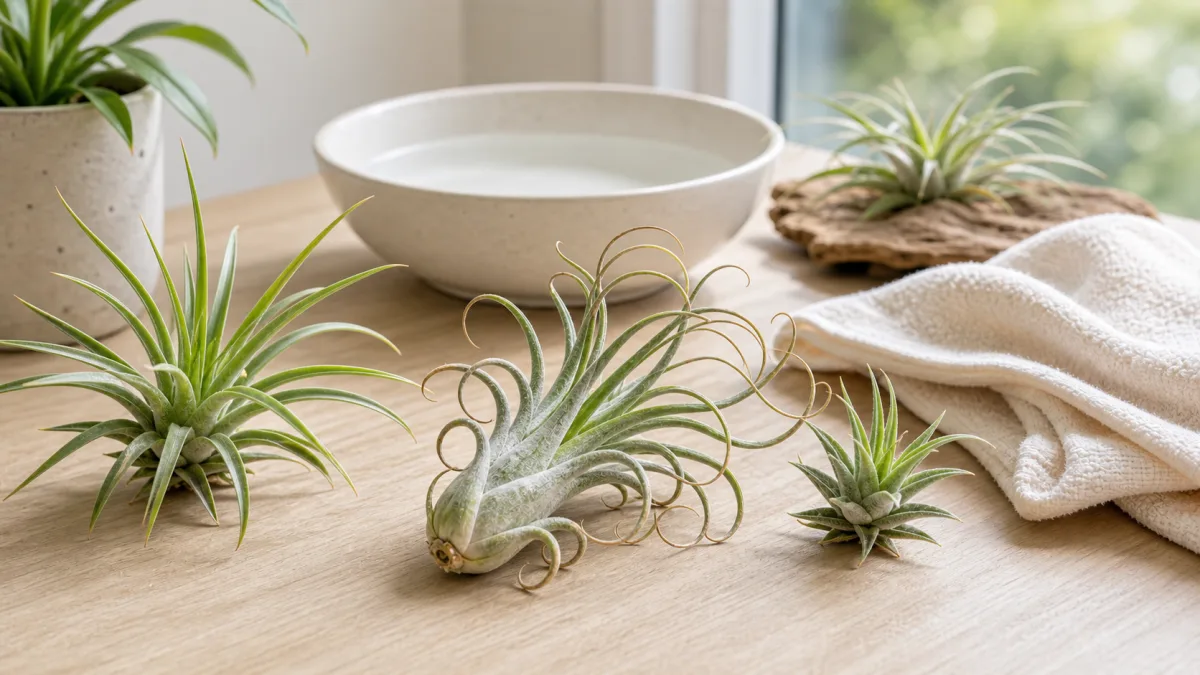
During recovery, keep the plant out of shells, globes, damp moss, and tight holders. A simple towel or open tray makes it easier to monitor the base and drying speed.
Stabilize the environment
Use bright indirect light, avoid hot direct sun, and keep the plant out of closed containers while it recovers. Simple open conditions make recovery easier to judge.
Look for living tissue
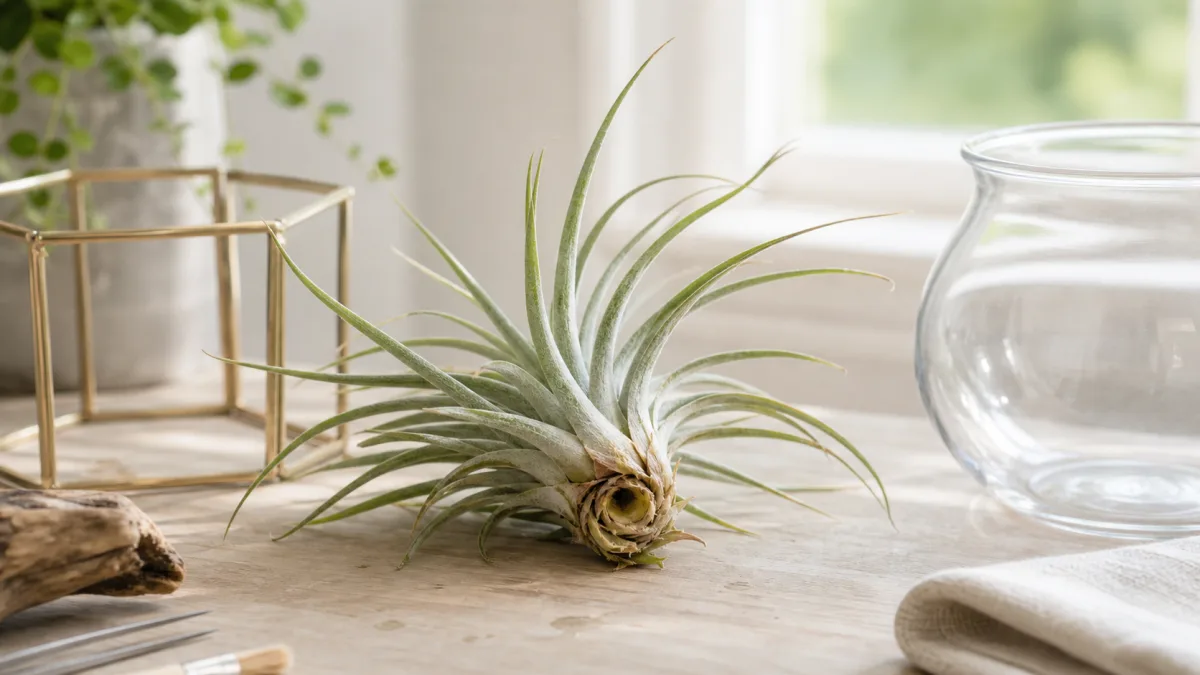
Firm green or silvery leaves near a stable base are more promising than fully brown, hollow, or mushy tissue. Trim only dry dead tips if they are clearly dead.
Know the limit
Dead tissue will not turn green again. Focus on firm living parts, new stability, and preventing the same care mistake with the rest of your plants.
Prevent the next rescue
Once the plant stabilizes, rebuild the routine around the original cause. A drying problem needs more airflow, while dehydration needs deeper or more frequent watering.