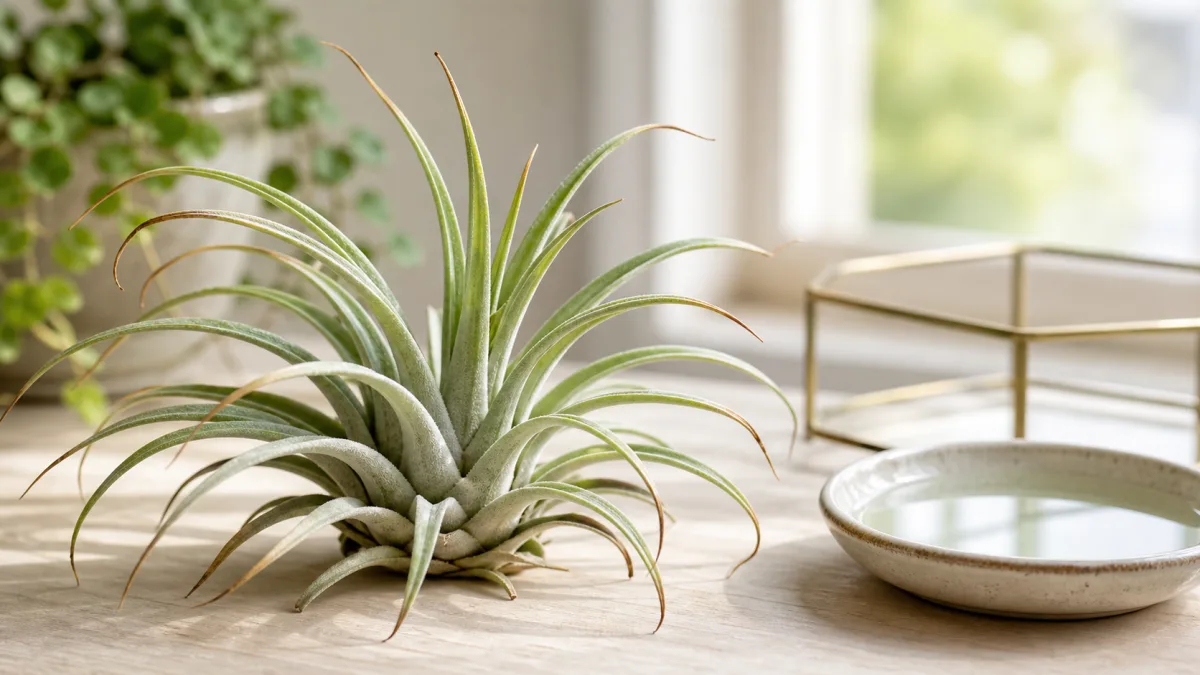
Check where the browning is
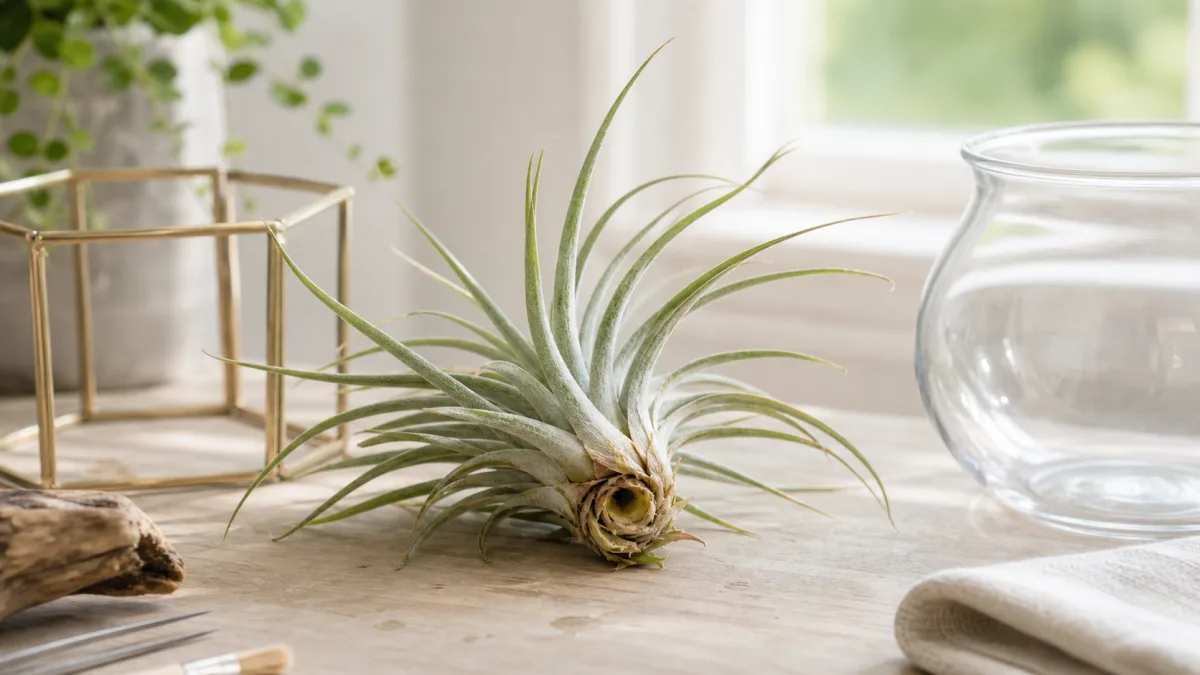
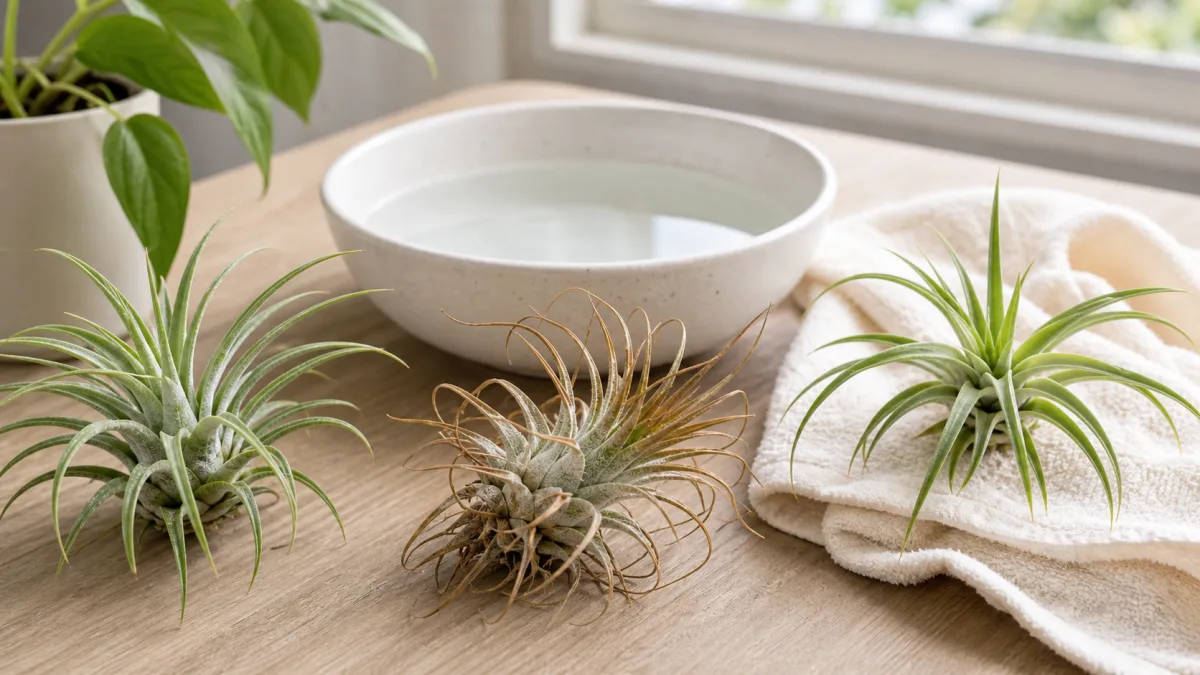
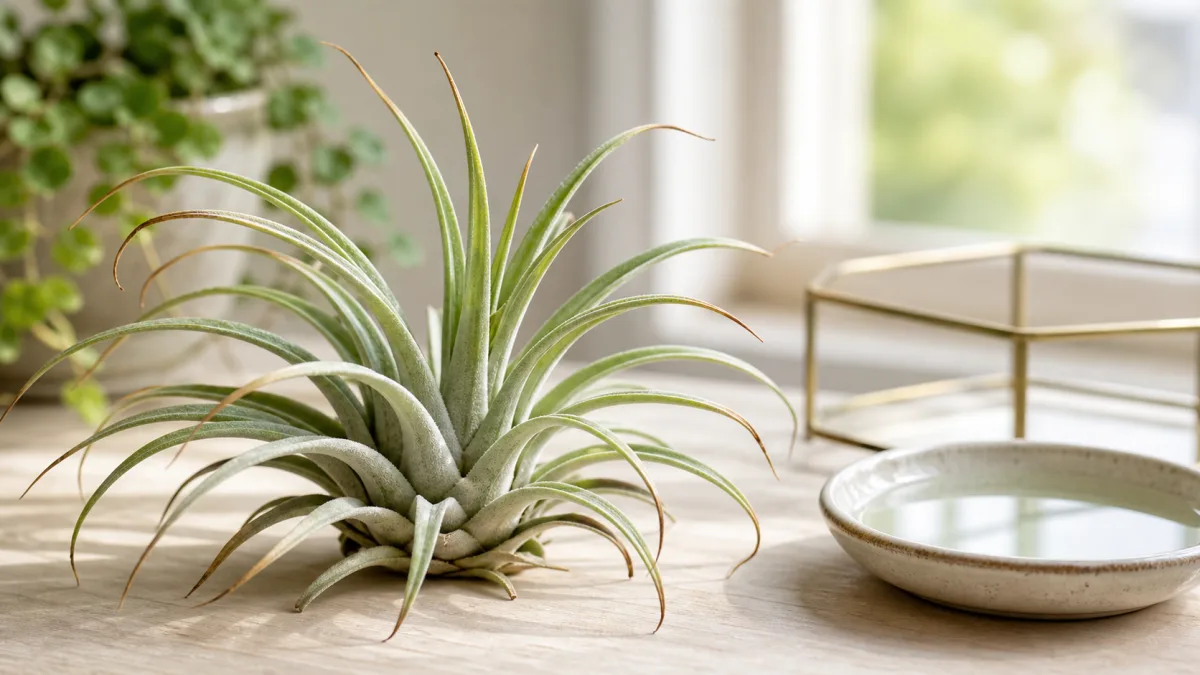
Brown tips often point toward dryness, heat, or mineral buildup. A brown, soft, or dark base is more concerning because it can indicate rot.
Review watering and drying together
If the plant is crispy and curled, it may need more consistent hydration. If it stays damp in a holder or terrarium, watering may be fine but drying may be the real problem.
Move away from harsh sun
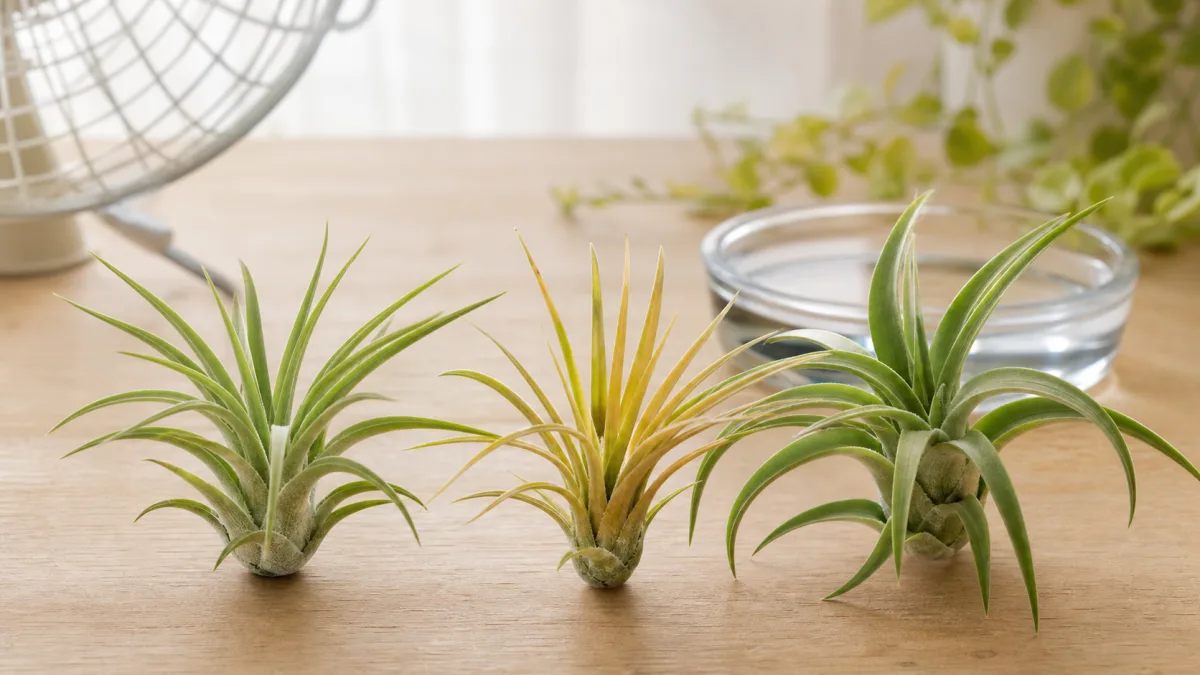
Bleached or brown patches on exposed leaves can come from sun stress. Try bright indirect light and watch new growth rather than expecting damaged leaves to recover.
Consider water quality
Hard water, softened water, or heavy mineral residue can contribute to dry-looking brown tips. If everything else is reasonable, test rainwater, filtered water, or another safe source.
Inspect the display
Browning can follow a display problem: a hot window, a dry air vent, or a cup that traps moisture. Move the plant into a simpler open holder while you troubleshoot.
Remove only dead tissue
Trim fully dry brown tips if you want a cleaner look, but avoid cutting living green tissue unnecessarily.
Track the next change
Brown damage may not reverse, so judge whether new browning stops. Change one factor at a time, such as light, watering depth, or display drying.
Watch the base first
Cosmetic brown tips are usually less urgent than a soft base. If the lower leaves loosen or the center smells sour, treat it as a rot problem rather than simple browning.