Confirm what you are seeing
White marks are not always mold. Mineral residue, dust, trichomes, and pests can look similar. Mold is more likely when material looks fuzzy and appears after the plant or display stayed damp.
Remove damp materials
Take the plant out of moss, shells, glass, or filler that stayed wet. Do not keep an air plant in a moldy display while trying to fix only the leaves.
Dry and inspect
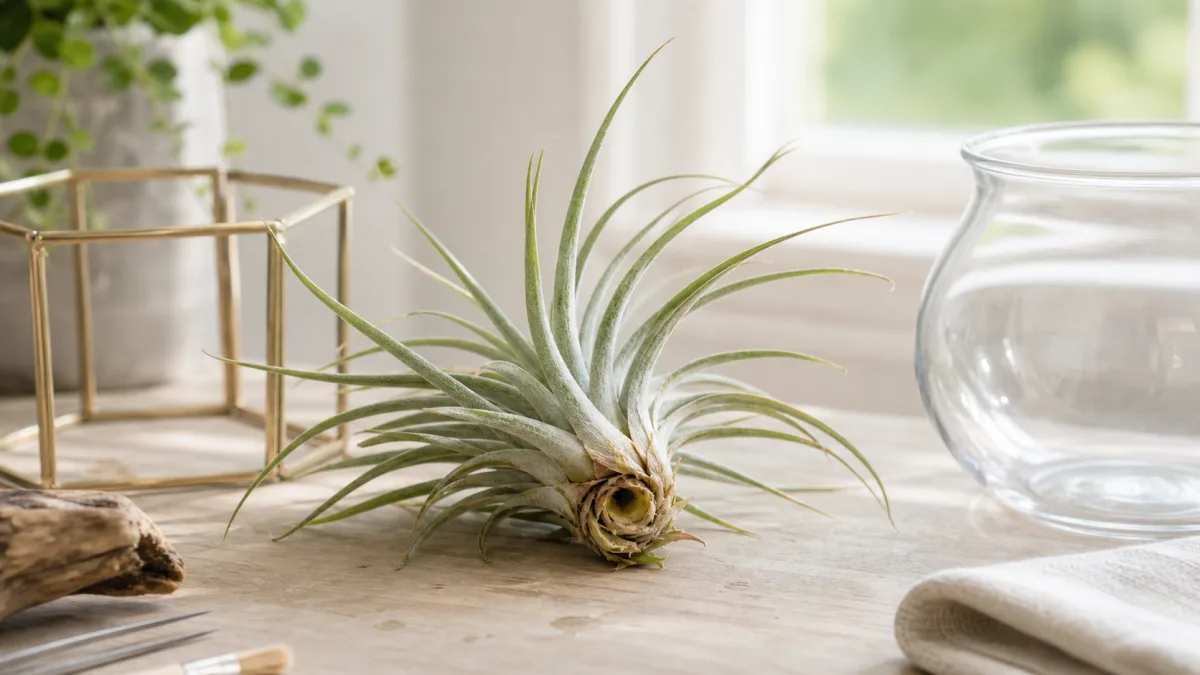
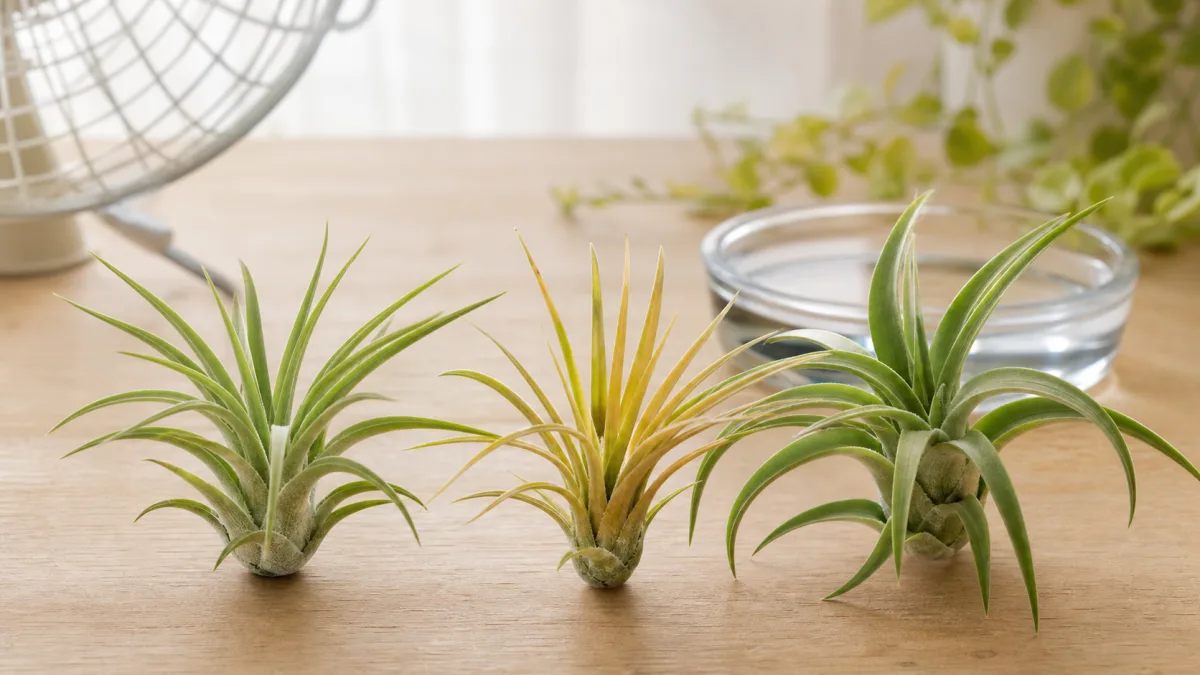
Let the plant dry in bright airflow and inspect the base. If the base is soft, dark, or smells sour, treat the problem as rot risk, not just surface mold.
Clean gently
Brush away loose material with a soft brush or rinse gently if the plant is otherwise firm. Avoid harsh household cleaners on living tissue.
Fix the cause
Mold usually means moisture stayed too long. Improve airflow, water outside the display, avoid damp moss, and return the plant only when fully dry.
When to discard a plant
If the plant is collapsing, smells bad, or leaves pull from the center, it may not recover. Do not keep a rotting plant packed against healthy plants.
Protect nearby plants
Keep the suspect plant separate while you inspect it. Clean the display, remove damp filler, and avoid placing healthy air plants back into the same wet container.
Prevent mold from returning
Water outside decorative displays, dry plants fully, and avoid organic filler that stays damp. If mold returns, the setup is still holding too much moisture or has too little airflow.
Mold vs trichomes and mineral residue
Natural trichomes form an even silvery or fuzzy coating that belongs to the leaf. Mineral residue usually looks chalky or crusty after water dries. Mold is more likely to appear in irregular fuzzy patches, especially on damp filler, dead leaf material, or a base that stayed wet.
What to do first
Remove the air plant from its holder and isolate it from nearby plants. Discard damp moss or organic filler, let the plant dry in bright open airflow, and inspect the crown and base before adding any more water.
Check for rot at the same time
Mold on a holder may be a display problem, but softness, black or brown tissue, sour odor, or leaves pulling free can indicate rot. A plant with structural decay needs drying and damage assessment, not another rinse or soak.
Should you use fungicide?
Do not start with household bleach, alcohol, soap, or an unlabelled fungicide on living air plant tissue. For a firm plant with light surface material, gentle dry cleaning or a careful rinse followed by complete drying is a safer first step.
Clean the display before reuse
Wash and fully dry hard holders before reuse. Replace porous material that stays musty or repeatedly grows mold, because putting the plant back into the same damp setup recreates the cause.
How to prevent air plant mold
Water outside decorative containers, remove dead leaf debris, provide open airflow, and wait until the crown and base are fully dry before returning the plant to its display. In humid rooms, reduce trapped moisture rather than assuming the plant needs no watering.
White fuzz quick check
Do not treat every white patch as mold. Natural trichomes look evenly silvery and belong on many Tillandsia leaves. Mold is more suspicious when it appears as irregular fuzzy patches after the plant, moss, shell, or glass display stayed damp.
Mold vs rot
Mold can be a surface or display problem, while rot affects the plant structure. If the base is firm, the plant may recover after cleaning and better drying. If the base is soft, dark, sour-smelling, or leaves pull loose, handle it as rot risk first.
What not to do
Do not soak a soft plant again just because it looks dirty. Do not scrub living leaves hard, seal the plant back into a damp holder, or use harsh cleaners on the tissue. The first fix is usually isolation, drying, and removing the damp material that caused the problem.
When mold keeps coming back
Recurring mold usually means the display is still too wet or stagnant. Replace moss, remove dead leaf debris, use an open holder, water outside the display, and wait until the crown and base are fully dry before returning the plant.