Airflow is part of care
Air plants need water, light, and drying. Airflow connects those steps because a plant that cannot dry after watering is more likely to rot even if the watering schedule seems correct.
What good airflow looks like
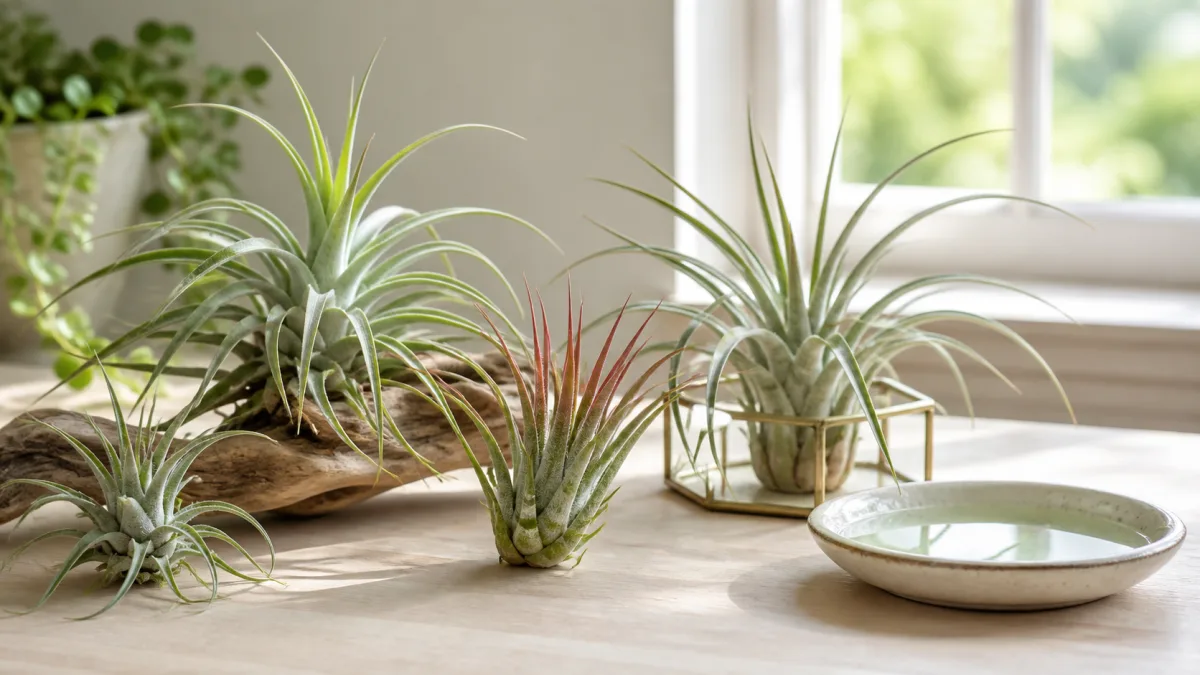
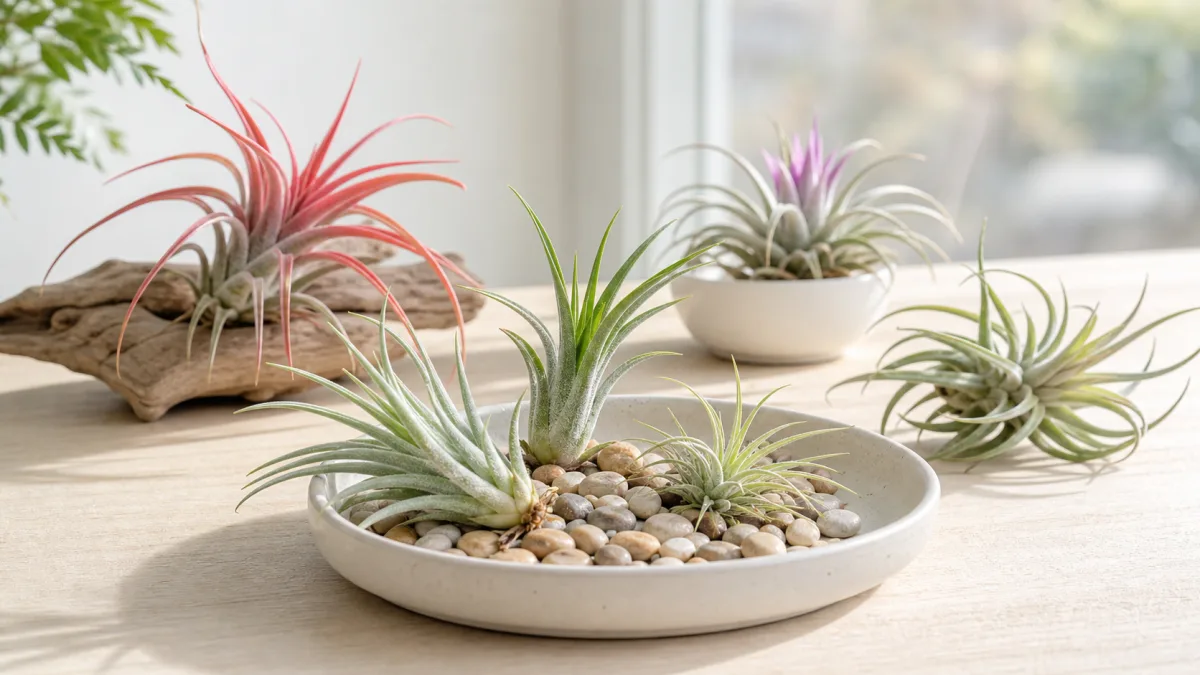
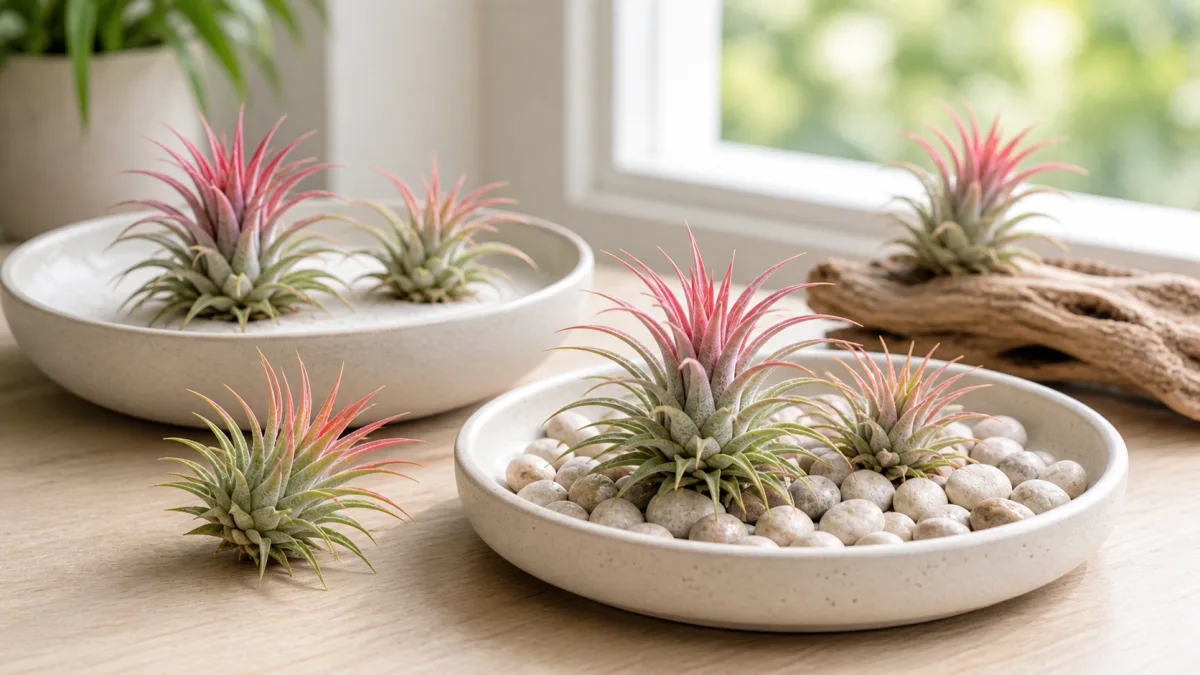
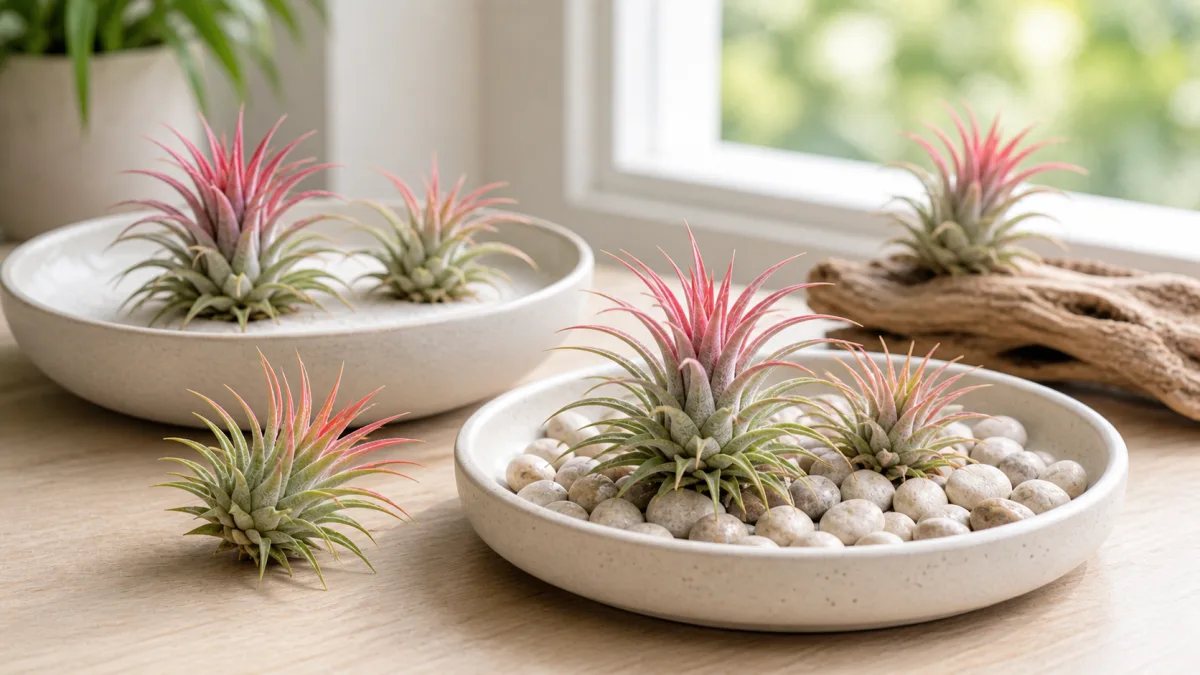
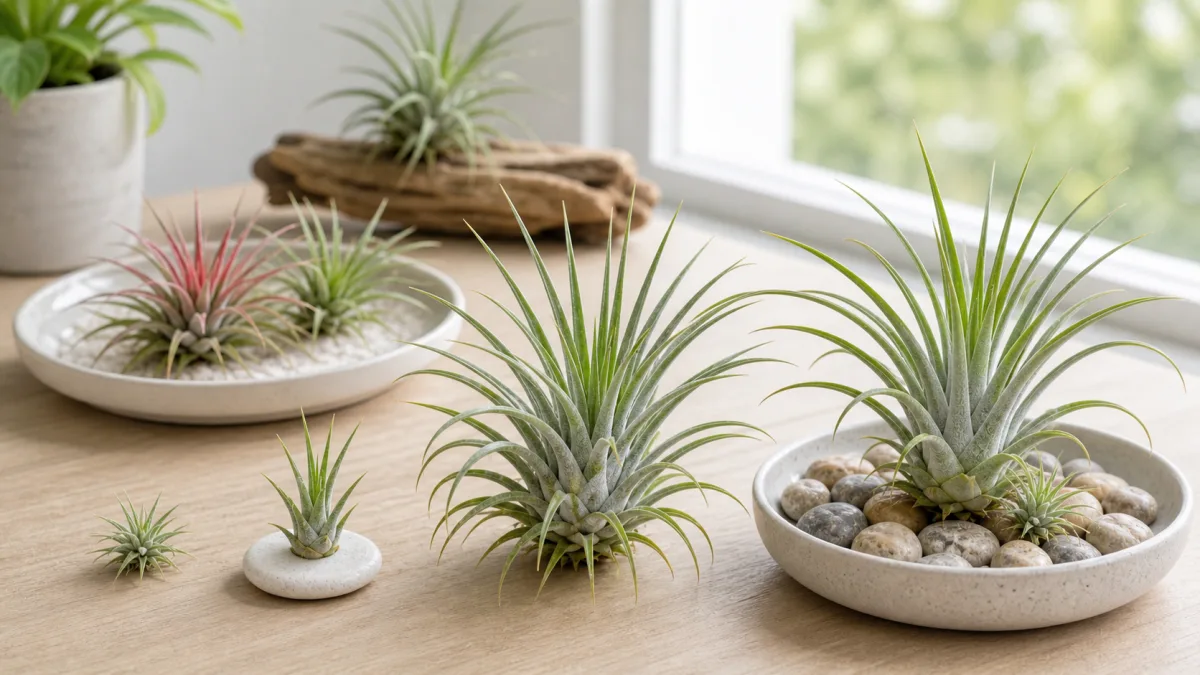
Good airflow means the plant is in open air, not sealed inside glass, packed into damp moss, or buried in filler. A bright shelf, open holder, or removable mount usually works better than a tight container.
After watering
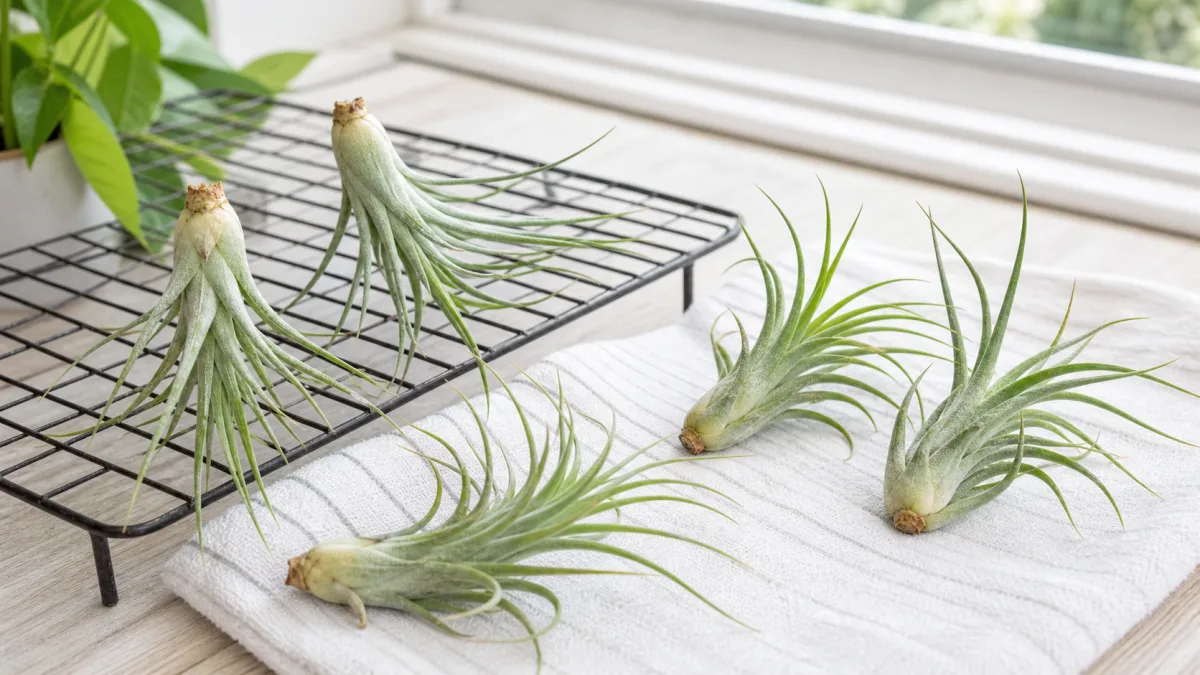
After soaking, rinsing, or misting, shake out trapped droplets and dry the plant in open airflow. The crown and base should dry within a few hours before the plant returns to a display.
Airflow and light work together
bright indirect light helps the plant use water and dry at a normal pace. Low light plus poor airflow is one of the easiest ways to keep the base wet too long.
Common airflow mistakes
Closed terrariums, narrow globes, damp bathrooms, deep shells, and glued displays can all slow drying. If the plant feels soft, smells sour, or stays wet late in the day, improve airflow before adding more water.
Simple airflow test
Water the plant, dry it on a towel, and check it after a few hours. If hidden leaf pockets or the base still feel wet, use a more open holder or a brighter drying spot.
Airflow in humid rooms
Bathrooms, kitchens, and humid apartments can make air plants dry more slowly. In those rooms, open displays and a dedicated drying spot matter more than extra watering.
Airflow for mounted plants
Mounted plants need special attention because the mount can stay damp even when the leaves feel dry. Check wood, cork, moss, and glue points after watering so the plant is not resting against wet material.