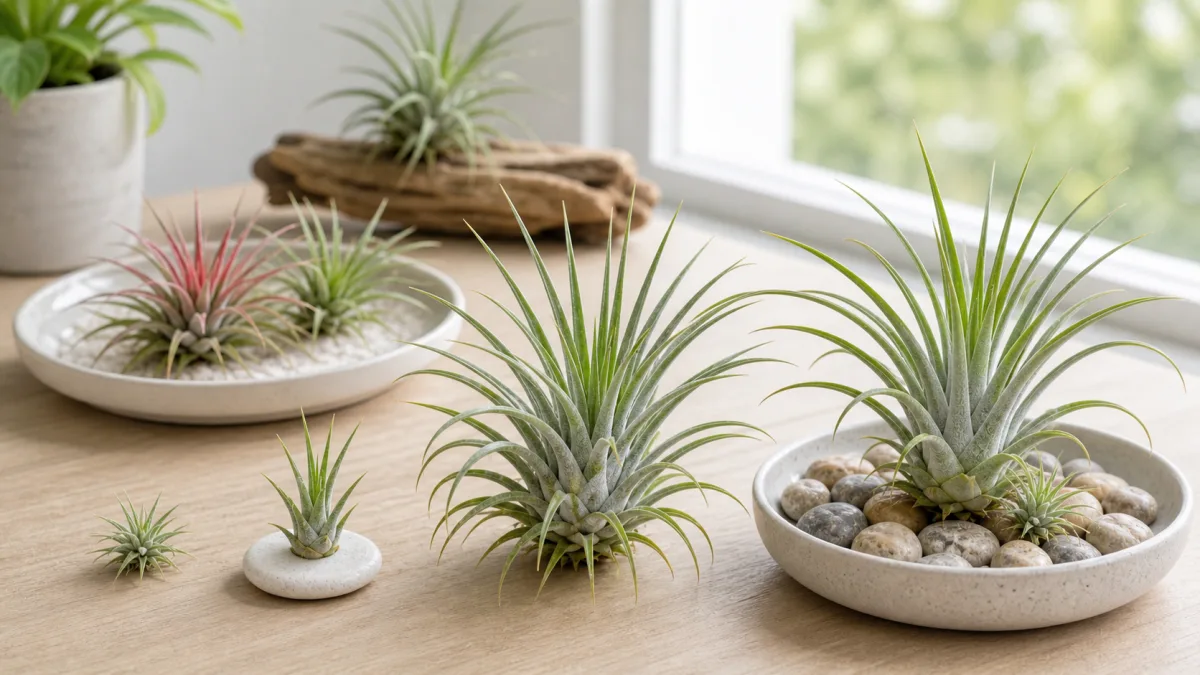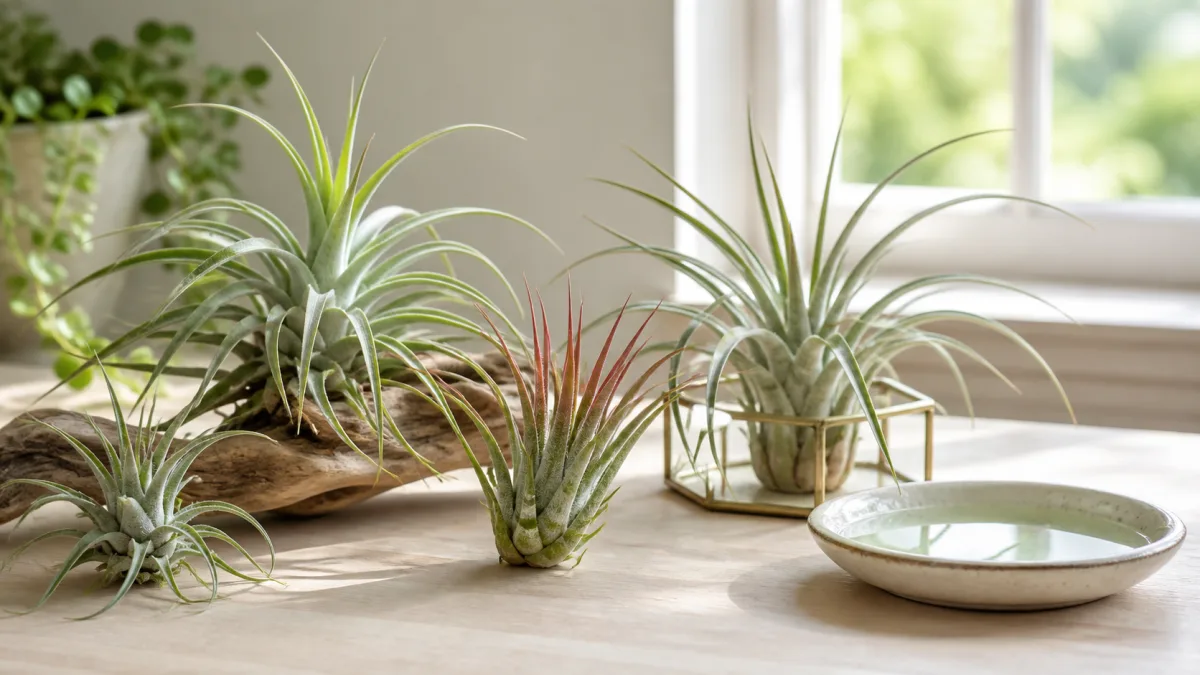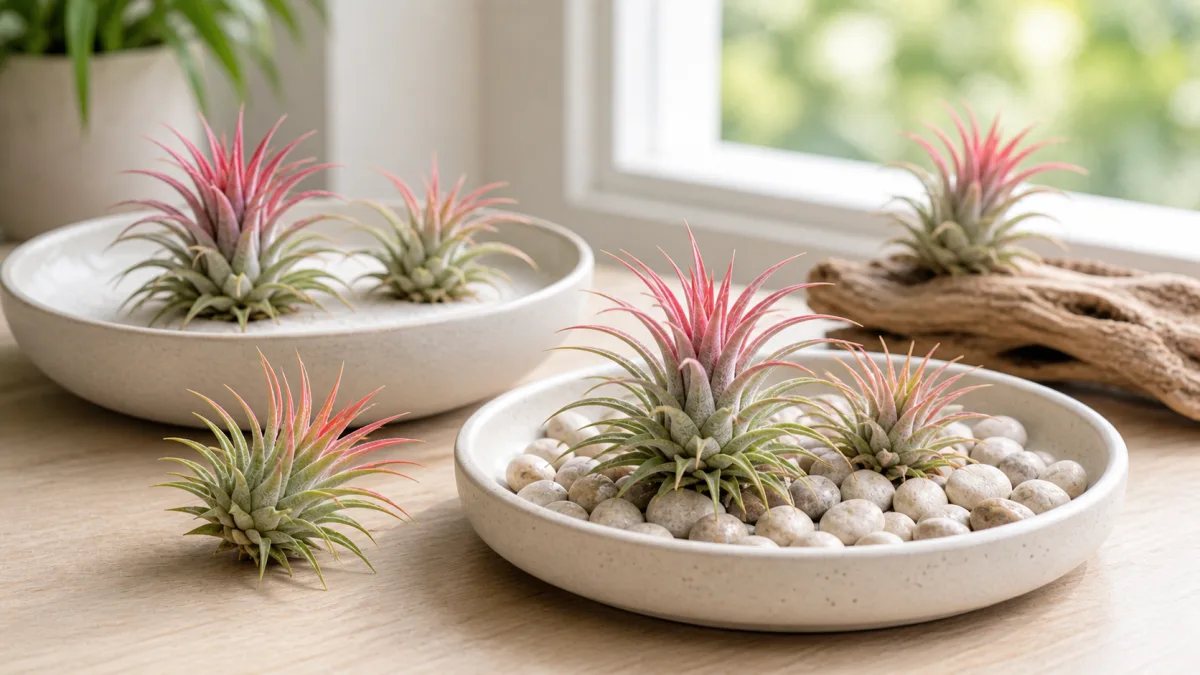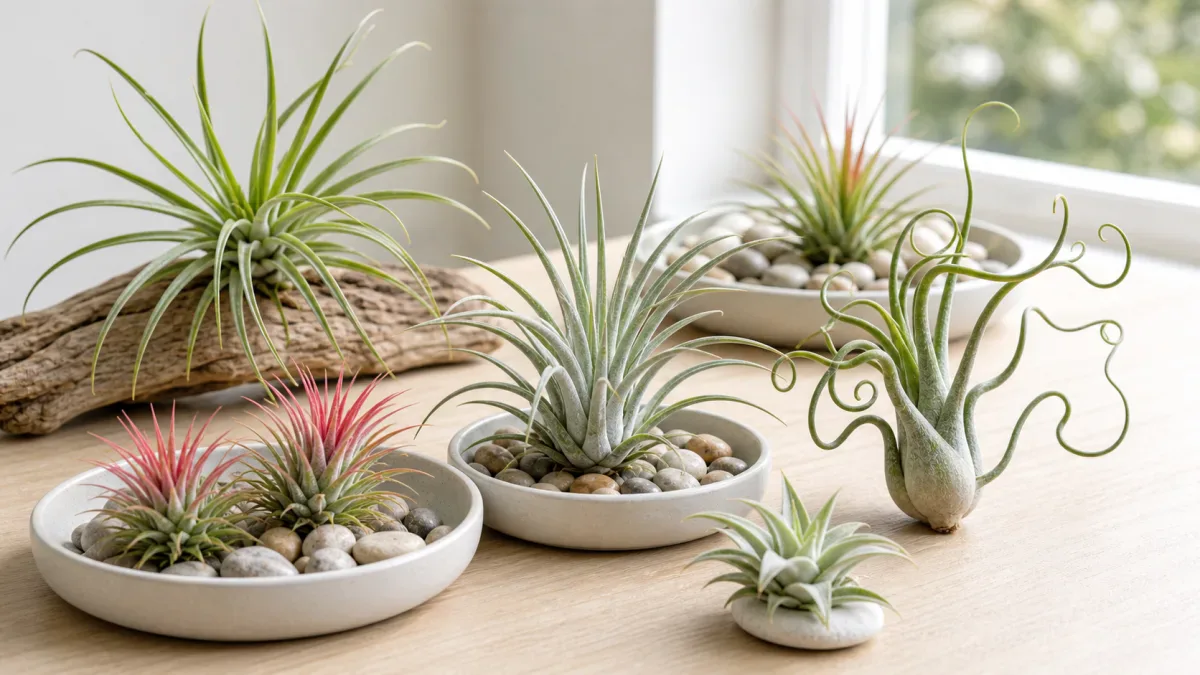
Air plants do bloom
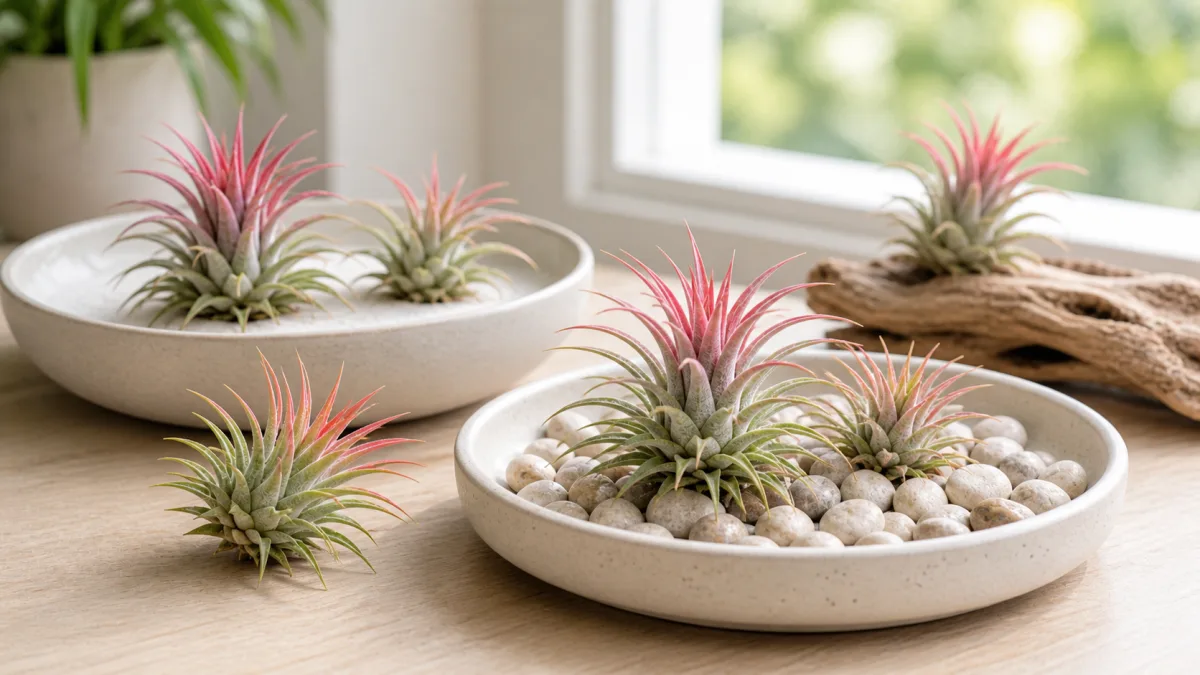
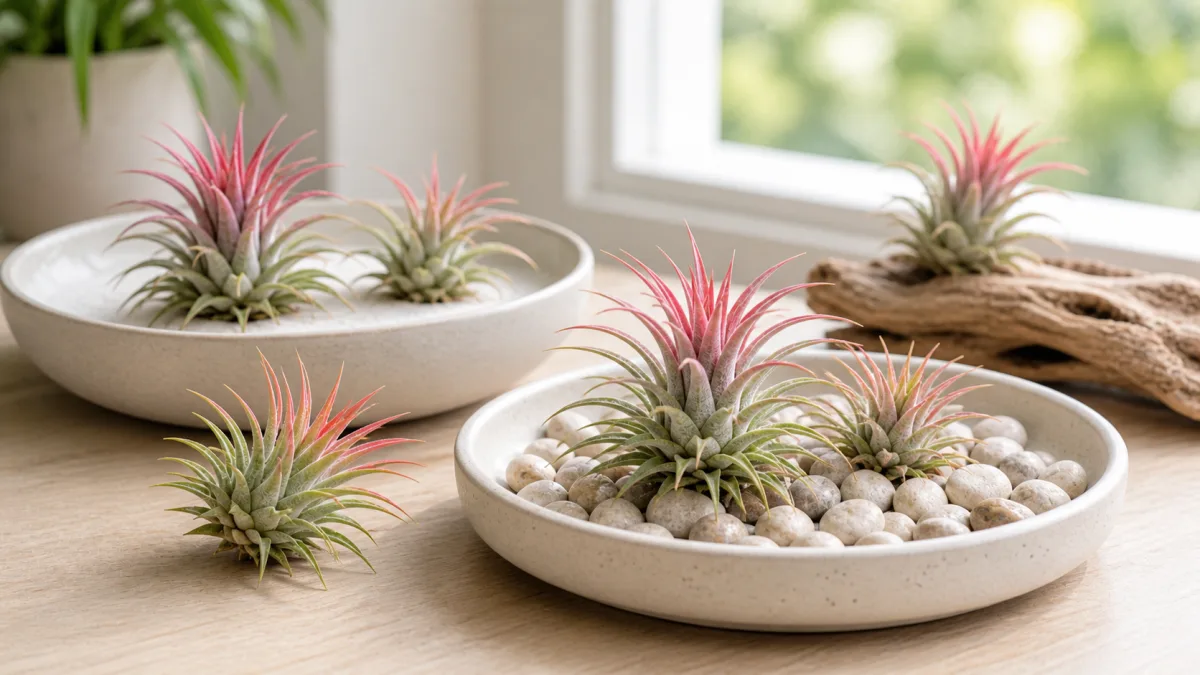
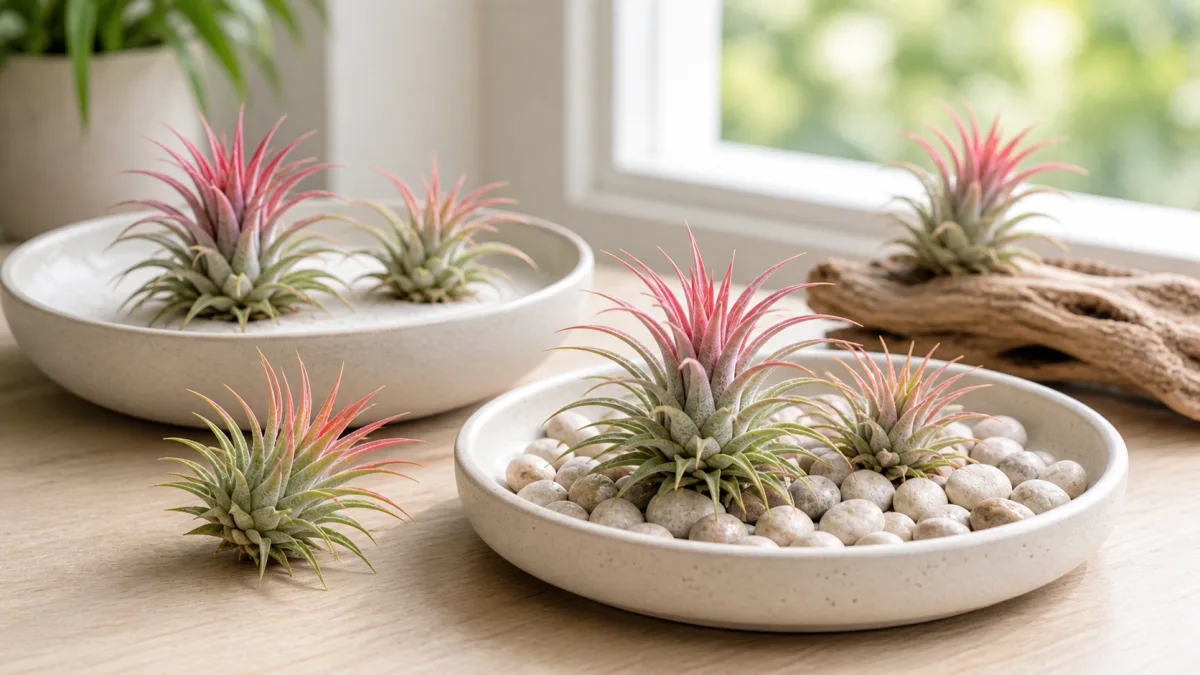
Air plants are flowering bromeliads, so a mature Tillandsia can produce a flower spike, colorful bracts, or small tubular flowers. The exact look depends on the species. Some plants blush before bloom, while others send up a more obvious spike.
Most bloom once
Most air plants bloom once as part of their life cycle. That does not mean the plant fails immediately. Many plants keep looking healthy for months after bloom while they shift energy toward offsets.
What happens after flowering
After flowering, the mother plant often produces pups near the base or between leaves. These pups are small offsets that can eventually become separate plants. Keep caring for the mother plant as long as it is firm because it supports the pups while they grow.
How to care during bloom
Keep the routine steady: bright indirect light, careful watering, and complete drying. Avoid soaking delicate flowers if you can, and do not leave water trapped in the bloom spike, crown, or display.
Should you cut the flower spike?
You can leave the spent bloom in place until it dries naturally. If it is fully dry and unattractive, trim only the dead flower stalk with clean scissors. Do not pull hard on the plant or cut into healthy leaves.
When to separate pups
Wait until pups are large enough to handle, often about one-third to one-half the size of the mother plant. Separating tiny pups too early can slow them down. If the cluster looks healthy, leaving pups attached is also fine.
Why an air plant will not bloom
No bloom usually means the plant is not mature yet or needs better growing conditions. Bright indirect light, consistent watering, airflow, and patience matter more than forcing bloom. Some species simply take years.
Bloom signs vs stress signs
Colorful blush, a firm base, and new growth are usually good signs. A soft base, black tissue, sour smell, or falling-apart leaves are problem signs, not normal blooming. Check rot and watering issues before assuming a stressed plant is just preparing to flower.