Why type matters
Air plants are not all identical. Some have thin leaves, some store water differently, and some have shapes that trap droplets after watering.
Common beginner types
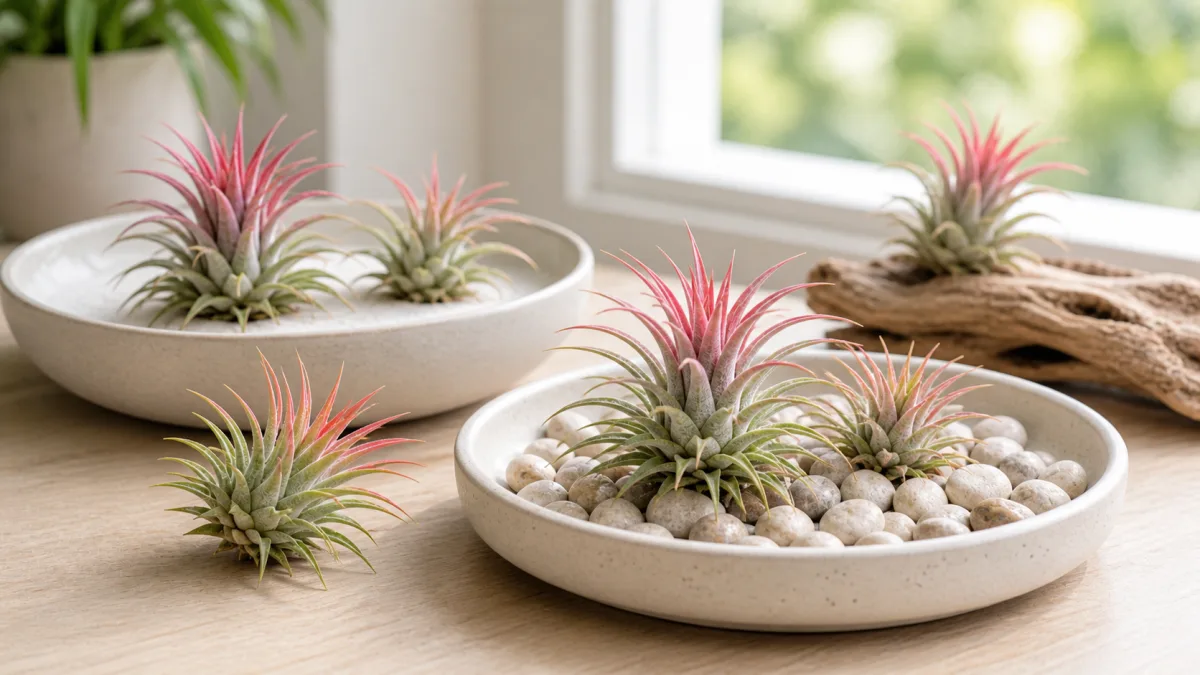
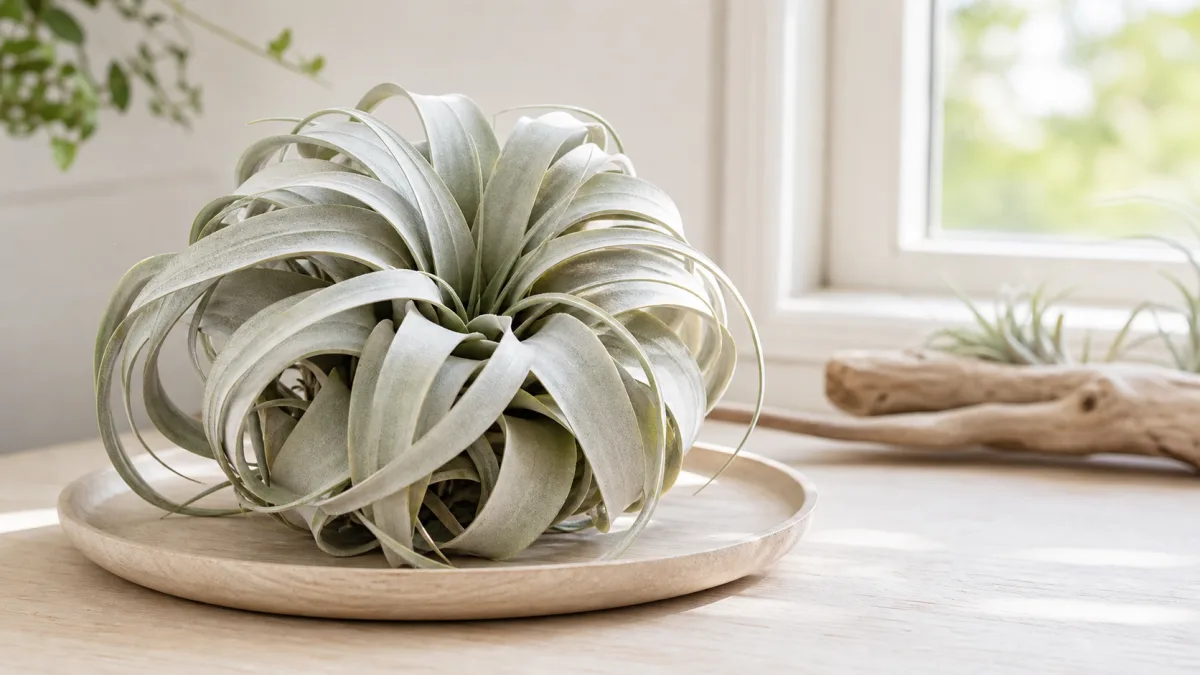
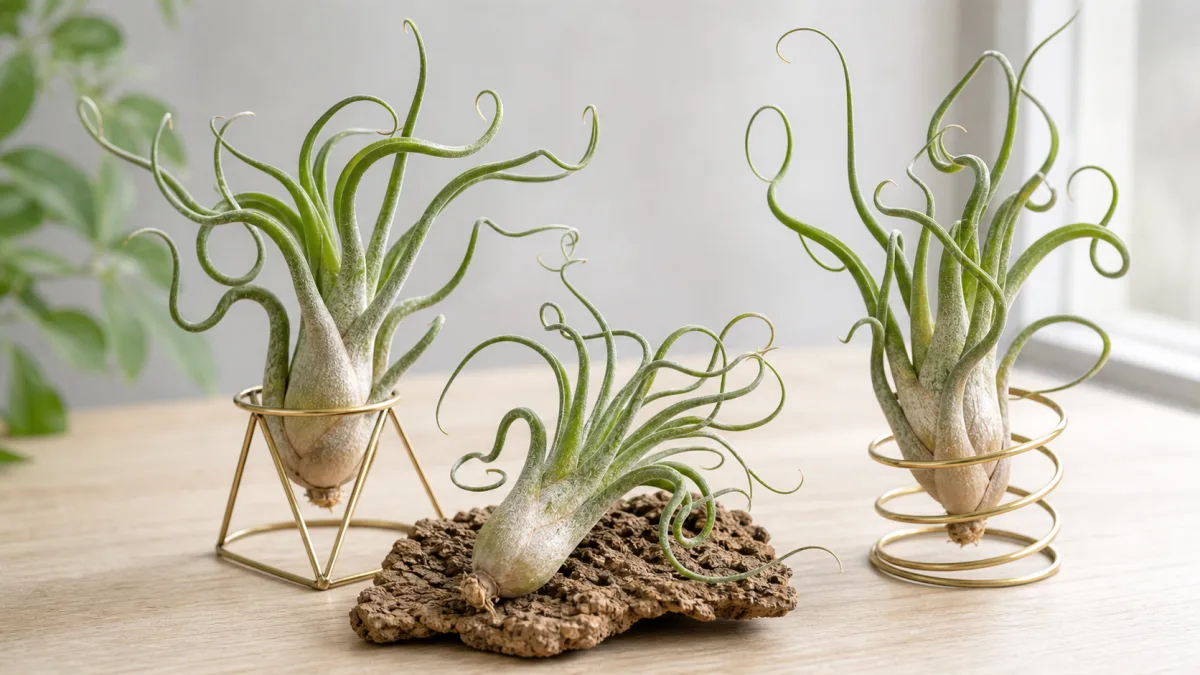
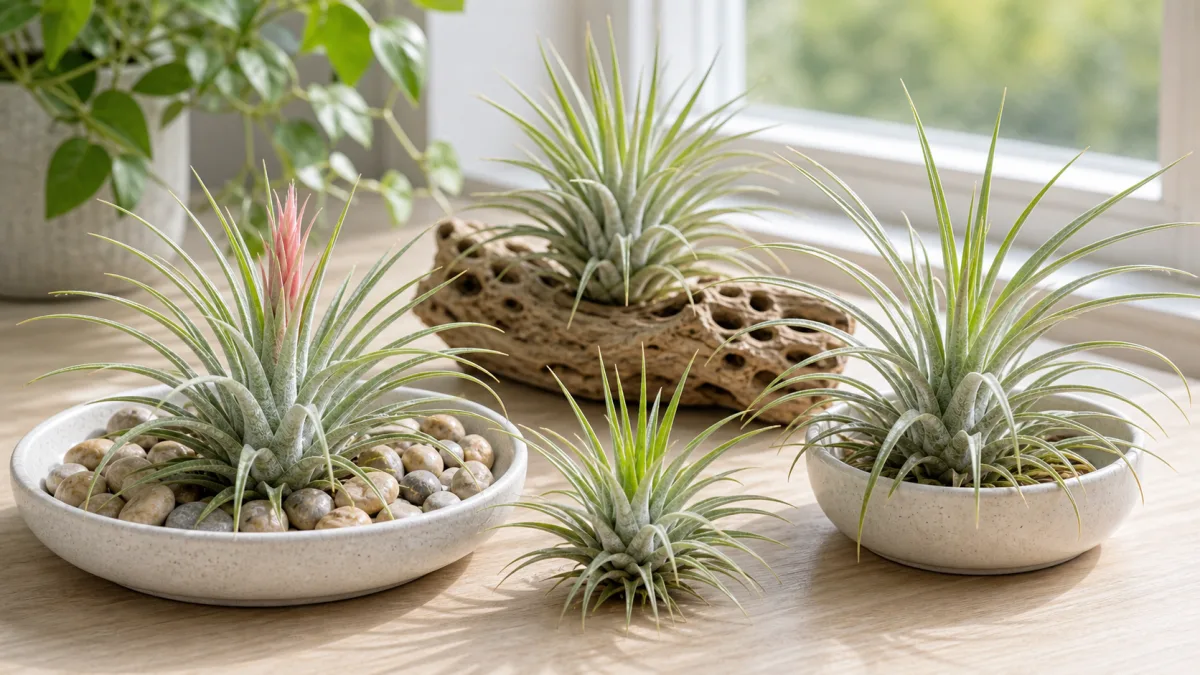
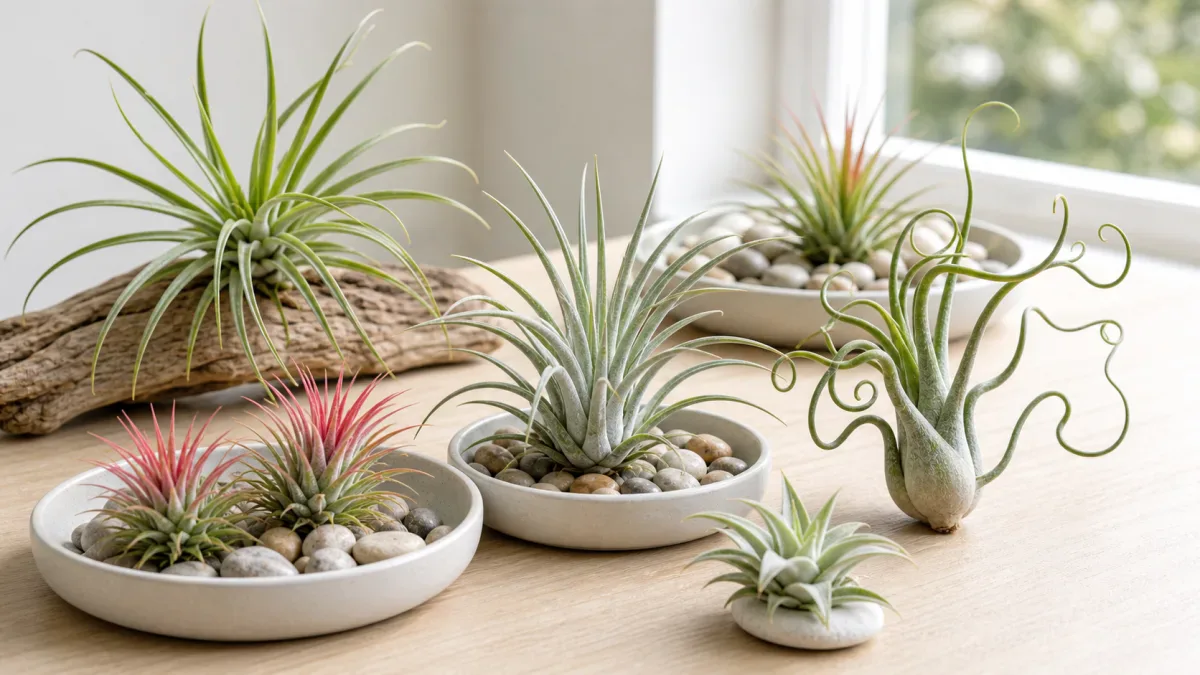
Ionantha is small and common, xerographica is large and sculptural, caput-medusae and bulbosa have twisting or bulb-like forms, and stricta is adaptable.
Thin-leaved vs thick-leaved plants
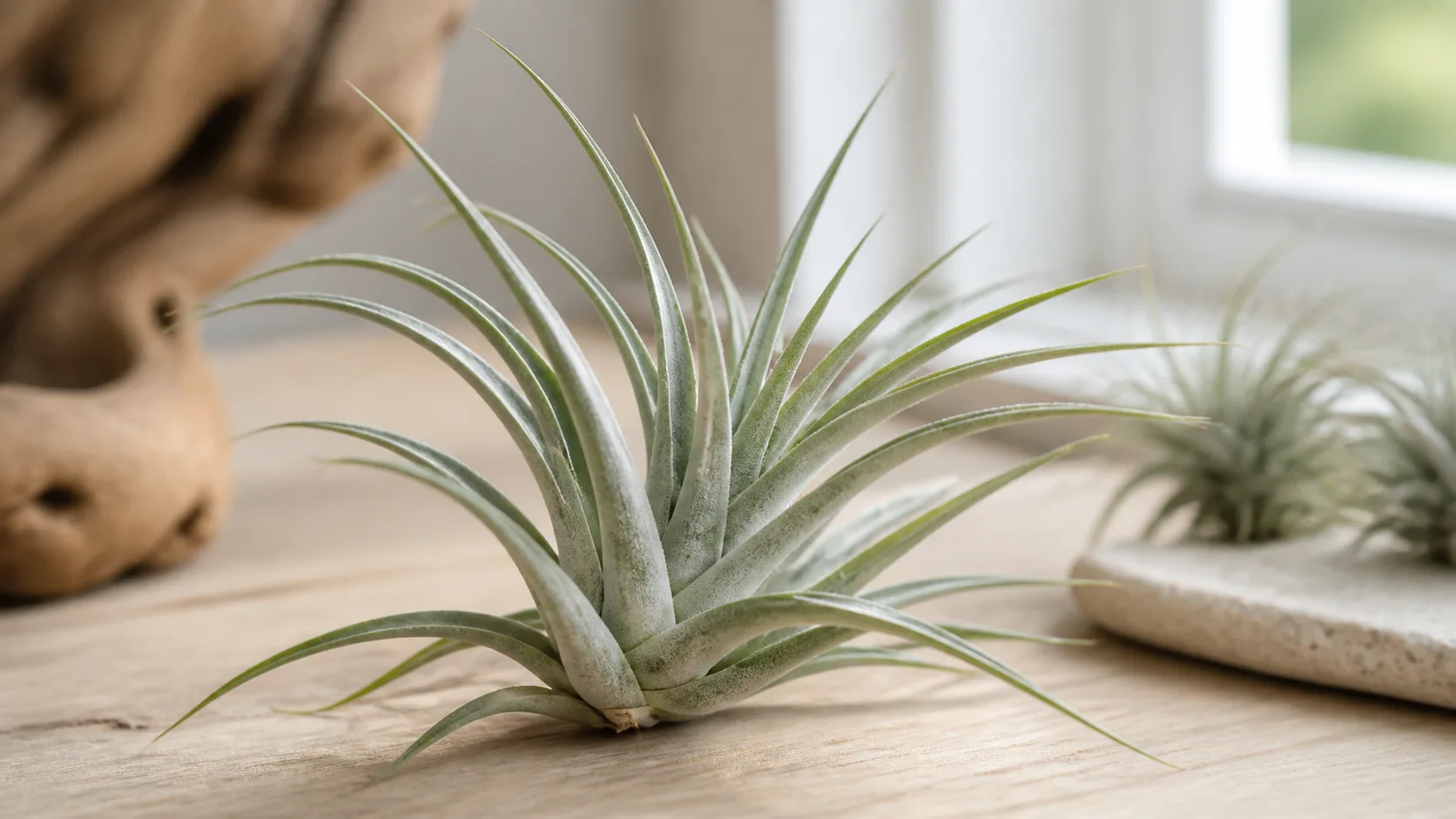
Thin-leaved types often dry faster and may need more frequent hydration. Thicker, silvery, or sculptural plants may tolerate dryness better but still need full watering.
Special growth habits
Usneoides grows as hanging strands, while cyanea is often sold more like a potted bromeliad and differs from many loose air plants.
Match care to shape
Plants with tight crowns or bulbous bases need special attention to drying. Thin-leaved plants may dry faster and need a different watering rhythm.
Match type to display
Large rosettes need room for airflow, strand-like plants need hanging space, and bulbous plants should not sit deep in cups. The display should fit the plant shape, not just the decor.
Buying tip
Choose a plant you can inspect easily and remove from its display. A common healthy plant is usually a better first choice than a rare plant glued into a tight holder.
Build a mixed collection slowly
Start with one or two forgiving types, learn how they respond in your room, then add plants with different shapes. A mixed collection is easier when you can compare drying speed and light response.
More species to compare
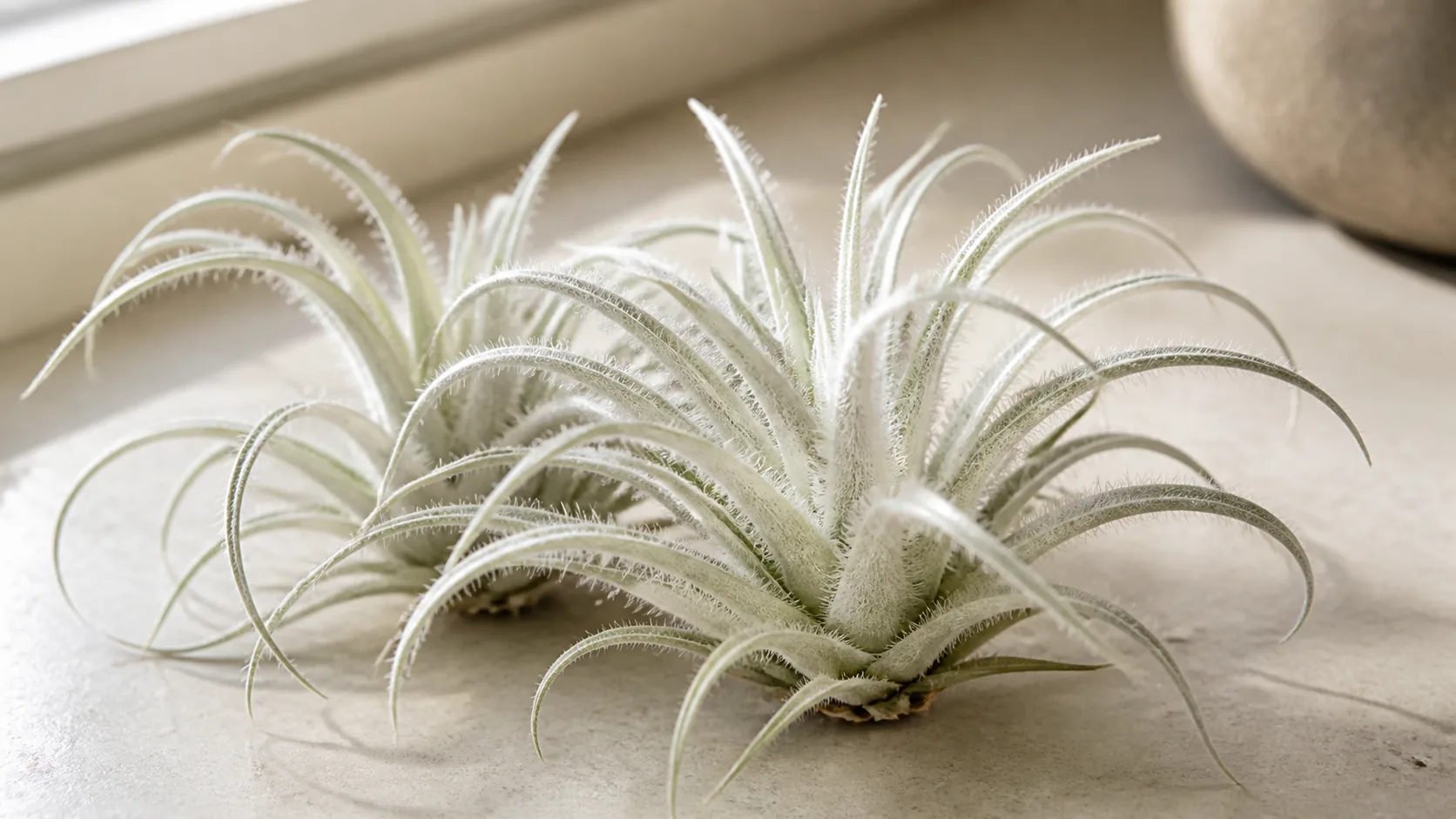
Once you know the common beginner types, compare harrisii for a sturdy silvery rosette and tectorum for a fuzzy, bright-light plant that prefers lighter watering. These species show why shape and leaf texture change the care routine.