Light needs
Give Tillandsia caput-medusae bright indirect light. Its sculptural shape makes it tempting for shelves, but dark placement leads to weak growth over time.
Watering needs
Water thoroughly enough to hydrate the leaves, then shake the plant well. Water can hide in the curled leaf bases, so do not rush it back into a display.
Drying and airflow
Dry this plant on its side or upside down in open airflow. The bulb-like base should not stay wet, especially after soaking.
Why the base matters
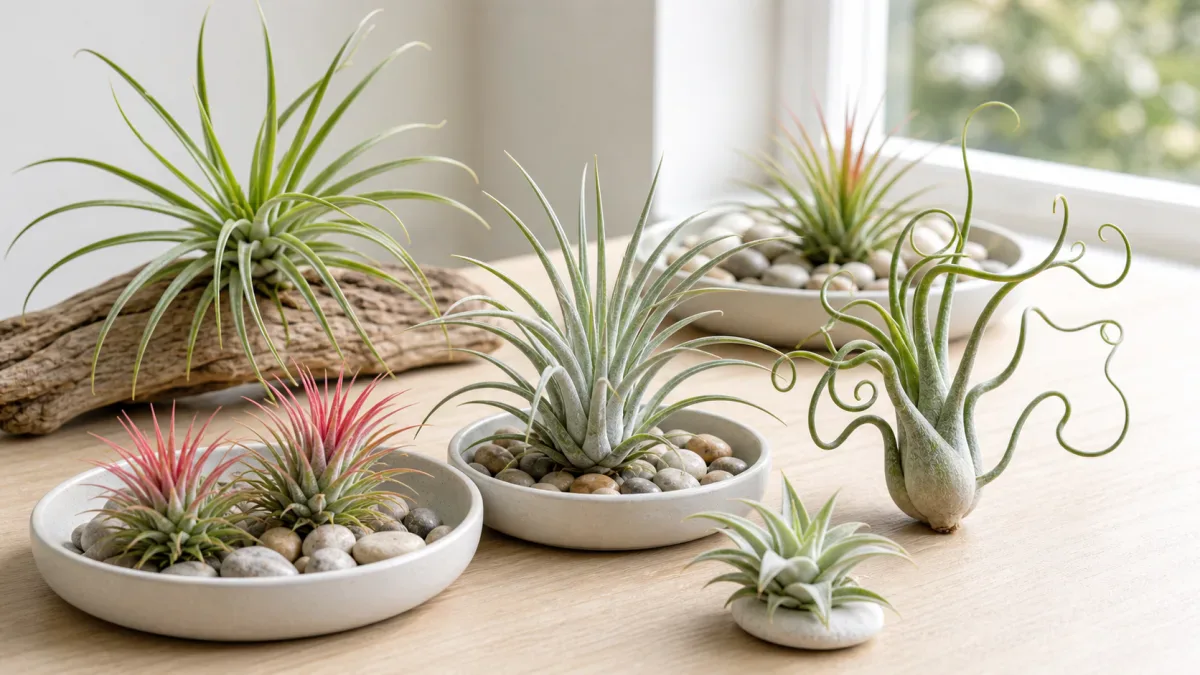
Caput-medusae has a twisting shape that can hold droplets near the lower leaves. A firm, dry base is one of the best signs that the routine is working.
Display tips
Open wire, cork, or driftwood displays work well because they leave the base visible. Avoid deep cups, narrow globes, or damp moss that keep the lower leaves wet.
Watering frequency
Start with the same routine you use for other air plants, then adjust by how fast it dries. In a humid room or closed display, water less often and improve airflow.
Common mistake
The biggest mistake is treating its unusual shape as decoration only. Caput-medusae still needs bright light, full drying, and a display that makes inspection easy.
Healthy signs
Look for firm leaves, a stable base, and gradual new growth. Old dry tips can be cosmetic, but spreading softness or yellowing near the base needs attention quickly.