Light needs
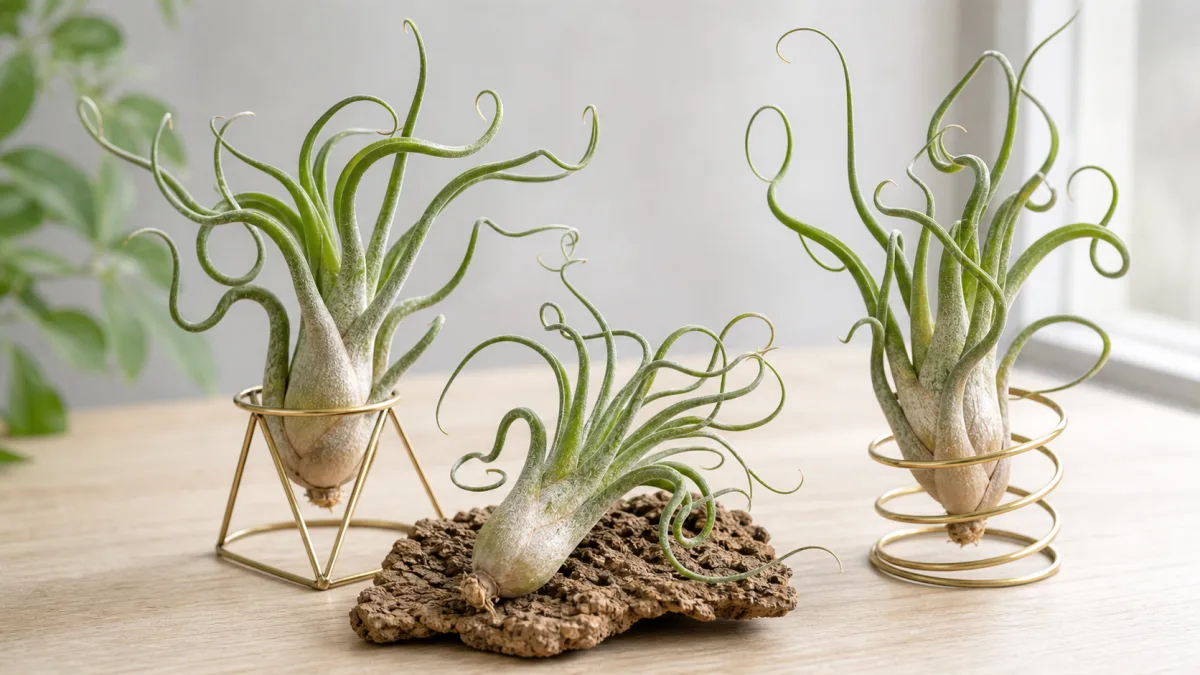
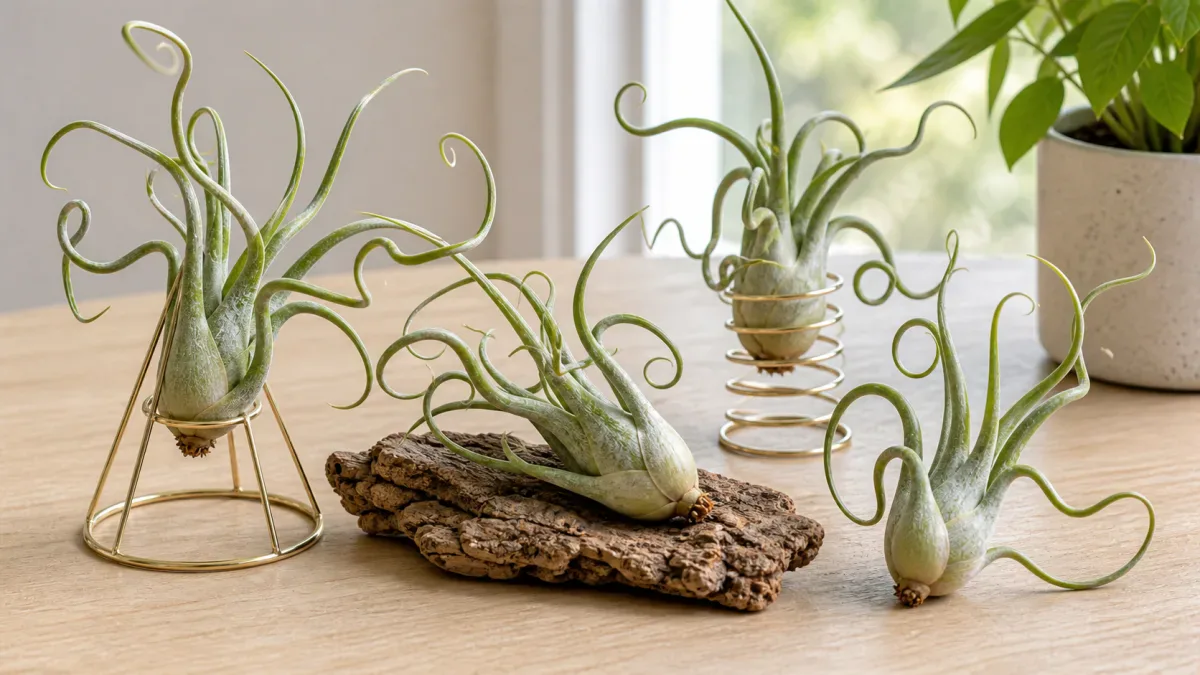
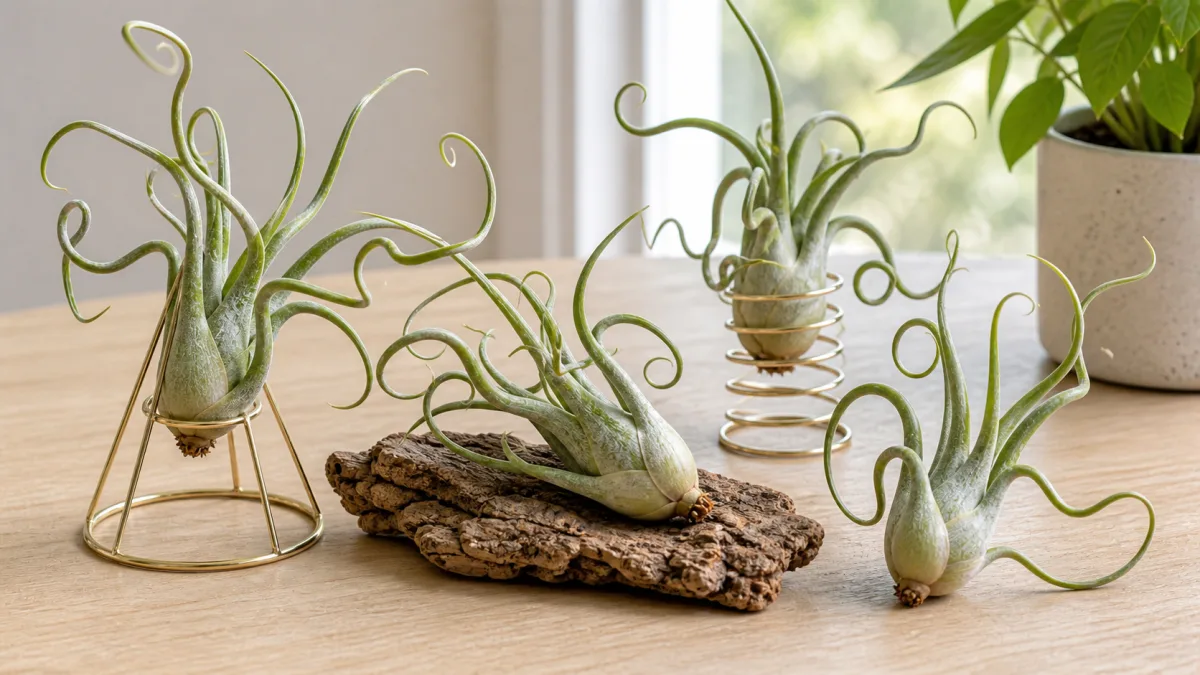
Give Tillandsia bulbosa bright indirect light. Its twisting leaves and bulb-like base make it popular for displays, but it still needs enough light to support healthy growth.
Watering needs
Water the leaves thoroughly, then shake the plant well. Because bulbosa can hold water in its base and leaf channels, short rinses or careful soaking may be safer than long, frequent soaks in humid homes.
Drying is critical
Dry bulbosa upside down or sideways in moving air until the base is no longer wet. This plant is a poor match for tight cups, shells, or globes that slow drying.
Display tips
Use an open stand or mount that supports the plant without burying the base. If you cannot remove the plant easily for watering, the display is probably too restrictive.
Watch the leaf channels
Water can sit where the twisting leaves overlap. After watering, shake from more than one angle and check the lower leaves before returning the plant to decor.
Adjust by room humidity
In humid rooms, shorten soaks and prioritize airflow. In dry bright rooms, bulbosa may still need regular hydration, but drying must remain complete.
Warning signs
A dark, soft, or collapsing base is more serious than a few dry leaf tips. If the base feels wet long after watering, change the routine before rot develops.
Beginner note
Bulbosa is beautiful but less forgiving in tight displays than simpler rosette plants. Choose it when you can keep the base visible and dry.