Light needs
Tillandsia stricta is adaptable, but it still needs bright indirect light to stay firm and grow. A dark shelf may look stylish, but it is rarely enough as a permanent spot.
Watering needs
Water regularly and adjust by leaf feel, humidity, and drying speed. Stricta usually responds well to a soak or thorough rinse followed by complete drying.
Drying and airflow
After watering, shake out extra moisture and let the plant dry with good airflow. The base should not stay wet inside a cup, shell, or tight holder.
Bloom and pups
Stricta can produce a colorful bloom and then pups as part of its normal life cycle. The mother plant may gradually decline after flowering while offsets become the next generation.
Display tips
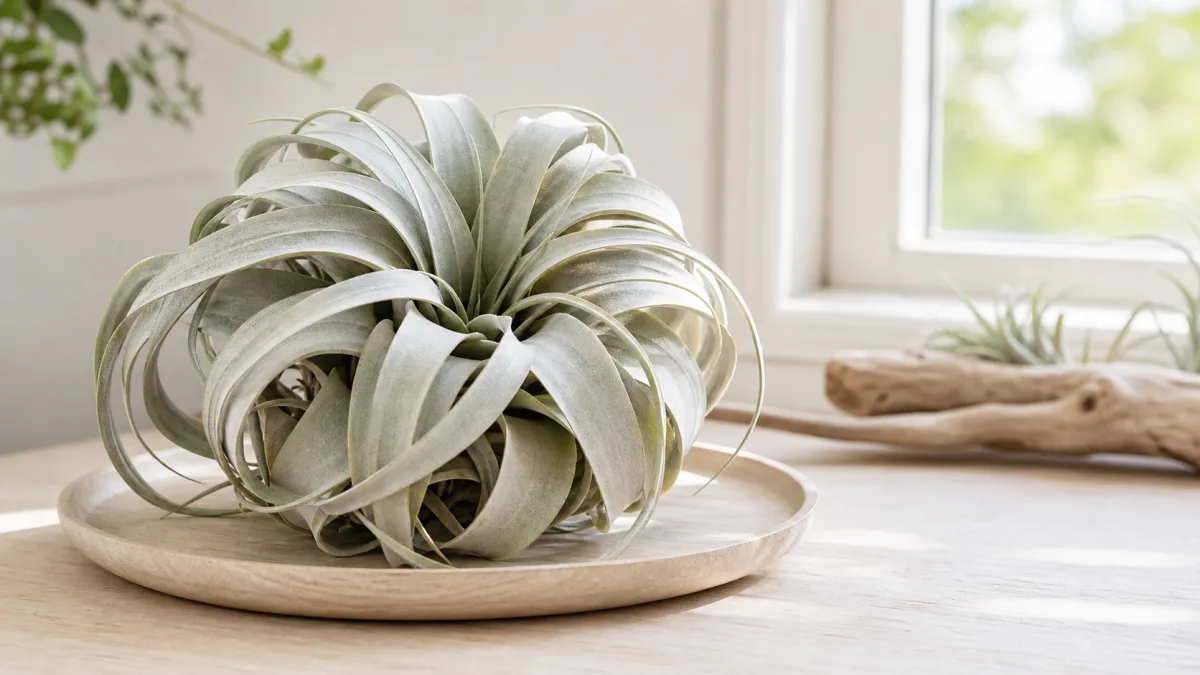
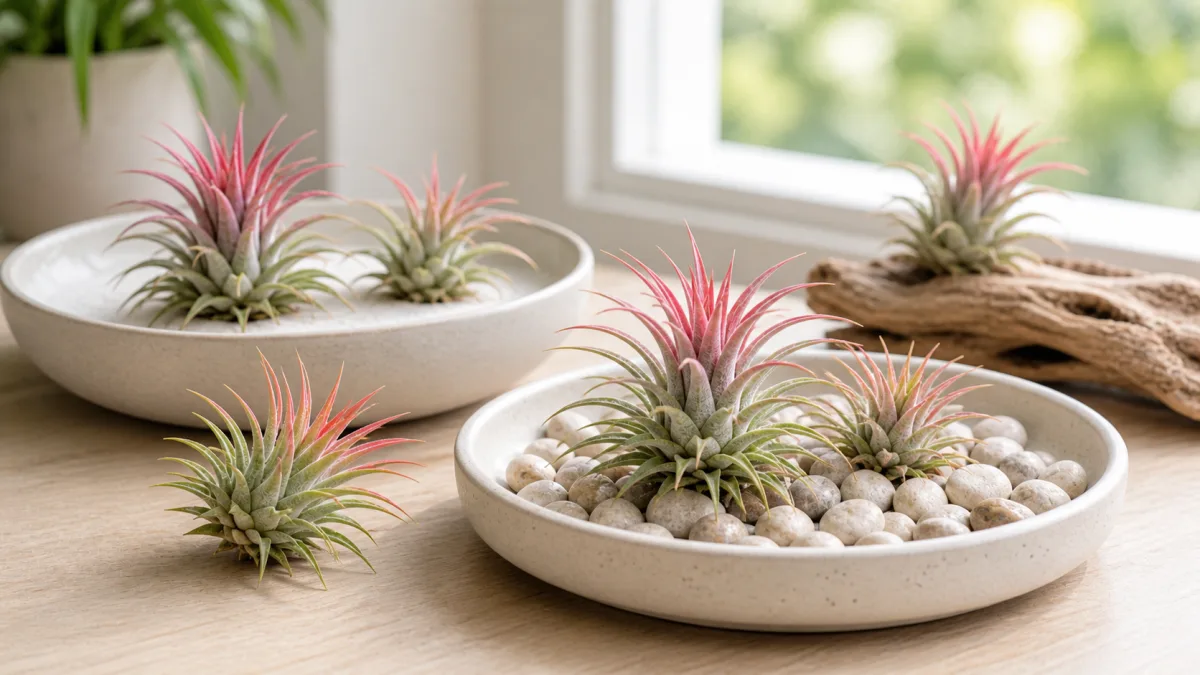
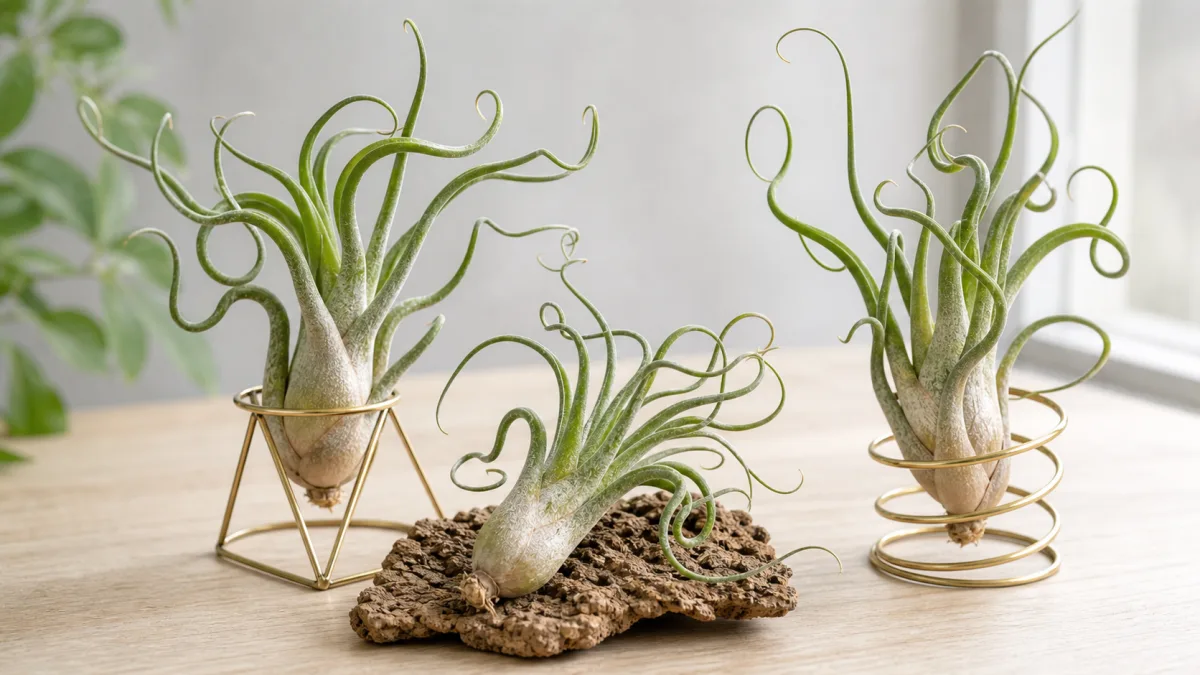
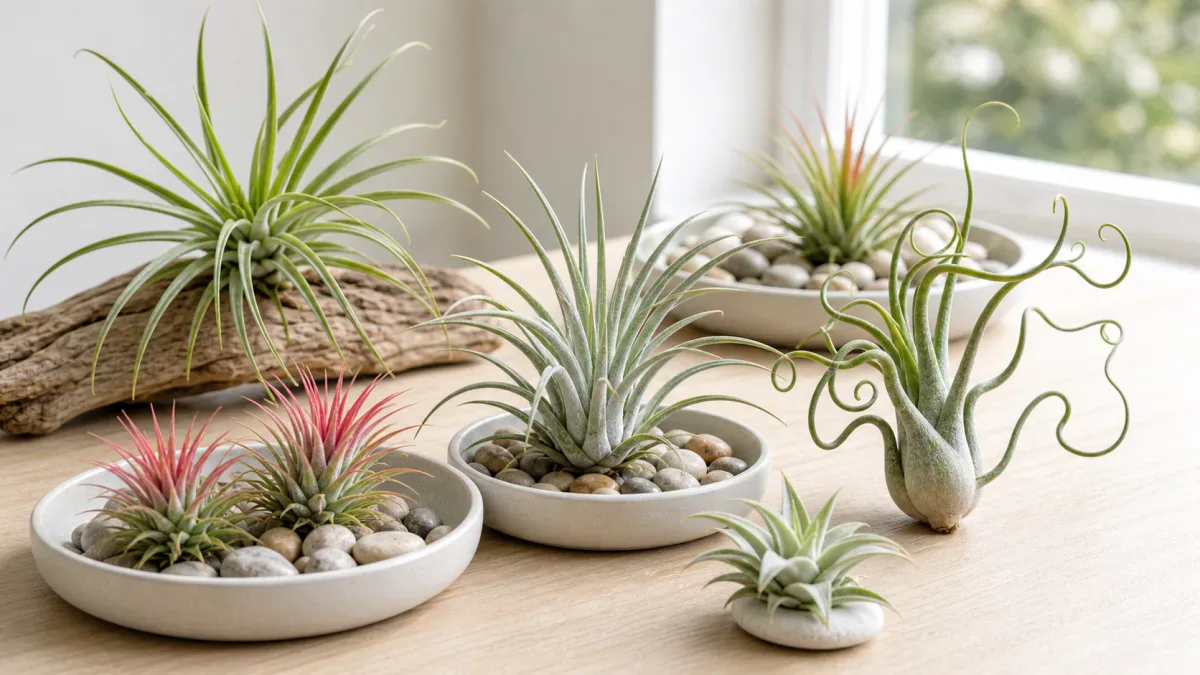
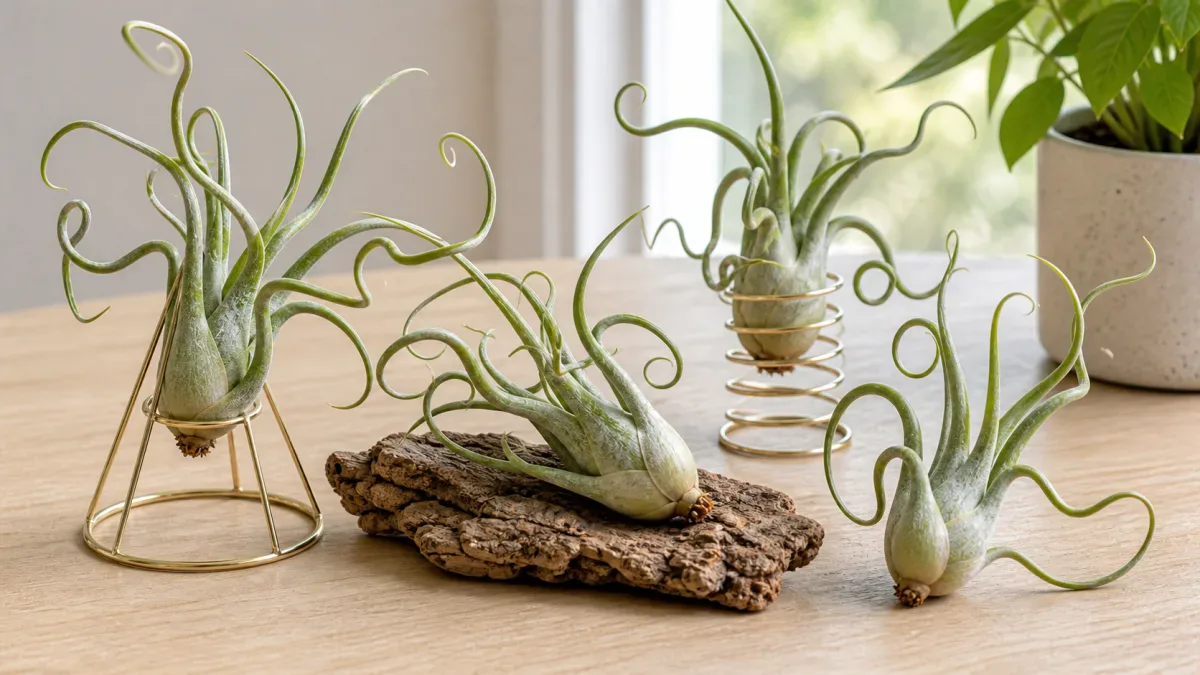
Use open holders that support the rosette without crushing leaves. Stricta is a good beginner display plant because it is easy to remove, inspect, and compare over time.
How to read the leaves
Firm leaves and stable color usually mean the routine is close. Limp leaves can mean dryness, while a soft dark base means the plant may be staying wet too long.
Seasonal adjustments
Stricta may dry faster in bright summer rooms and slower in cool winter conditions. Recheck watering and drying time whenever the room changes.
Beginner advantage
Because stricta has a straightforward rosette shape, problems are often easier to see early. That makes it a useful plant for learning watering, drying, and light balance.