Use clean room-temperature water
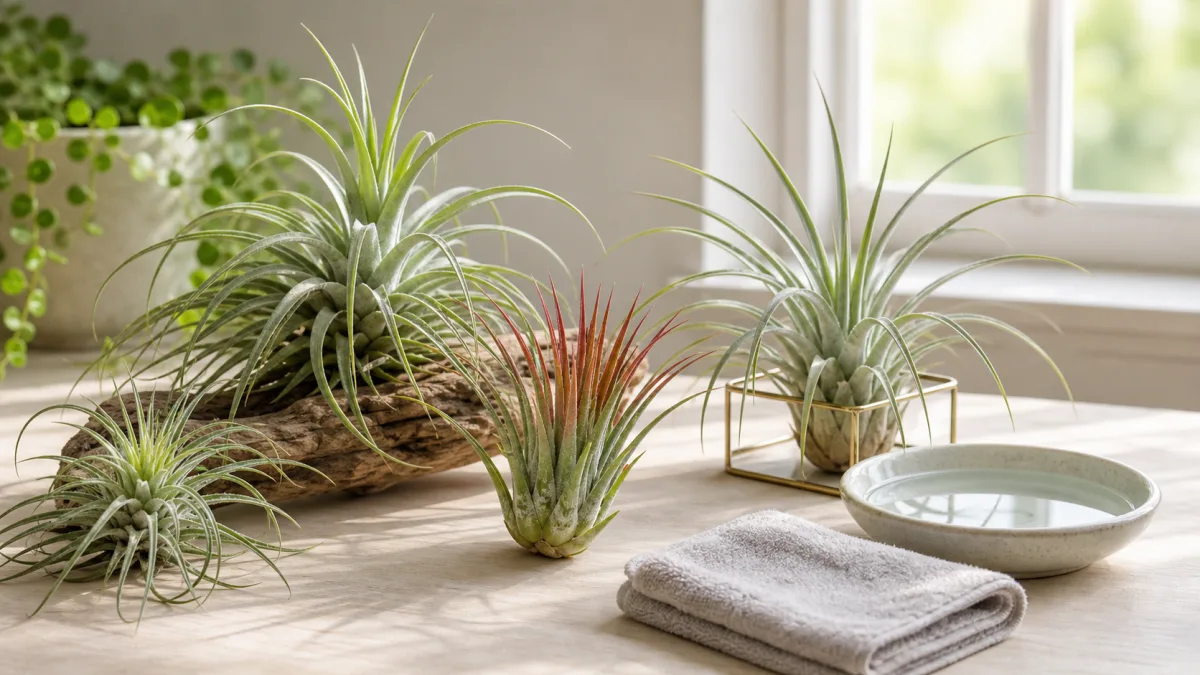
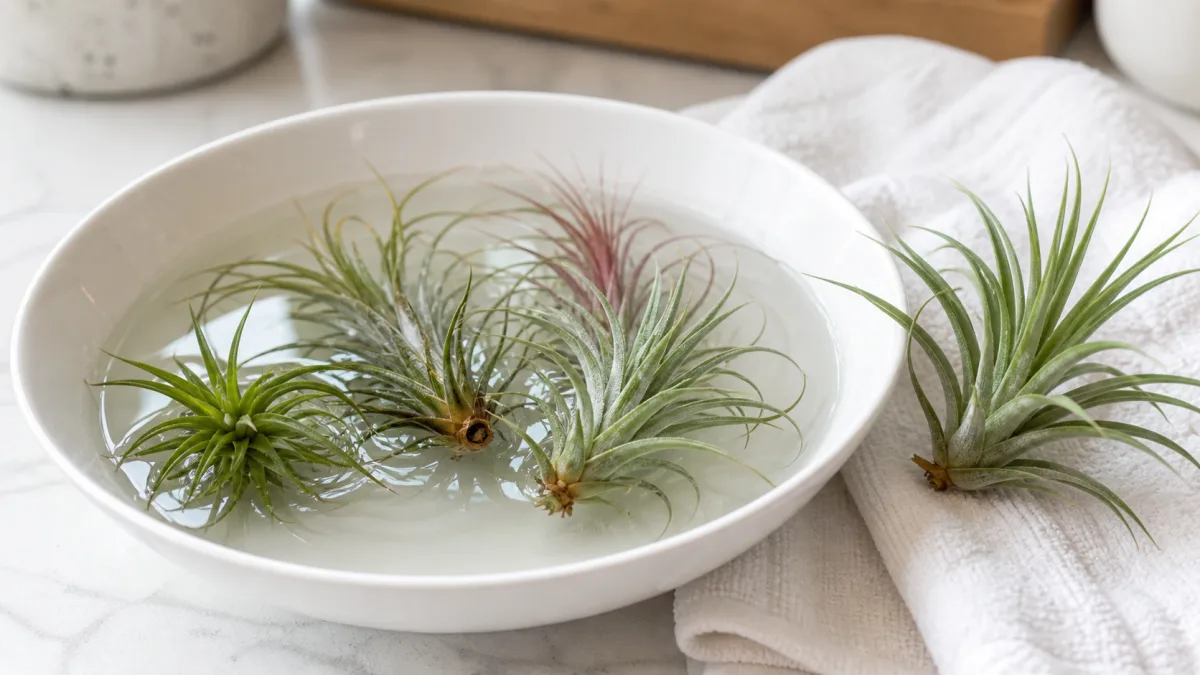
Fill a bowl with room-temperature water. Place the plant in the water so the leaves can hydrate, then avoid leaving delicate blooms submerged longer than needed.
Keep the soak practical
Many air plants tolerate a moderate soak, but exact time depends on species, dryness, and your routine. A shorter soak is often safer for plants that already struggle to dry.
Soak outside the display
Remove the plant from glass, shells, wood, or decorative filler before soaking. This keeps the display dry and gives you a chance to inspect the base.
Shake and drain
After soaking, gently shake out trapped water. Turn the plant upside down or sideways on a towel so water does not sit in the crown or base.
Return it only when dry
Do not put a wet air plant back into a glass globe, shell, or tight holder. Wait until the leaves and base are dry.
Adjust for plant shape
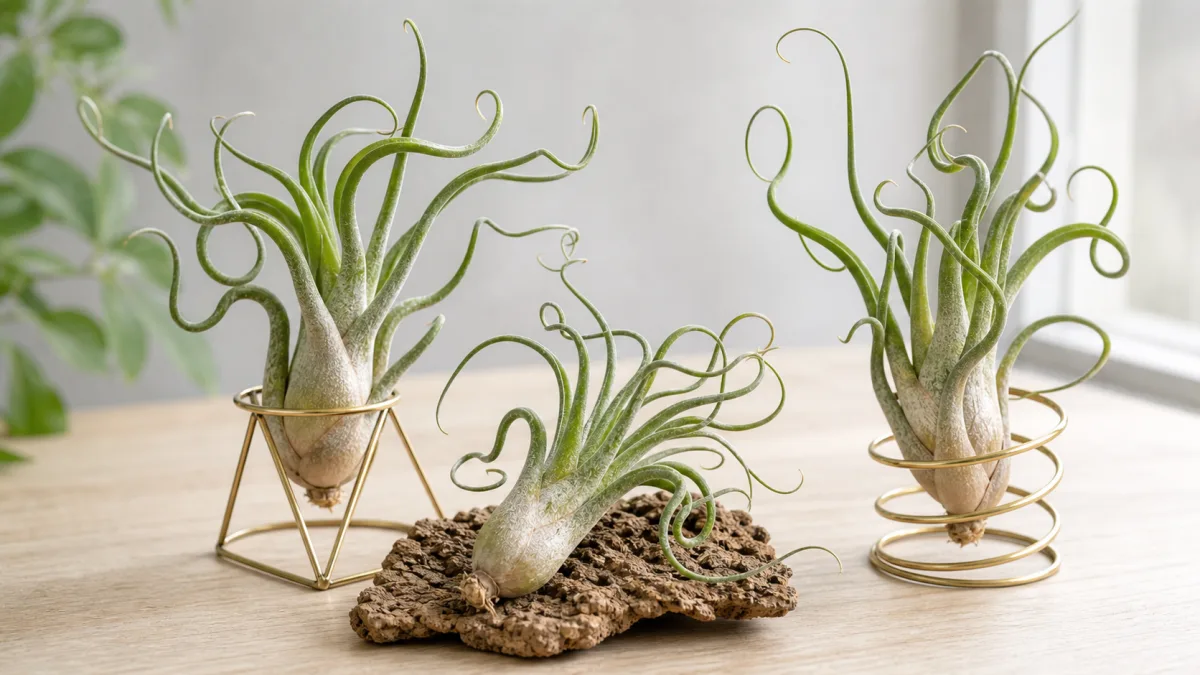
Bulbous or tightly curled plants can hold water after soaking. Give them extra shaking, angled drying, and airflow before returning them to a display.
Know when not to soak
Do not soak a plant with a soft, dark, or sour-smelling base. Let it dry in airflow and review for rot before adding more water.
Watch the response
A successful soak should leave the plant firmer over the next day or two. If it keeps crisping, review frequency and light; if it softens, improve drying and shorten future soaks.
How long to soak air plants
Use soak time as a starting point, not a rule. Many healthy plants do well with a moderate soak, but bulbous plants, humid rooms, and slow-drying displays often need shorter sessions.
When misting is safer
Misting can be safer than soaking for mounted plants, tight shapes, or rooms where drying is slow. If a plant needs deeper hydration, soak it only when you can dry the crown and base fully afterward.
Adjust the watering schedule after soaking
A soak should reset hydration, not force the same watering schedule every week. If the plant stays damp for hours, shorten future soaks or wait longer before watering again.
Air plant soak quick rule
An air plant soak should hydrate the leaves without leaving hidden water in the crown or base. Start moderate, shorten the soak for bulbous or slow-drying plants, and always dry the plant before returning it to decor.