Start with a weekly check
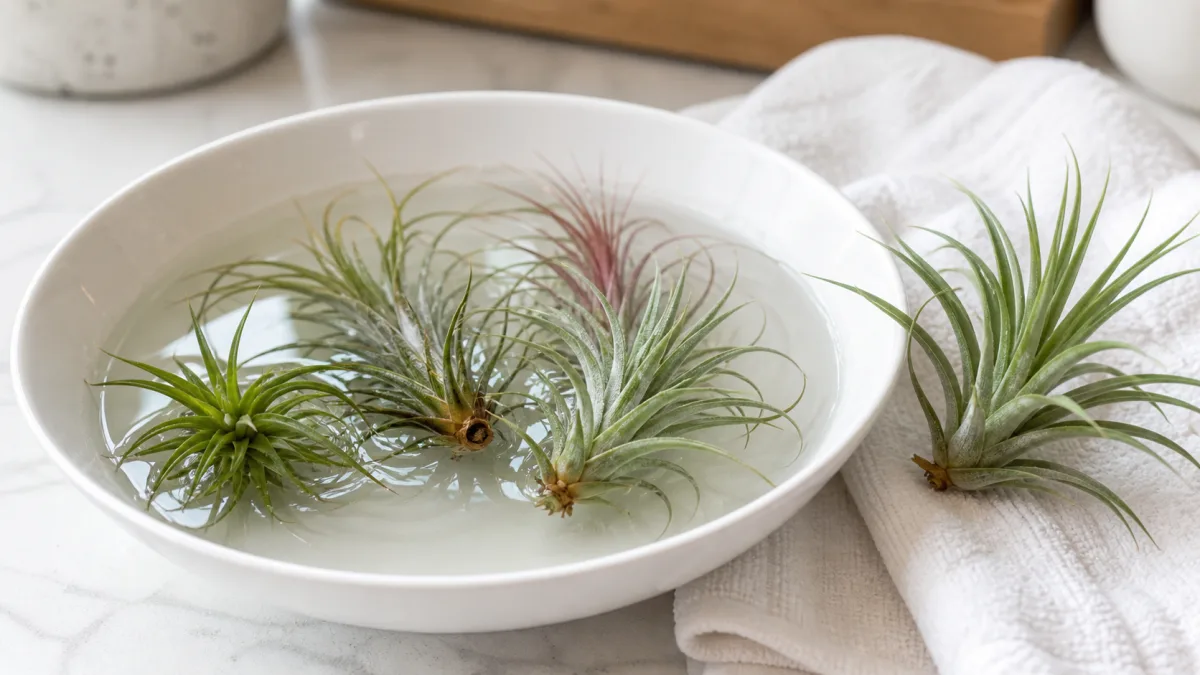
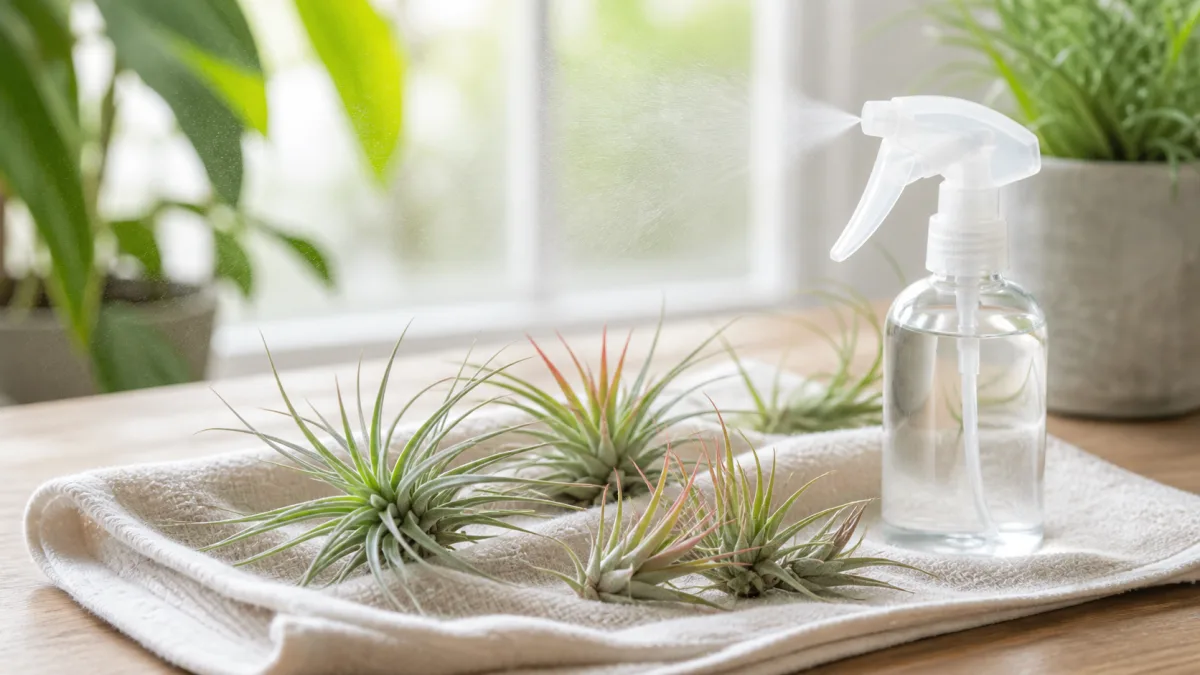
A weekly soak, rinse, or thorough mist is a common starting point for many indoor air plants. This is only a baseline, not a permanent rule.
Adjust for your room
Dry rooms, bright light, heat, and strong airflow can make air plants dry faster. Humid bathrooms or cooler rooms may need less frequent watering.
Watch the leaves
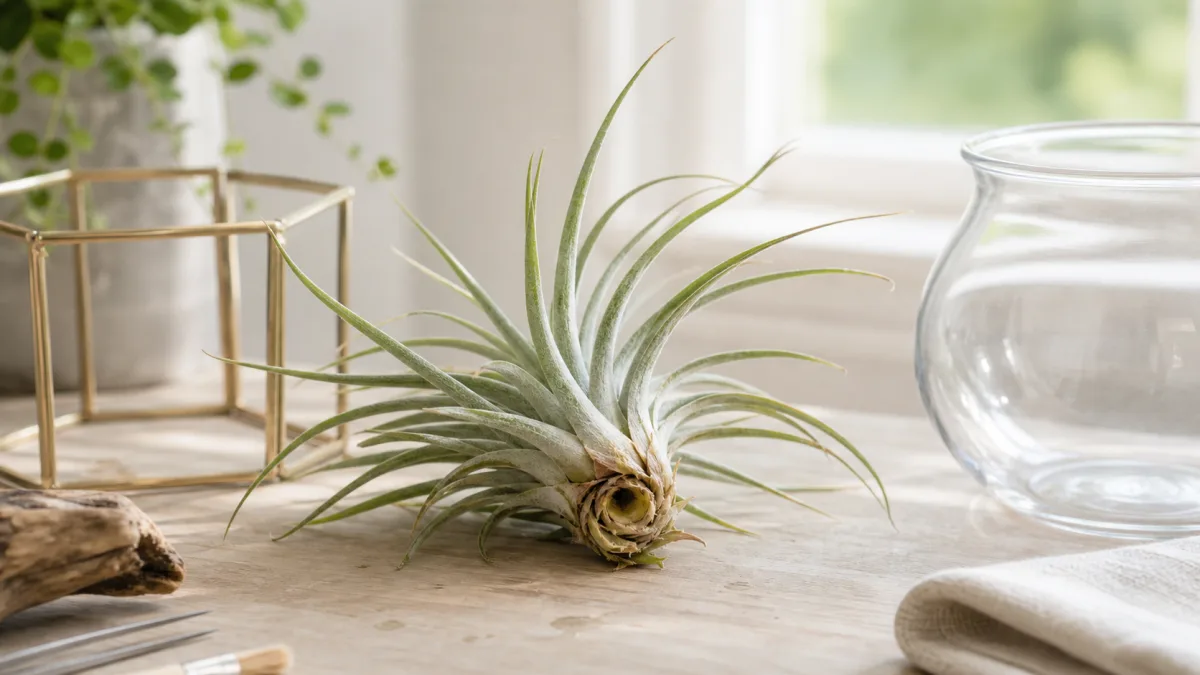
Leaves that curl inward, feel thin, or look dull may point toward dryness. Soft, dark, or mushy bases suggest the plant stayed wet too long.
Match frequency to plant type
Thin-leaved plants often need water sooner than thick or silvery types. Bulbous plants may not need more water, but they do need more careful drying.
Drying is part of watering
After watering, shake off extra water and place the plant upside down or on its side on a towel in bright airflow. The plant should dry fully within a few hours.
Adjust after display changes
A plant in an open dish may dry quickly, while the same plant in glass may stay damp longer. Change the watering schedule when the holder changes.
Recheck after changes
Season, room placement, and display changes can all change watering needs. Revisit the schedule whenever the plant moves or the weather shifts.
Keep a simple rhythm
Use a reminder as a prompt to inspect the plant, not as an automatic command to water. The best frequency is the one that hydrates the plant and still lets it dry fully.
Seasonal watering changes
Watering frequency often changes through the year. Heat, air conditioning, winter heating, brighter windows, and lower humidity can all make plants dry faster. Cooler rooms, bathrooms, and shaded shelves can slow drying and increase rot risk.
A practical schedule test
After watering, note how long the plant takes to dry. If it dries in a few hours and later feels thin or curled, it may need water sooner. If it stays damp for much of the day, reduce frequency, shorten soaks, or improve airflow before watering again.
Do not water by calendar alone
A reminder is useful, but it should prompt inspection. The right schedule is not weekly for every plant forever; it is the rhythm that keeps the plant hydrated while still letting the crown and base dry completely.