Why harrisii is beginner-friendly
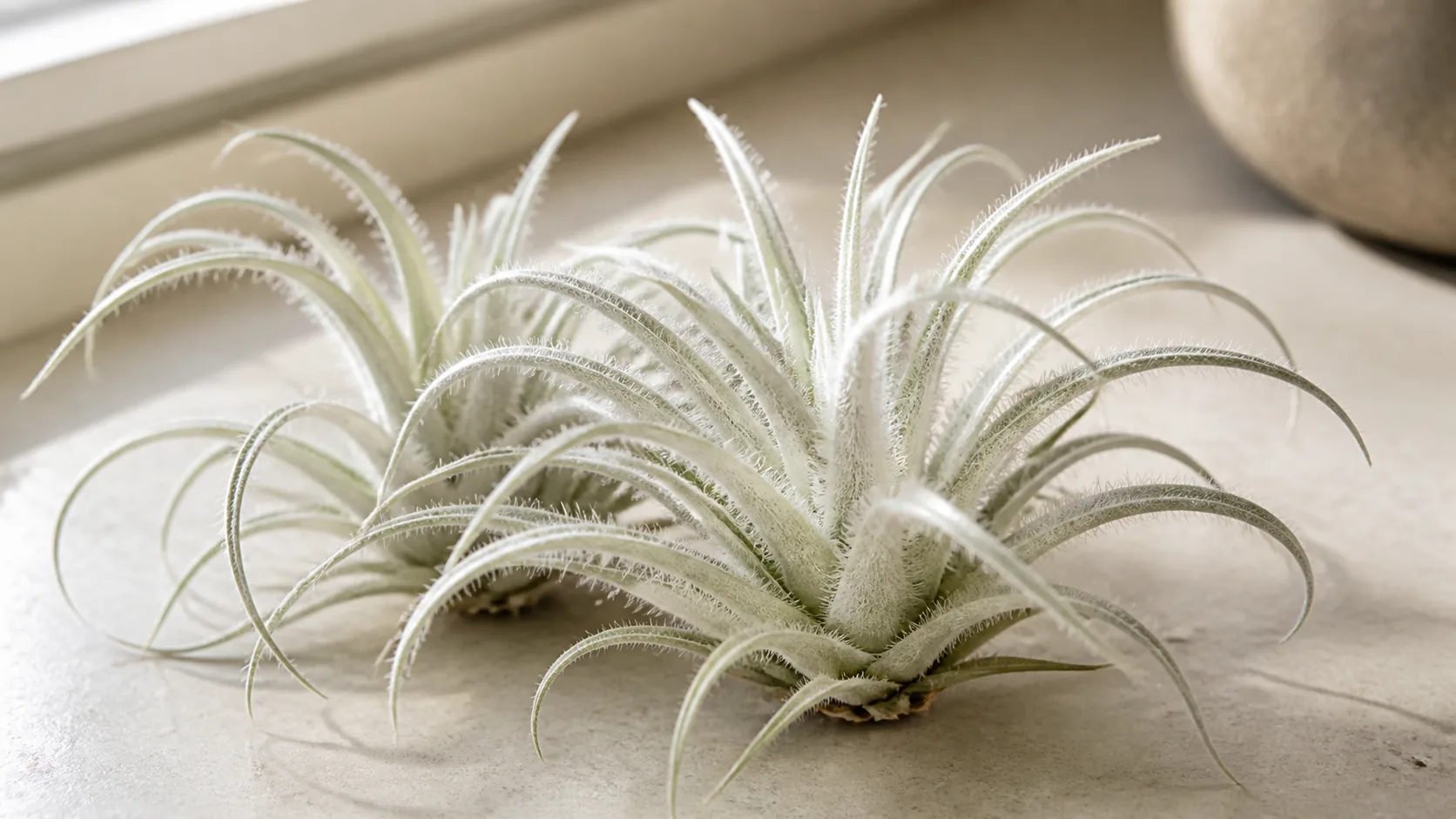
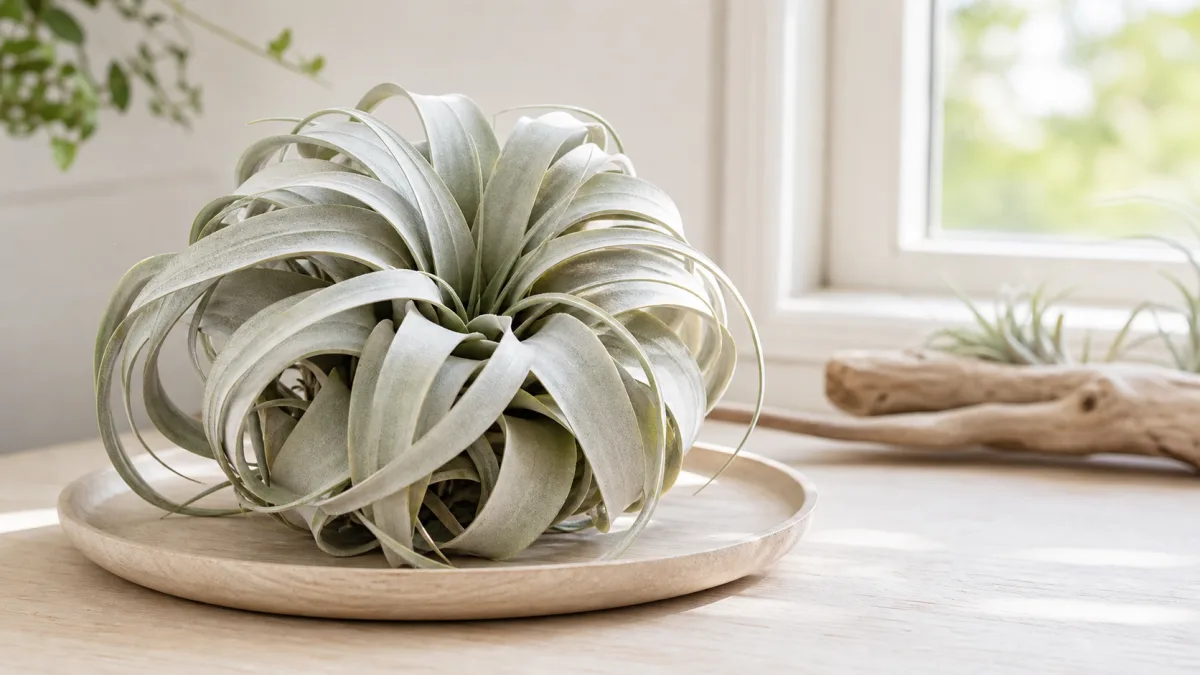
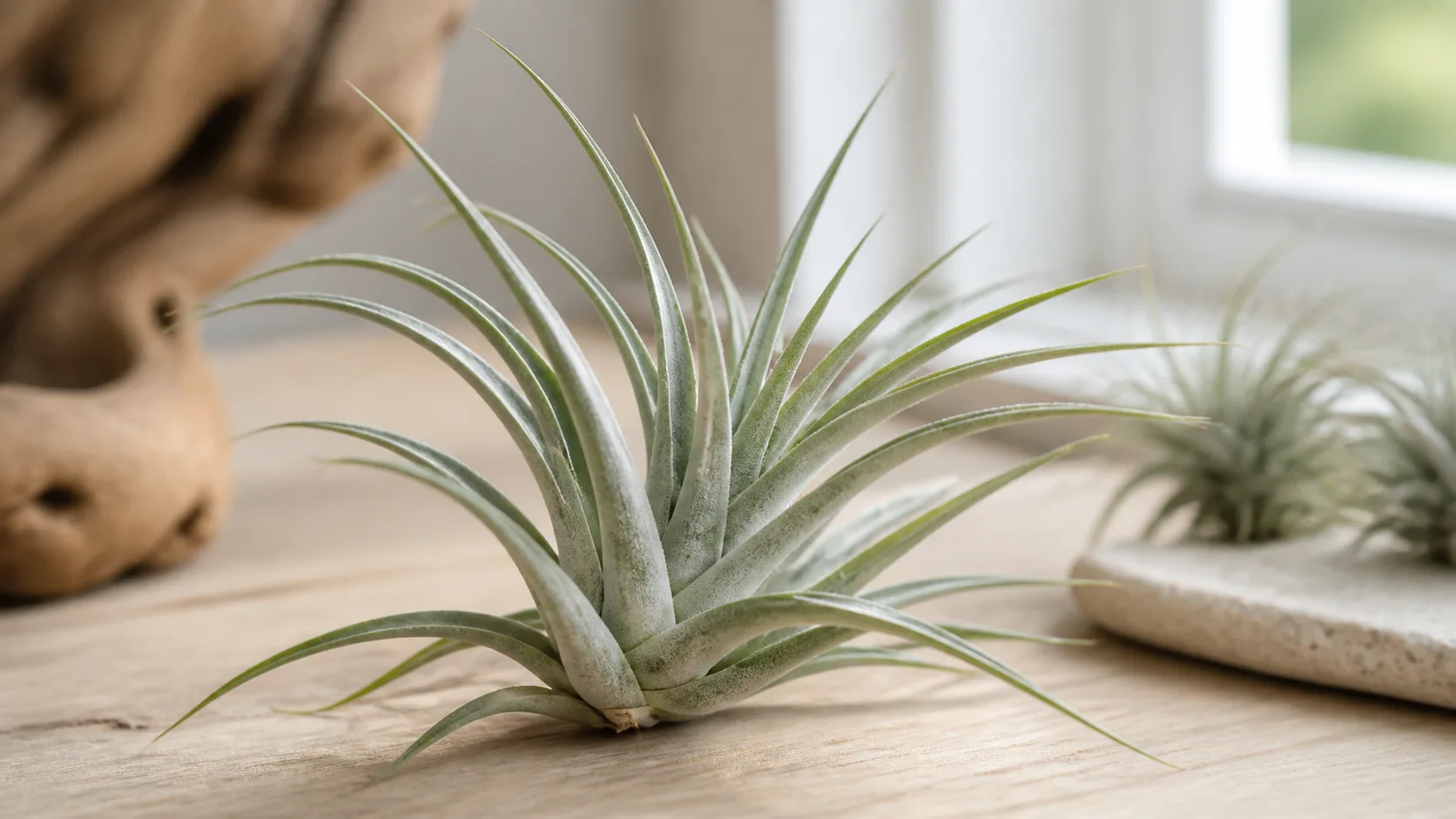
Tillandsia harrisii has sturdy silvery leaves and a clean rosette shape, which makes it easier to inspect than many tight or delicate air plants.
Light needs
Use bright indirect light as the default. Harrisii can handle bright rooms well, but hot direct sun can dry or scorch leaves if watering and airflow are not adjusted.
Watering routine
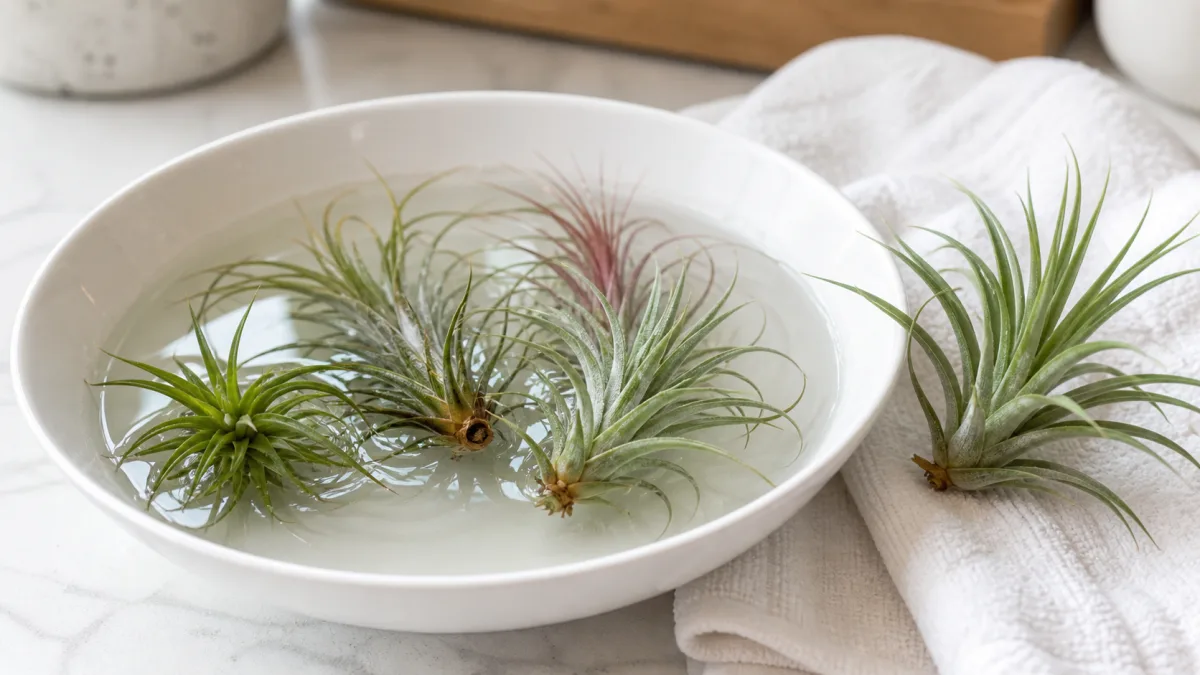
Water thoroughly when the plant feels dry, then let it drain. A moderate soak or rinse can work, but the plant should never go back into decor while the base is wet.
Drying and airflow
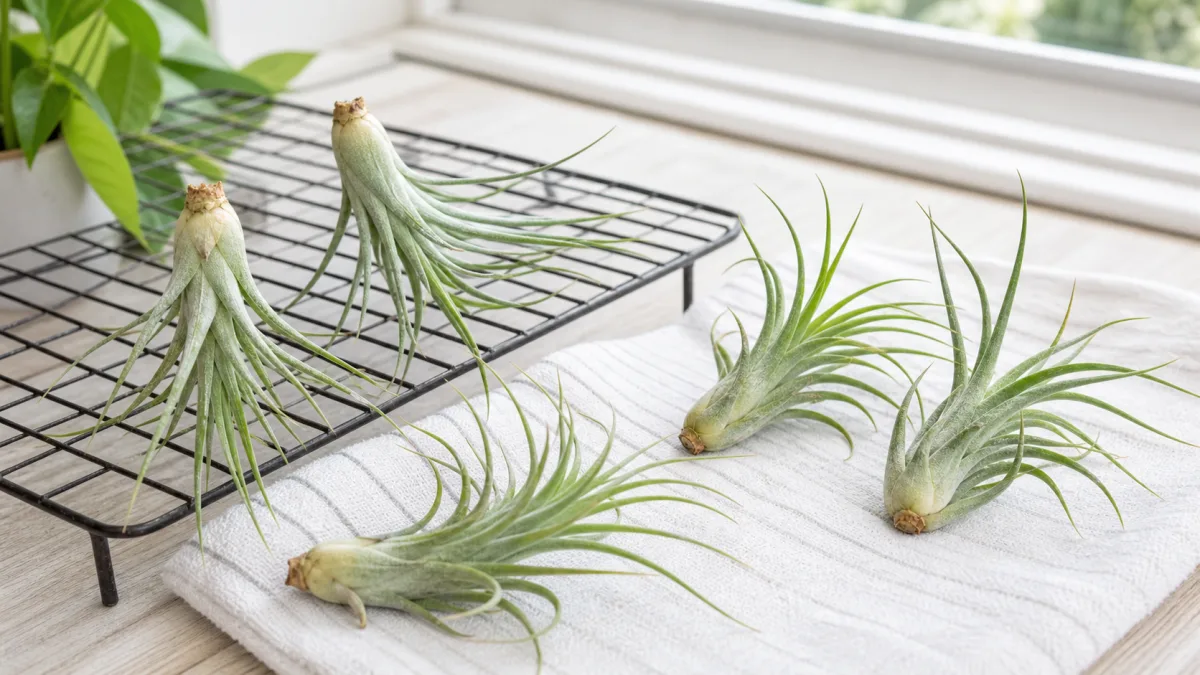
Shake out trapped water and dry harrisii in open airflow. The lower leaves and base should feel dry before the plant returns to a holder.
Display choices
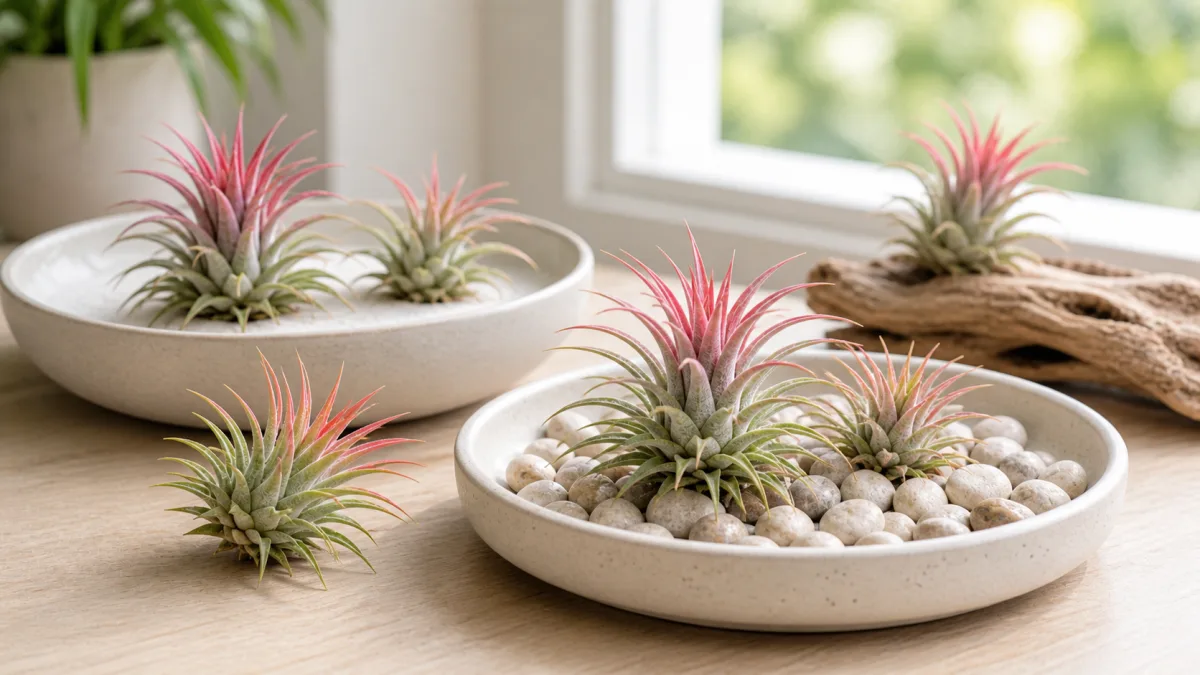
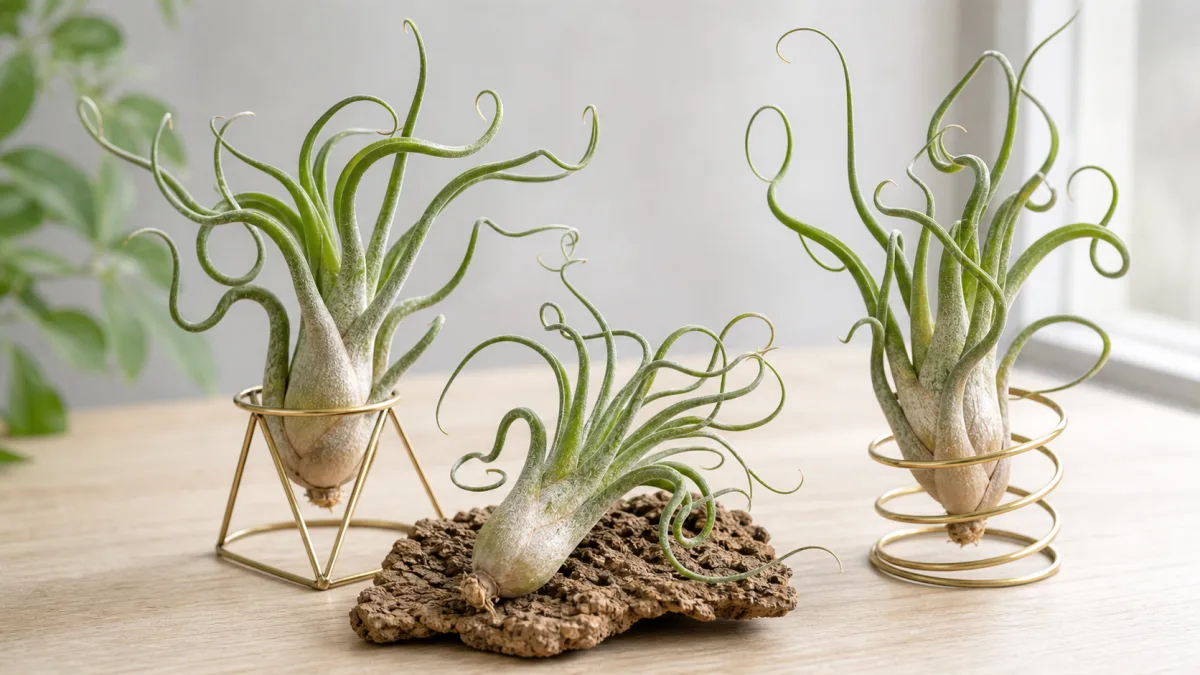
Harrisii works well in open holders, on cork, on driftwood, or on a bright shelf. Avoid deep cups and damp filler that hide the base.
Common mistakes
Do not treat harrisii as a no-care decoration. Weak light, repeated misting in a closed display, or a wet base can still cause slow decline.
Healthy signs
Look for firm leaves, a stable base, and slow steady growth. A few dry tips may be cosmetic, but yellowing, softness, or loose lower leaves need quick attention.
When to adjust care
If the leaves curl tightly and feel thin, review watering frequency. If the base is soft or dark, stop watering, improve drying, and check for rot risk.