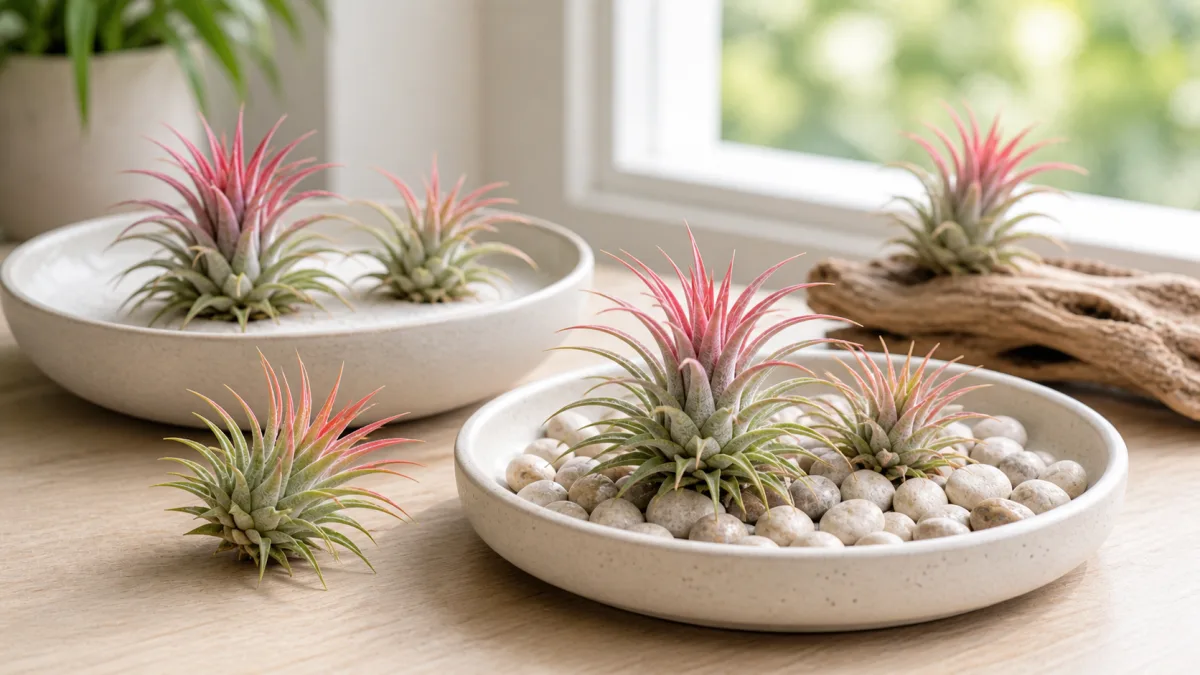
Air plants propagate by pups
Most home growers propagate air plants from pups, also called offsets. These small new plants usually form near the base of a mature Tillandsia after the mother plant blooms. Seed propagation is possible, but it is slow and not practical for most beginners.
Wait before separating
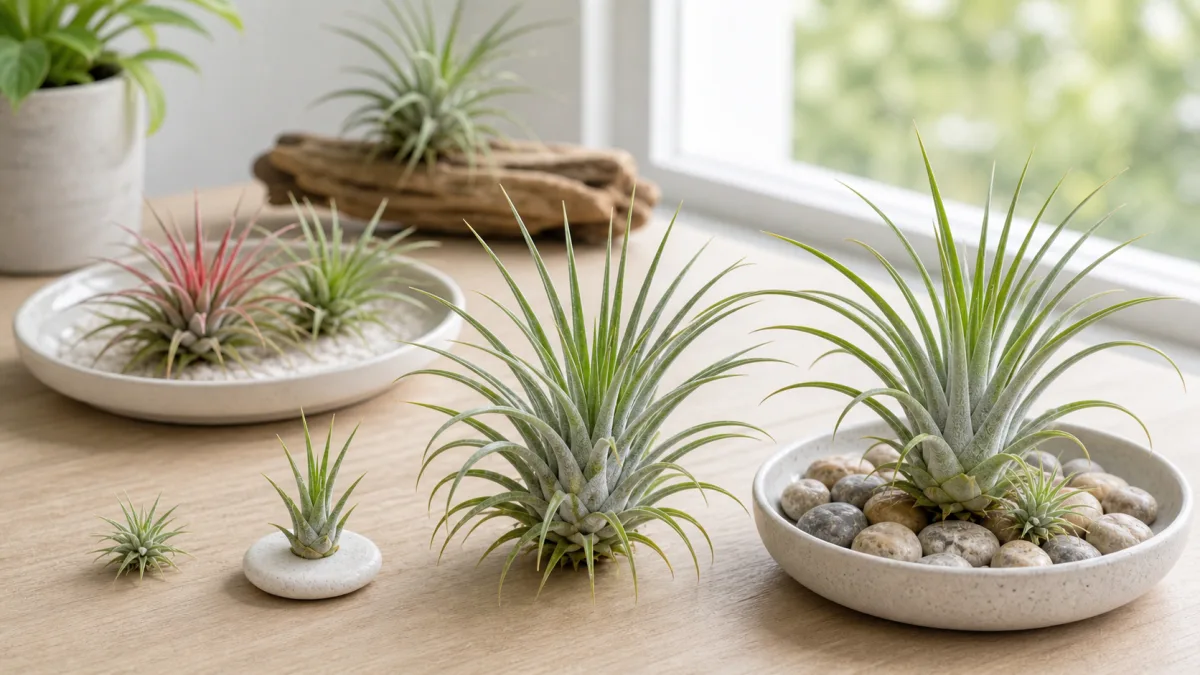
Do not remove tiny pups as soon as you see them. Wait until each pup is about one-third to one-half the size of the mother plant. A larger pup has more stored energy and is easier to handle without damage.
Leave clumps attached if you want
You do not have to separate pups. Leaving them attached can create a larger clump that looks natural and may grow more strongly at first. Separate only when you want individual plants or the mother plant is declining enough that the pup needs its own space.
How to remove a pup
Hold the mother plant near the base and gently wiggle or twist the pup where it joins the plant. If it does not release easily, wait longer or use clean scissors to cut close to the connection point. Do not yank on leaves or tear into the crown.
Care after separation
Treat a separated pup like a small air plant: bright indirect light, careful watering, and excellent airflow. Small pups can dry faster than large plants, but they can still rot if water sits in the base or display.
When not to propagate
Do not separate pups from a plant that is soft, rotting, or falling apart unless the pup is already firm and independent enough to survive. If the mother plant is still firm, keeping pups attached is often the safer choice.
Can you grow air plants from seed?
Air plants can grow from seed, but seedlings are very slow and need controlled moisture, airflow, and patience. For ordinary home care, pups are the realistic propagation method.
Propagation mistakes
The common mistakes are separating pups too early, pulling too hard, watering a fresh pup in a tight holder, and assuming the mother plant is useless after bloom. Keep caring for the mother plant while it supports new growth.