Start with how air plants grow
Air plants are Tillandsia, a group of bromeliads that can grow without soil. Their leaves collect moisture and nutrients, while their roots mainly help them anchor to trees, rocks, or display materials.
Use bright indirect light
bright indirect light is the safest starting point indoors. A bright window, filtered sun, or a suitable grow light can work, but harsh direct sun can dry or scorch some plants.
Water, then dry
Most beginner problems come from either too little water or poor drying after watering. Soak, mist, or rinse the plant based on your home conditions, then place it where air can move around the leaves until it dries fully.
Start with one simple routine
Choose one watering method, one bright placement, and one removable display. Change only one thing at a time so you can tell what helps or hurts the plant.
Keep displays practical
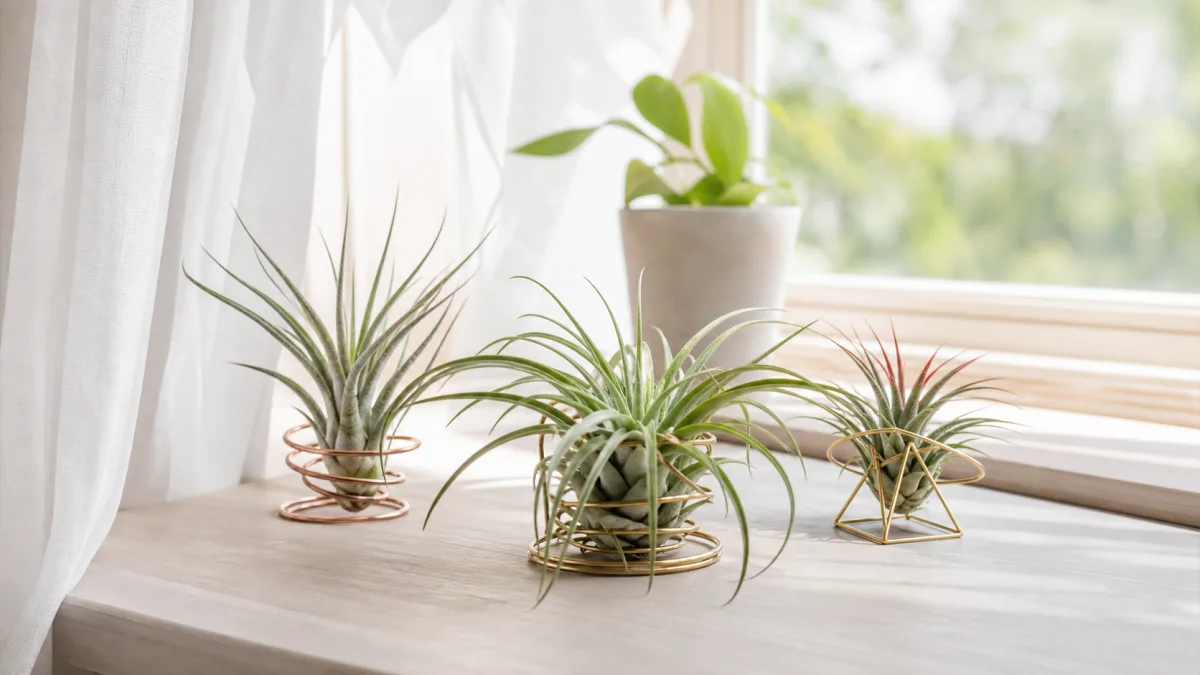
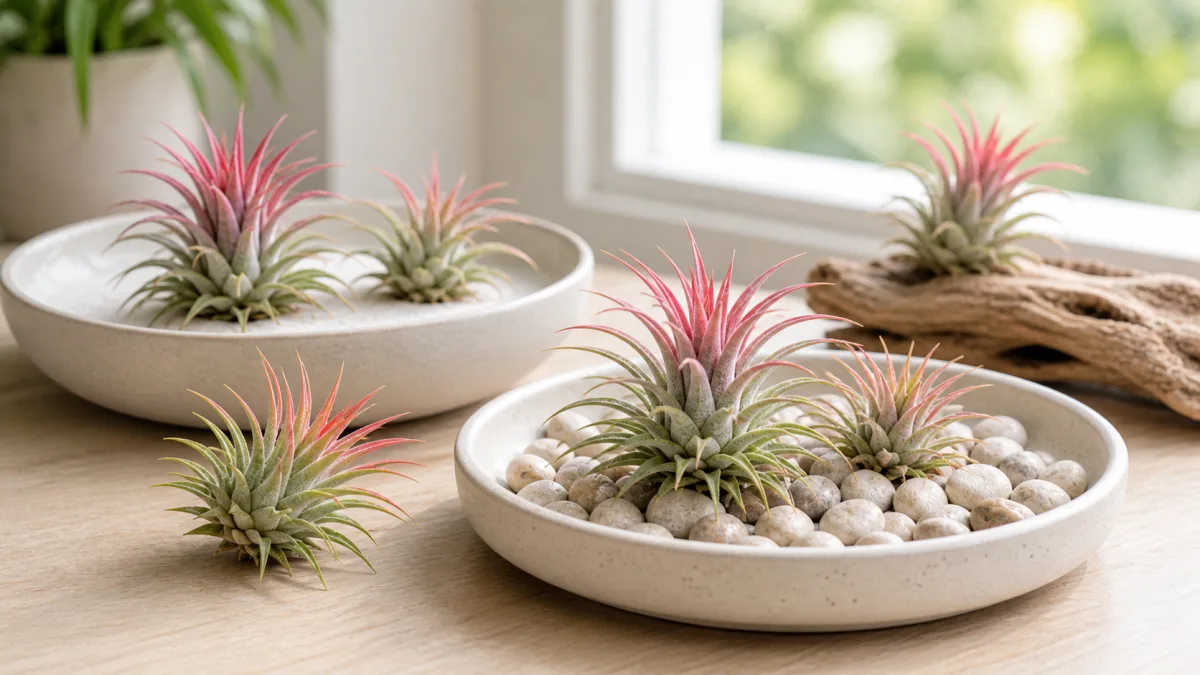
Air plants can look good in holders, shells, glass, or on wood, but the display should not trap water around the base. It should also be easy to remove the plant for watering.
Learn the warning signs
Crispy curled leaves often mean dryness, while a soft dark base suggests trapped moisture or rot. Yellowing, browning, and loose leaves should be read with the base condition in mind.
Feed lightly if needed
Fertilizer is optional for beginners and should be gentle. Use a bromeliad-safe or air-plant-safe fertilizer sparingly, and never use fertilizer to compensate for poor light or drying.
Expect slow growth
Air plants often grow gradually, then bloom and produce pups as part of their life cycle. Stable firmness and healthy new growth are better success signs than dramatic weekly change.
First month routine
For the first month, keep the routine boring on purpose. Place the plant in bright indirect light, water on a simple inspection rhythm, dry it completely after each watering, and avoid sealed displays. Take notes if the room is very dry, humid, hot, or dim.
Beginner mistakes to avoid
Do not plant Tillandsia in soil, leave it wet in glass, glue the base into a holder, or move it between extreme conditions every few days. Also avoid using fertilizer as a fix for weak light, poor drying, or a plant that arrived damaged.
When to use a specific guide
If the plant is crisp and curled, read watering and drying guides. If it is soft, dark, or falling apart, start with rot and problem guides. If it looks stable but slow, focus on light, seasonal rhythm, and patience rather than constant intervention.