Air plants are usually pet-safe
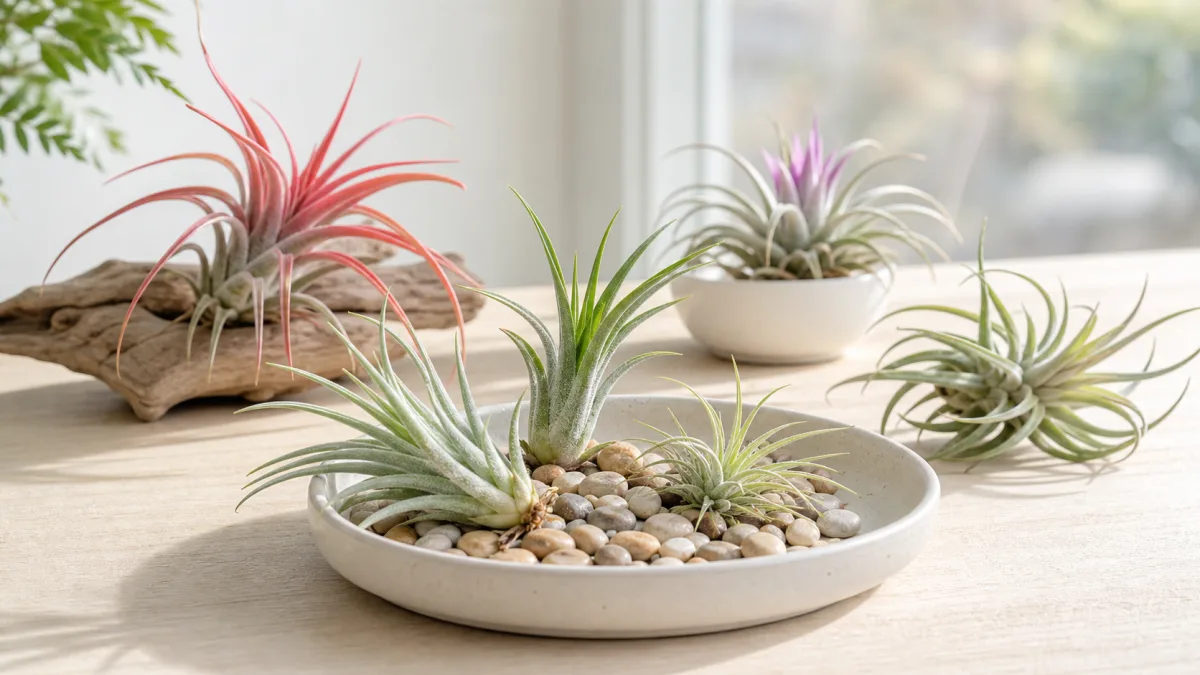
Most common air plants sold for homes are Tillandsia, a bromeliad group usually treated as pet-safe around cats and dogs. That makes them a friendlier choice than many common houseplants for pet homes, especially if you want small decor plants without soil.
Non-toxic does not mean snack
Even when a plant is considered non-toxic, cats and dogs can still vomit or have stomach upset after eating plant material. Air plant leaves are tough, fibrous, and not meant to be pet food. If your pet chews a large amount, acts sick, drools, vomits repeatedly, or seems weak, contact a veterinarian or pet poison hotline.
The plant can be harmed too
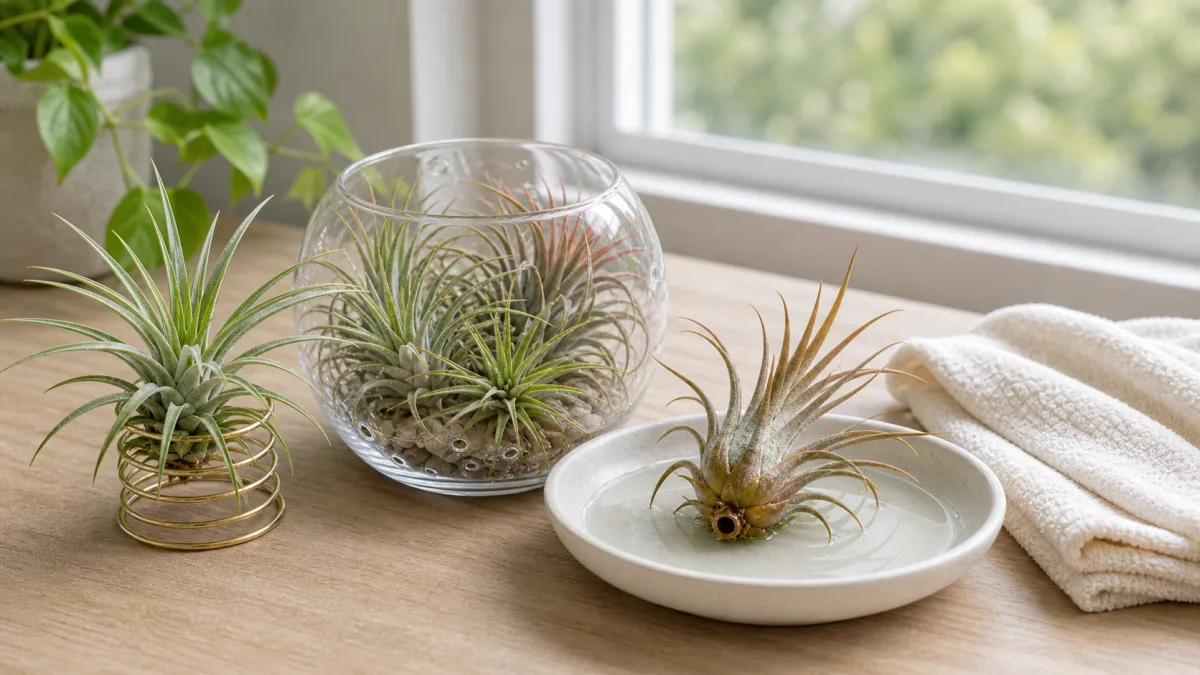
Curious cats often treat air plants like toys. Chewed leaves, torn bases, and plants knocked into water can make the Tillandsia harder to save. A damaged plant needs bright indirect light, gentle watering, and fast drying so torn tissue does not stay wet.
Watch fertilizers and sprays
Pet safety is not only about the plant. fertilizer residue, pest sprays, scented oils, glue, moss, and decorative filler can create a separate risk. Keep recently fertilized plants out of reach until they are dry, and avoid displays that invite licking or chewing.
Safer placement for cat homes
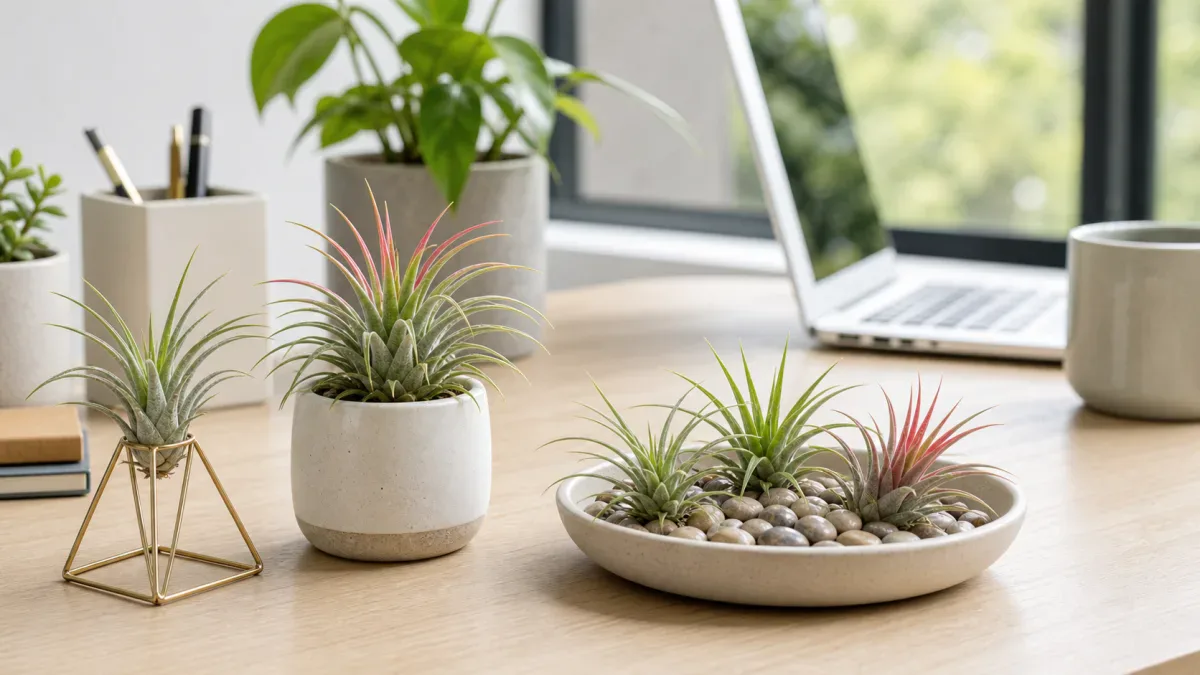
Use a high shelf, hanging holder, wall display, or closed-off bright room where the plant gets light but the pet cannot bat it around. The best setup keeps the plant removable for care while keeping the base visible and dry.
Dogs and air plants
Dogs are less likely to climb for air plants, but puppies may chew fallen displays. Keep loose plants, shells, wires, and small holders away from pets that swallow objects.
What to do if your cat ate one
Remove the remaining plant pieces, check what else was in the display, and watch your pet. If the plant had fertilizer, pesticide, glue, preserved moss, or unknown decorative materials on it, treat the situation more cautiously and call a professional for advice.
Best air plant routine with pets
Choose sturdy, removable displays, water the plant away from pets, dry it fully, and return it to a spot your pet cannot reach. That routine protects both the pet and the air plant.