Air plant roots are anchors
Air plant roots mainly help Tillandsia attach to bark, branches, rocks, and other surfaces. They are not the same as soil roots on potted plants. Air plants absorb most water through their leaves, which is why they do not need soil.
Root growth is normal
Roots do not mean something is wrong. A plant may arrive with no visible roots, then grow them later after settling into a bright, stable spot. Root growth can simply mean the plant is trying to anchor itself.
When trimming is safe
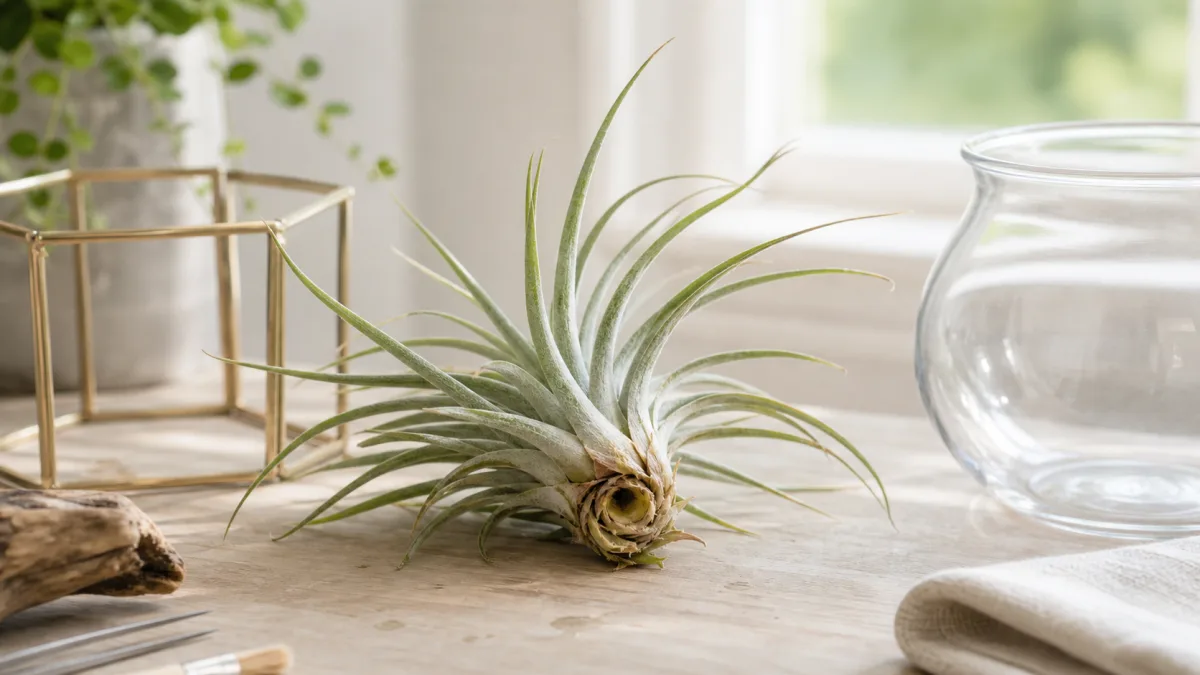
You can trim dry, brown, stringy roots if they look messy or make the plant hard to place in a display. Use clean scissors and cut only the roots below the base. Leave a little space so you are not cutting into firm plant tissue.
When not to trim
Do not trim because the plant looks stressed, soft, or rotting. Roots are rarely the cause of those problems. If the base is soft, black, or falling apart, focus on rot, watering, and drying instead of grooming.
Do roots help displays?
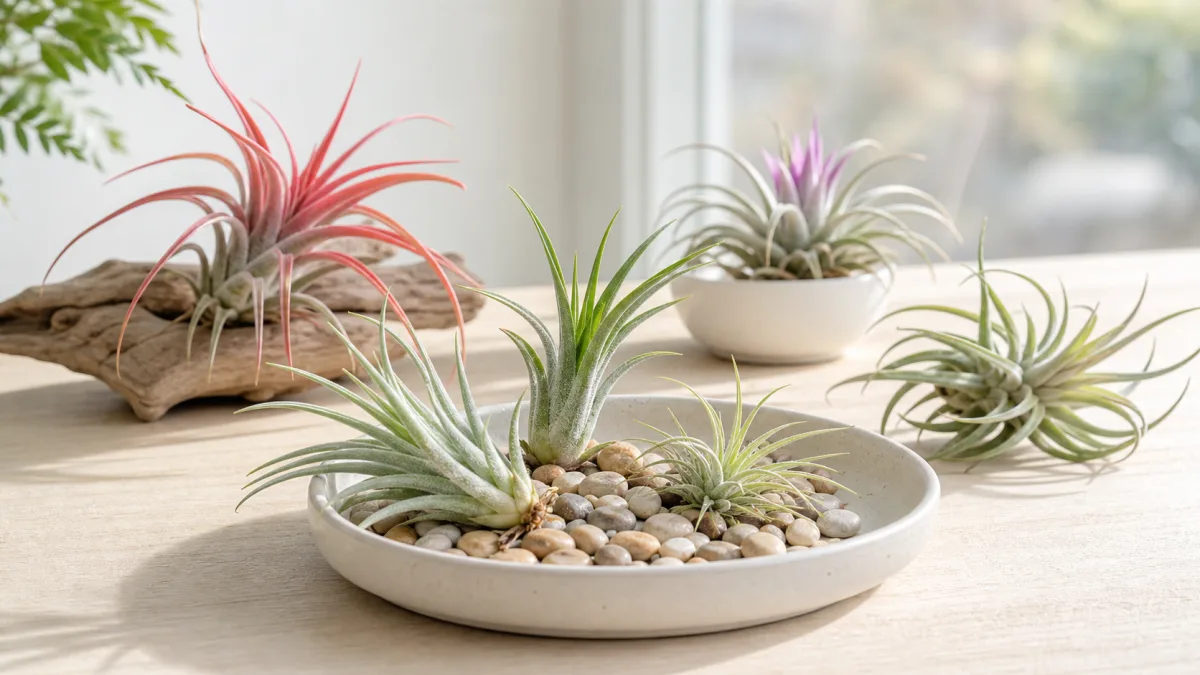
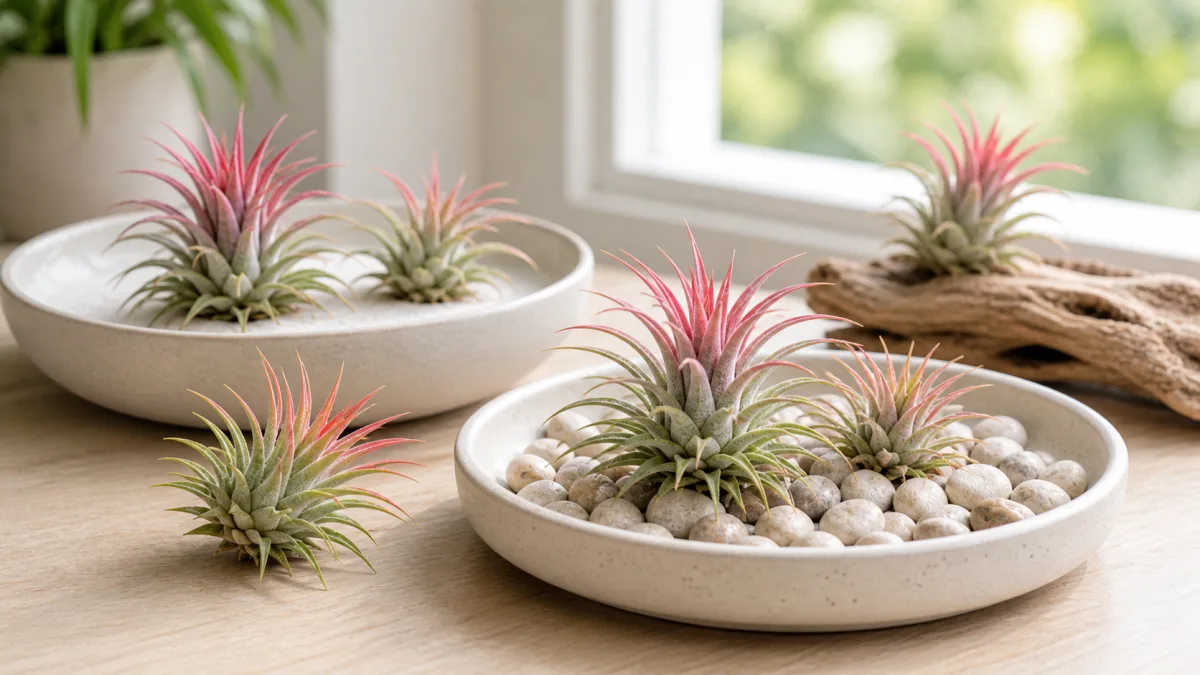
Roots can be useful if you want the plant to grip driftwood, cork bark, or a mounted display. If the plant is loose in an open holder, roots are optional. Keep the display dry enough that roots do not sit in trapped moisture.
How to trim safely
Use clean, sharp scissors. Hold the plant gently near the base, identify only the dry root strands, and snip them without pulling. Avoid tearing roots away from the base because pulling can damage nearby leaves.
Should you remove all roots?
There is usually no need to remove every root. Trim only what interferes with the look or fit of the plant. Leaving roots in place is also fine, especially if they help lift the plant in an open holder.
Roots vs the plant base
Beginners sometimes mistake the lower base for a root mass. If the tissue is firm, green, silver, or part of the leaf cluster, do not cut it. Only dry, papery strands below the plant are safe grooming targets.