Why cork works
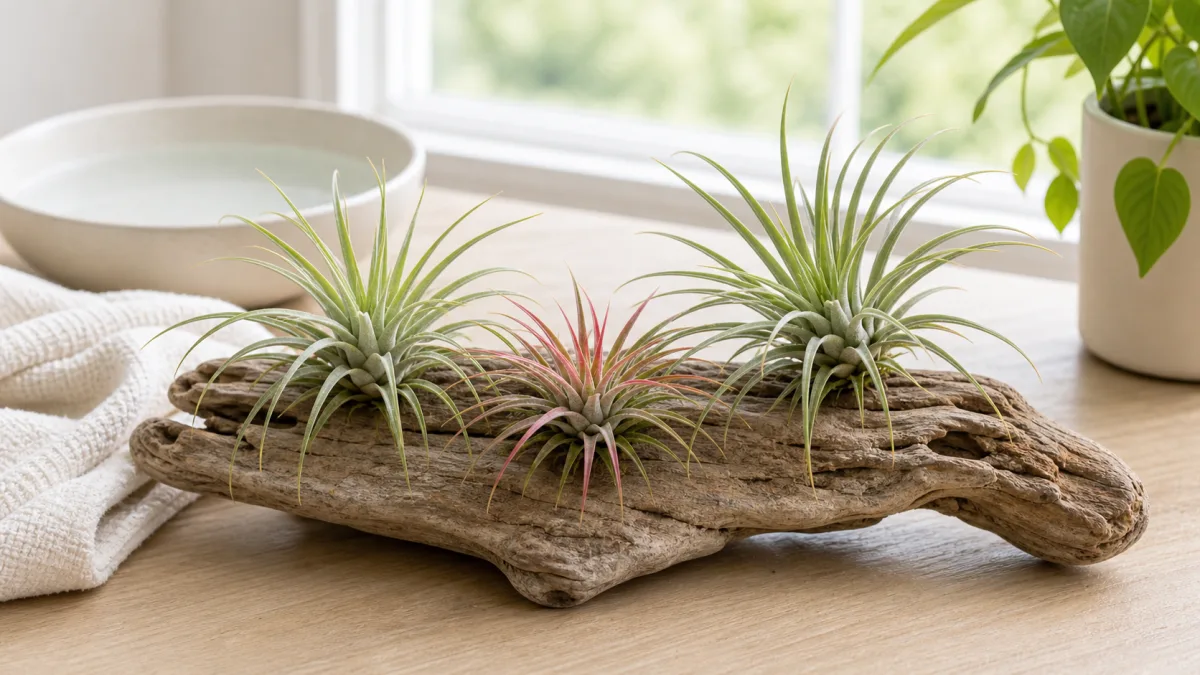
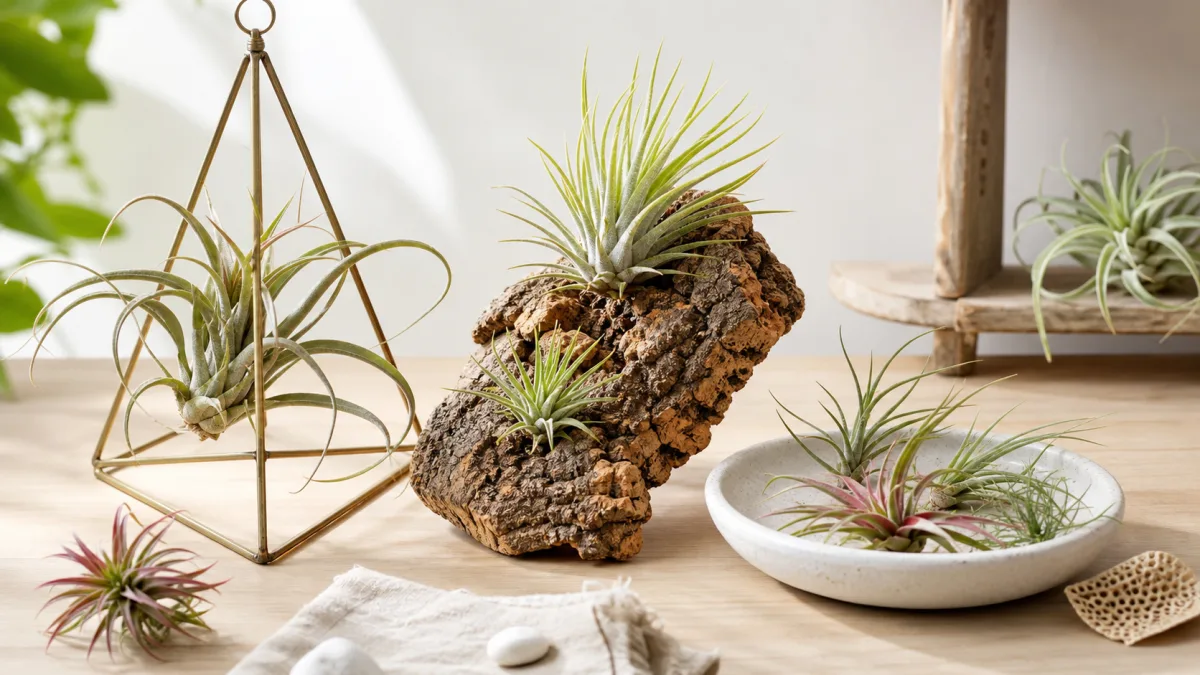
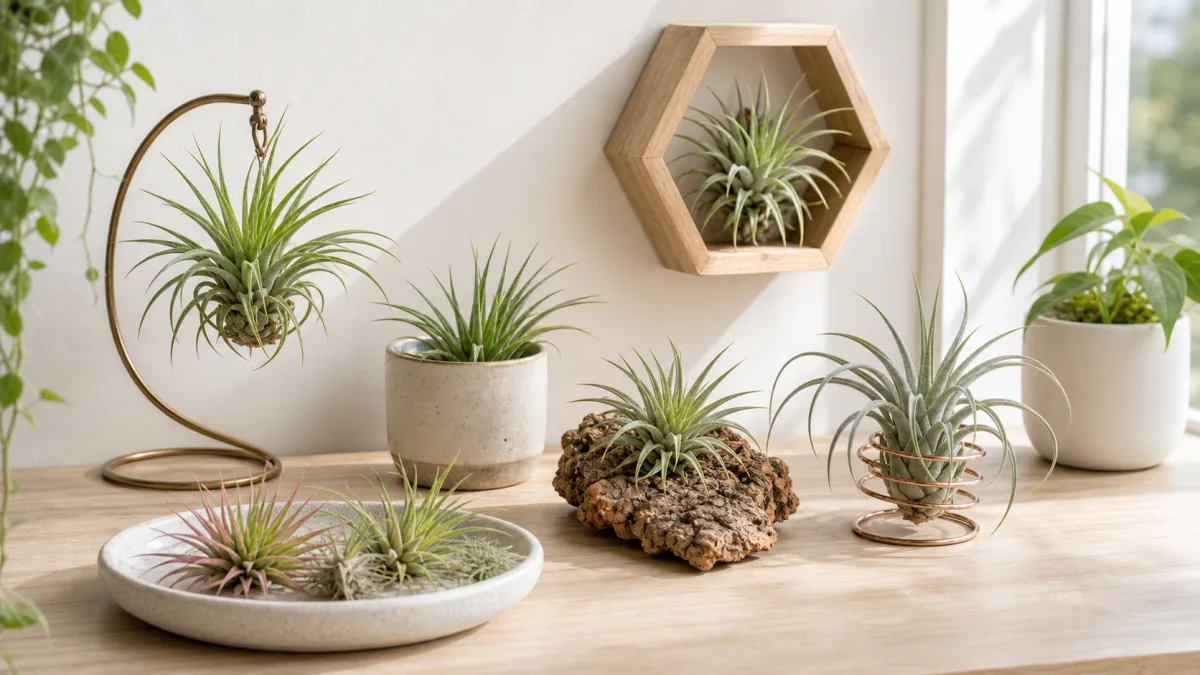
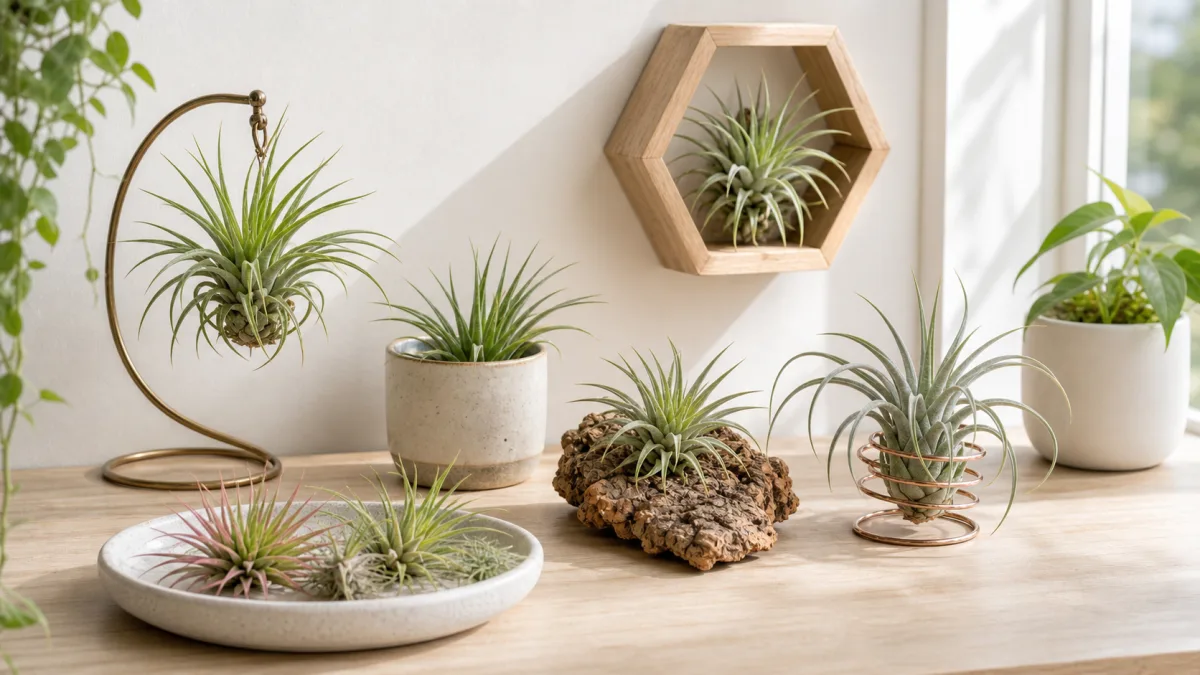
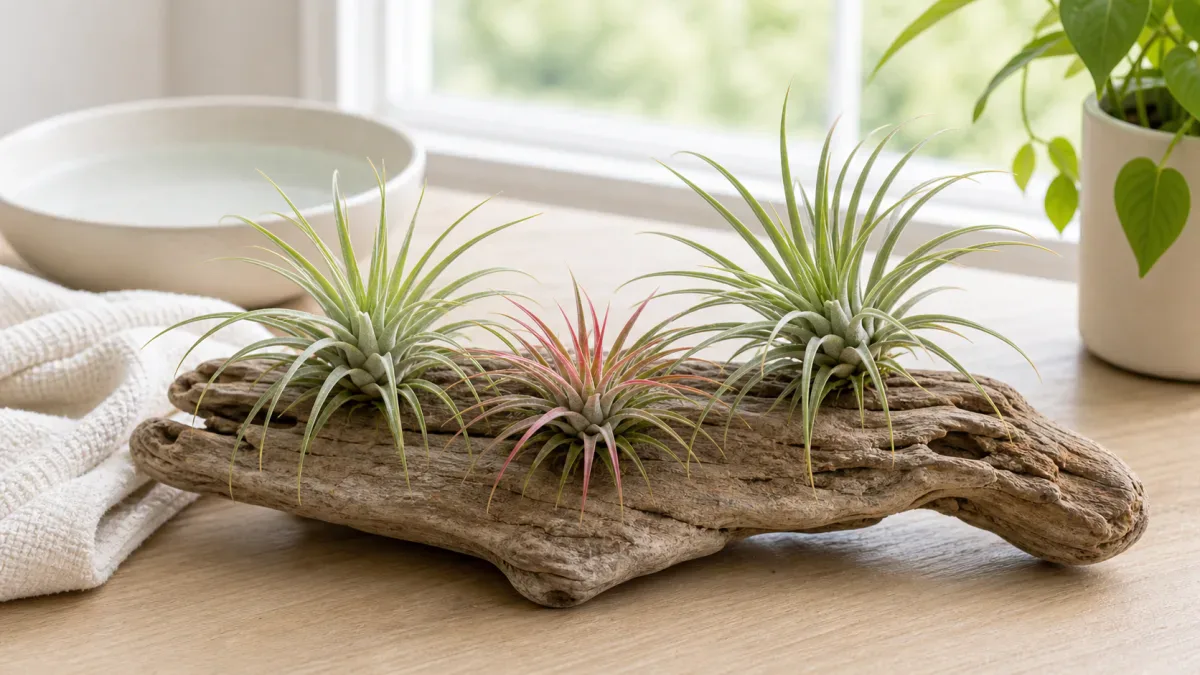
Cork bark gives air plants a textured, natural-looking surface and usually dries better than deep containers. It also makes it easier to keep the plant base visible and open to air.
Attach lightly
Use plant-safe wire, gentle ties, or a small amount of appropriate adhesive only where it will not seal the base. The plant should be secure, but not buried or squeezed.
Watering mounted plants
Mounted plants may be misted, rinsed, or soaked with the mount if the whole piece can dry quickly. If the cork stays damp for hours, remove the plant for watering or use a lighter routine.
Keep airflow open
Do not pack wet moss around the plant. Moss can look decorative, but damp moss near the base can undo the airflow advantage that makes cork useful.
Choose the right plant
Small rosette plants and compact species are often easier to mount on cork than large plants with heavy crowns. Bulbous plants need extra space so the base can dry.
Placement tips
Hang or set cork mounts where they receive bright indirect light and can be inspected easily. Avoid pressing the mount flat against a wet wall, window, or closed terrarium.
Watch the attachment point
After watering, check the exact place where the plant touches cork. Moisture can hide under ties, glue spots, or leaf bases even when the front looks dry.
Refresh the mount
If the cork collects mineral residue, dust, or old plant debris, clean it gently and reset the plant. A mounted display should stay easy to inspect, not become a hidden damp pocket.