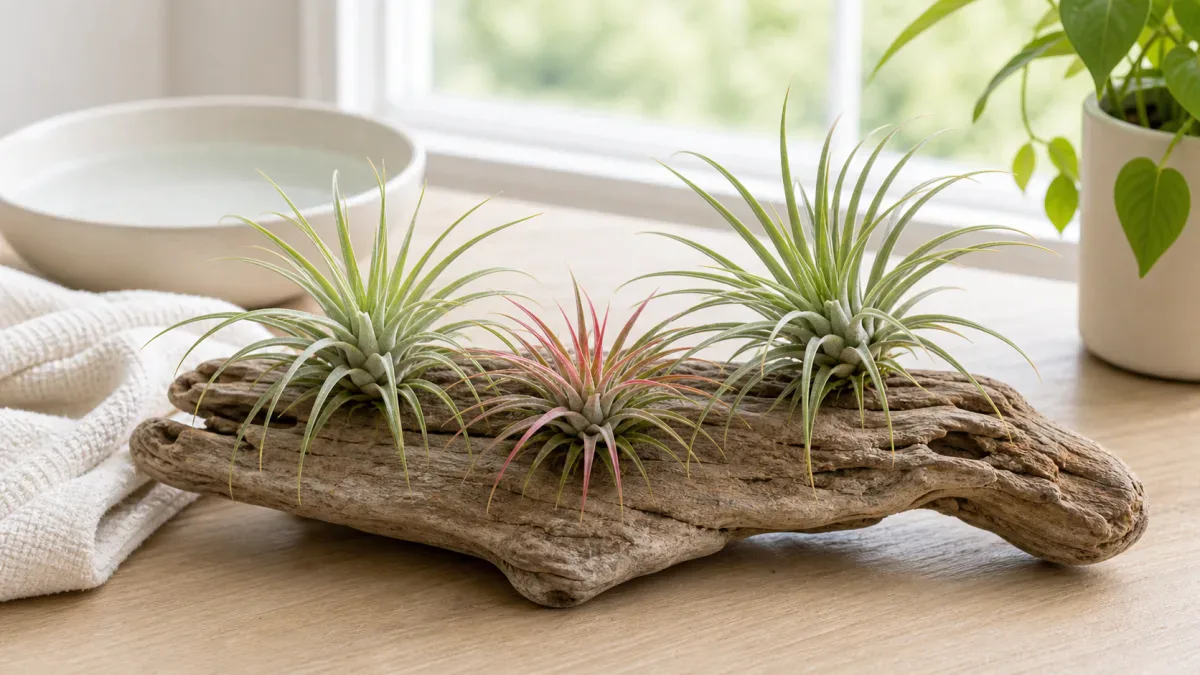
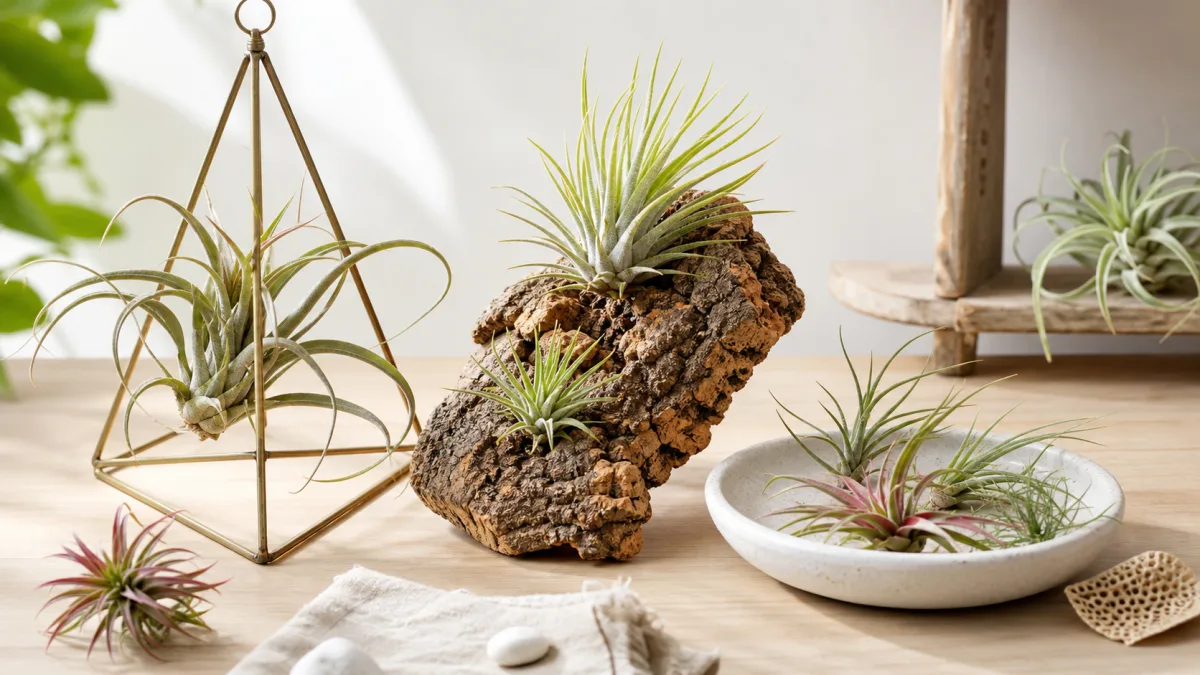
Gluing can work, but it is not always best
Air plants can be mounted to wood, cork, shells, rocks, or other displays because they do not need soil. Glue can hold a plant in place, but it can also make watering, inspection, and drying harder if the plant cannot be removed.
The safest display is removable
For beginners, a removable display is usually better than glue. The plant should lift out for soaking, rinsing, drying, and base checks. If a glued display prevents normal care, the display is working against the plant.
Where glue can be used
If you choose glue, apply a small amount only near dry lower root or base material, not over the crown or living leaf cluster. The goal is to anchor the plant lightly, not seal the base or cover tissue that needs airflow.
Avoid hot glue on living tissue
Hot glue can burn or damage plant tissue if applied too hot. Strong craft adhesives can also be risky if they cover the base or stay tacky. Let any adhesive cure fully before watering the display.
Better alternatives to glue
Use natural hollows, loose wire, fishing line, plant-safe ties, open holders, cork bark pockets, or driftwood grooves. These methods can hold the plant while still letting you remove it or inspect the base.
How to water glued air plants
If the plant is permanently mounted, misting or careful rinsing may be more practical than soaking the entire display. The display and plant still need to dry fully. Wet wood, moss, shells, or tight glue points can raise rot risk.
Removing a glued air plant
If a store-bought plant is glued, do not yank it free. Inspect whether the glue is on dead root material, lower dry leaves, or the living base. If removal would tear the plant, it may be safer to improve watering and airflow around the display.
Glue red flags
Avoid plants glued into sealed glass, damp moss, tiny cups, shells that hold water, or displays where the base is hidden. A healthy display should keep the base visible, dryable, and easy to inspect.