
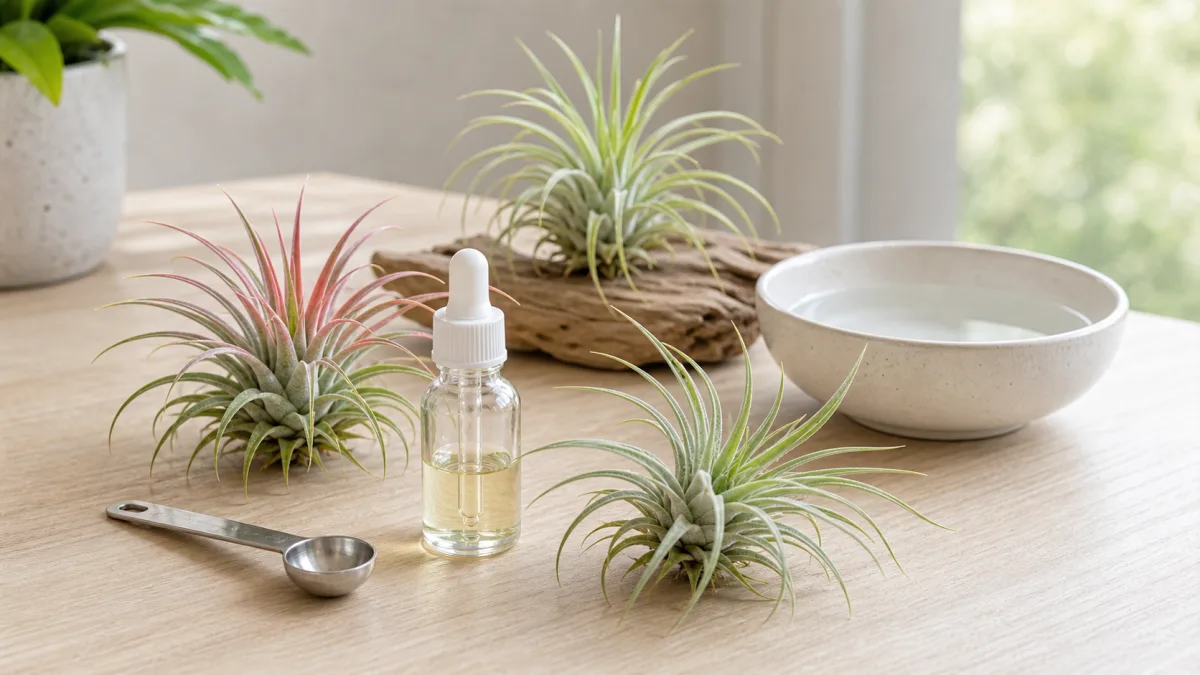
Fertilizer is optional support
Fertilizer can help a well-cared-for plant grow, but it does not fix poor light, dehydration, or rot. Get the basic routine stable before adding feeding.
Use the right kind
Use a product intended for bromeliads or air plants when possible. Avoid strong household fertilizers that may be too concentrated or contain unsuitable forms of nutrients.
Dilute and use occasionally
Air plants are not heavy feeders. A weak solution used occasionally is safer than frequent strong feeding, especially for beginners.
Feed only healthy plants
Fertilizer works best when the plant already has bright light, regular hydration, and full drying. A weak, rotting, or newly stressed plant needs better conditions first.
Watch the plant
If leaf tips brown after fertilizing, review concentration, water quality, and how often you fertilize. Fertilizer residue can add stress when the routine is already marginal.
Rinse and dry well
After fertilizing, do not leave fertilizer water trapped in the crown, base, or display. Drying rules still apply, even with a gentle feed.
When to skip feeding
Skip fertilizer when a plant is newly arrived, rotting, severely dry, or sitting in weak light. Stressed plants usually need better conditions before they need nutrients.
Keep expectations realistic
Fertilizer may support growth and blooming, but it will not create fast houseplant-style growth. Air plants naturally change slowly.
Best next step
Start with one weak feeding on a healthy plant and watch the next few weeks. If tips brown, residue appears, or the plant dries more slowly after feeding, reduce strength, feed less often, or pause fertilizer entirely.
Common fertilizer mistake
Do not combine a new fertilizer, a new water source, and a new light location at the same time. Change one variable at a time so you can tell whether the plant is reacting to nutrients, minerals, drying speed, or light.


