Fertilizer is not the foundation
Light, water, drying, and airflow matter more than fertilizer. Feed only after the basic routine is stable.
Choose the right formula
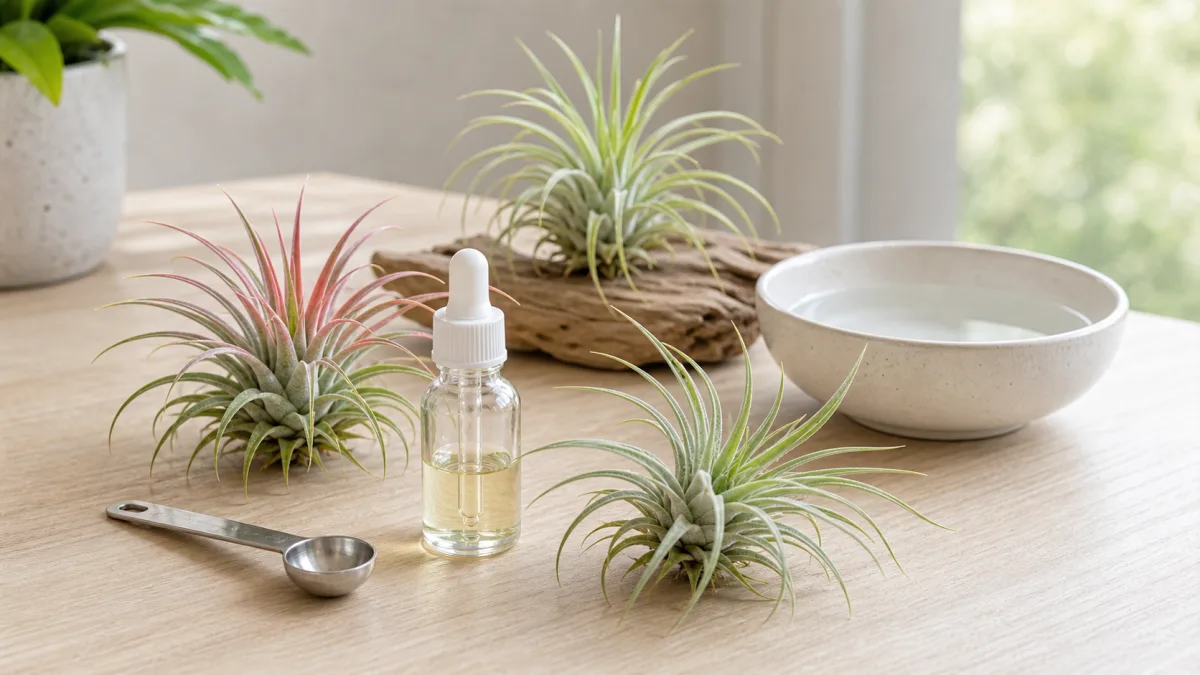
Look for products intended for air plants or bromeliads. Avoid strong general-purpose fertilizers that may be too concentrated for Tillandsia leaves.
Dilution matters
Air plants are not heavy feeders. A weak solution used occasionally is safer than frequent strong feeding.
Skip stressed plants
Do not fertilize plants that are rotting, newly shipped, severely dry, or stuck in low light. Correct conditions first.
Watch for residue
Brown tips or residue after feeding can mean the solution is too strong, the water source is mineral-heavy, or fertilizer is being used too often.
Buying criteria
Prioritize clear dilution instructions, bromeliad or air-plant suitability, gentle concentration, and packaging that makes accidental overuse less likely.
Use with normal drying
Fertilizer water should not sit in crowns, bulbous bases, or closed displays. Dry the plant exactly as carefully as after normal watering.
Best next step
If the plant is growing steadily, holding color, and drying reliably, choose a gentle bromeliad or Tillandsia fertilizer and start weaker than the label maximum. Keep notes so brown tips or residue can be traced back to feeding changes.
Common fertilizer mistake
Fertilizer should not be used to rescue a stressed plant. Fix light, watering, and drying first; feeding a rotting, newly shipped, or dehydrated plant can add stress instead of helping recovery.