Start with airflow
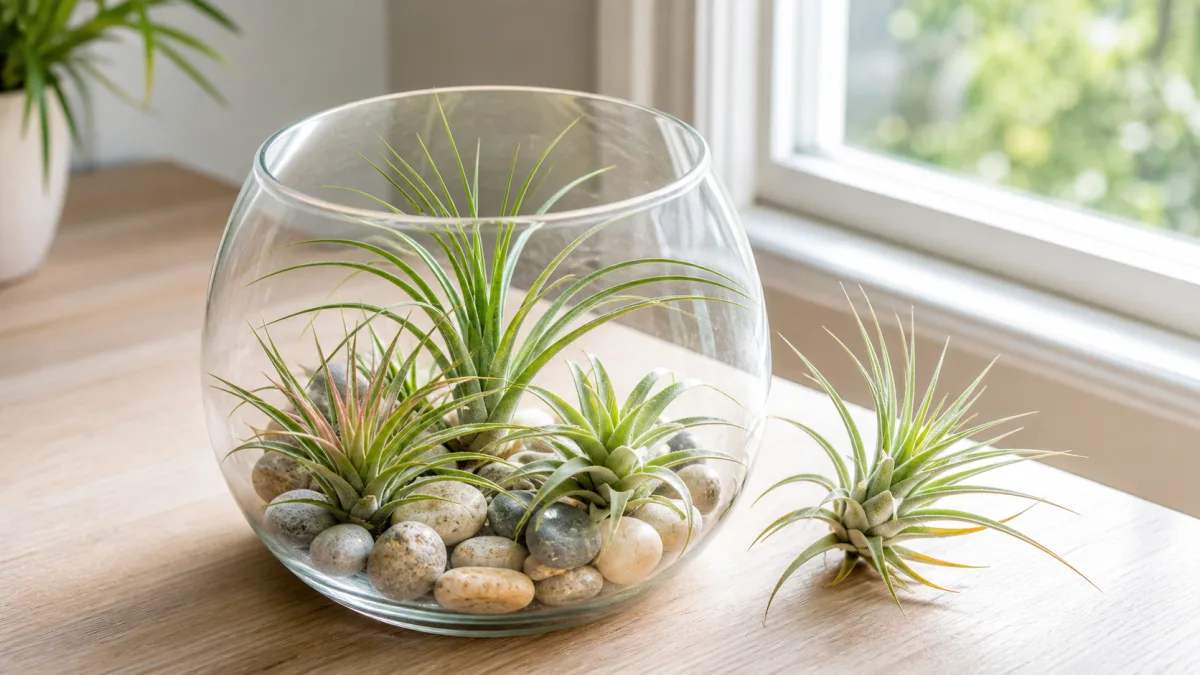
Air plant terrariums should support airflow first. Wide openings and shallow shapes are easier to manage than closed jars or narrow-neck glass.
Choose removable designs
The plant should lift out for soaking, rinsing, drying, and inspection. A terrarium that traps the plant in place makes routine care harder.
Keep filler dry
Sand, stones, shells, and glass can work decoratively, but they should not stay wet around the base. Damp moss and soil-like filler are risky.
Match size to the plant
The container should not bend leaves, wedge the base, or hide early rot signs. Leave enough room to remove and inspect the plant easily.
What to avoid
Avoid sealed containers, tiny globes with narrow openings, and terrariums that encourage watering inside the glass. Condensation means the setup is too wet.
Good beginner picks
A shallow open bowl, a wide geometric glass vessel, or an open hanging globe can work when the plant remains removable.
Buying criteria
Look for a wide opening, stable base, cleanable material, dry filler options, and enough space for airflow around the plant.
Best next step
Pick the terrarium shape after deciding how the plant will be removed for watering. A wide opening, dry filler, and enough room around the leaves make the display easier to clean, inspect, and correct before rot starts.
Common terrarium mistake
Do not water the plant inside the glass. Water outside the terrarium, shake out trapped droplets, dry the plant in open airflow, and return it only after the base is fully dry.