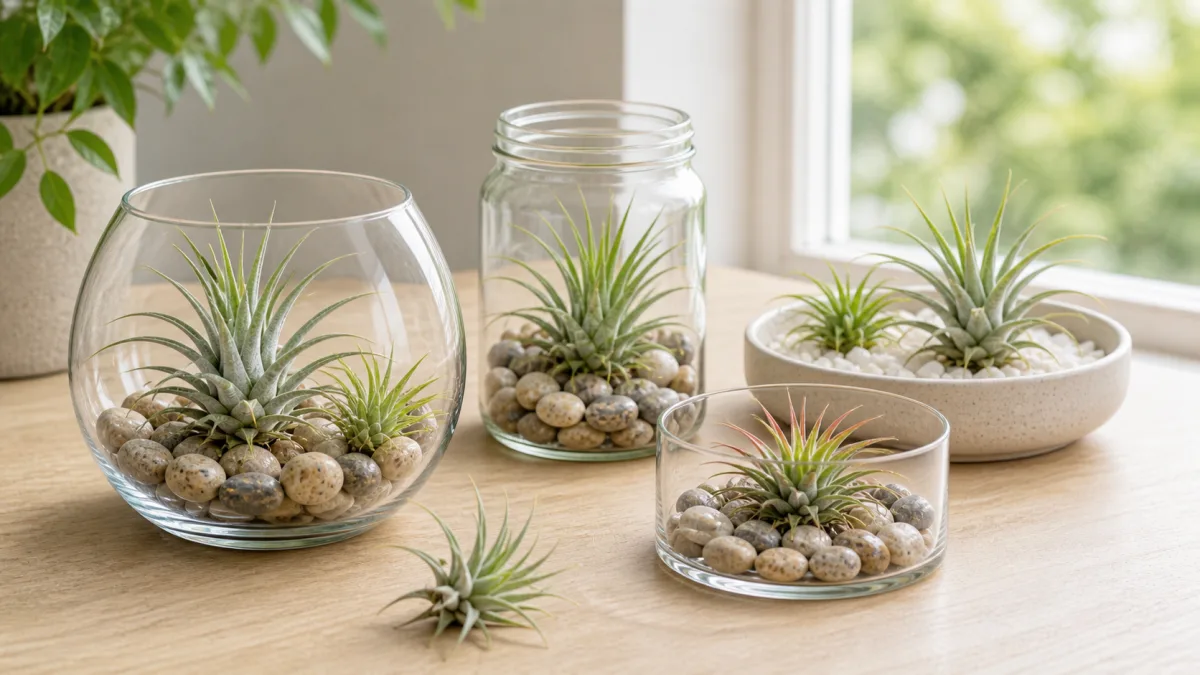
Choose open containers
Open glass containers can work when they allow air exchange. Sealed terrariums are usually too humid and stagnant for most air plant routines.
Water outside the terrarium
Remove the plant to soak, rinse, or mist it. Let it dry fully before placing it back with sand, rocks, shells, or decorative material.
Keep materials dry
Decorative sand and stones should not stay wet around the plant base. A terrarium is a display, not a pot of soil.
Pick dry fillers
Use dry stones, coarse sand, shells, cork, or clean glass as decoration. Avoid live moss, wet potting mix, or packed materials that hold moisture against the base.
Match the opening to the room
A wide bowl or hanging globe is easier to dry than a narrow-neck container. In humid homes, choose an even more open display and keep plants removable.
Watch for warning signs
If the base darkens, softens, or smells bad, remove the plant immediately and reassess watering, drainage, and airflow.
Build a beginner-safe setup
Use one or two removable plants, dry filler, and a wide opening. Simple open terrariums are easier to clean, inspect, and correct before rot develops.
Clean the display
Dust, mineral spots, and damp debris make it harder to spot plant problems. Empty and wipe the terrarium occasionally so the plant stays easy to inspect.
Best next step
Build the terrarium as a dry display first, then test how easily the plant can be removed and returned. If you cannot inspect the base without disturbing the whole arrangement, the setup is too fussy for routine care.
Common terrarium mistake
Closed terrarium advice for soil plants does not transfer to Tillandsia. Air plants need airflow and quick drying, so condensation, damp moss, and sealed lids are warning signs rather than features.