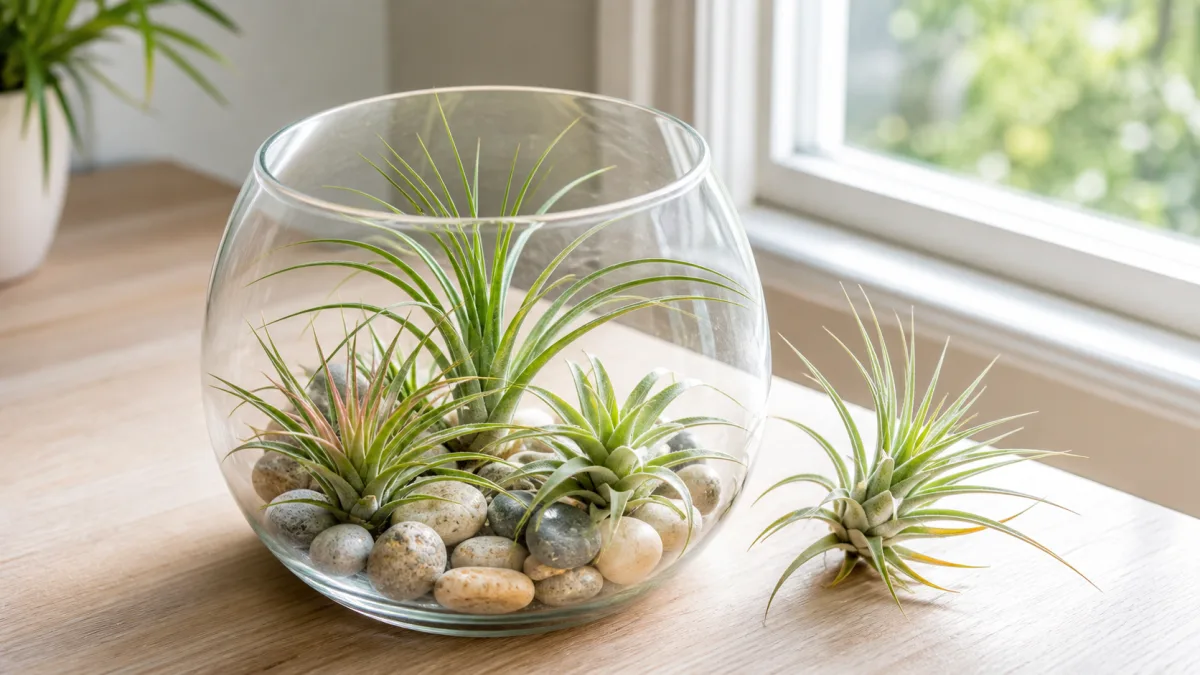
Choose open shapes
wide bowls, open geometric glass, and shallow containers are safer than jars with narrow openings or lids. The best container lets air move and lets you inspect the plant easily.
Avoid sealed containers
Air plants need to dry after watering. Closed terrariums hold humidity and can keep the base damp even when the visible leaves look dry.
Size matters
The container should not bend leaves or wedge the plant in place. You should be able to lift the plant out easily for watering, drying, and routine checks.
Match container to plant shape
Large rosettes need shallow space, bulbous plants need visible bases, and small ionantha can sit in open arrangements. Do not force a plant into a container just because it looks tidy.
Keep the display simple
Dry sand, stones, and shells can work decoratively, but they should not become a wet planting medium. Avoid damp moss pressed against the base.
Think about cleaning
Glass containers show mineral spots and dust quickly. A good terrarium container is easy to empty, wipe, and reset without disturbing the plant every time.
Best beginner choice
For a first terrarium, choose a shallow open bowl or wide glass vessel with one or two removable plants. Simple setups are easier to keep dry and adjust.
Skip containers that hide problems
If you cannot see the base or remove the plant without damage, the container is risky. Inspection matters more than a perfectly styled arrangement.