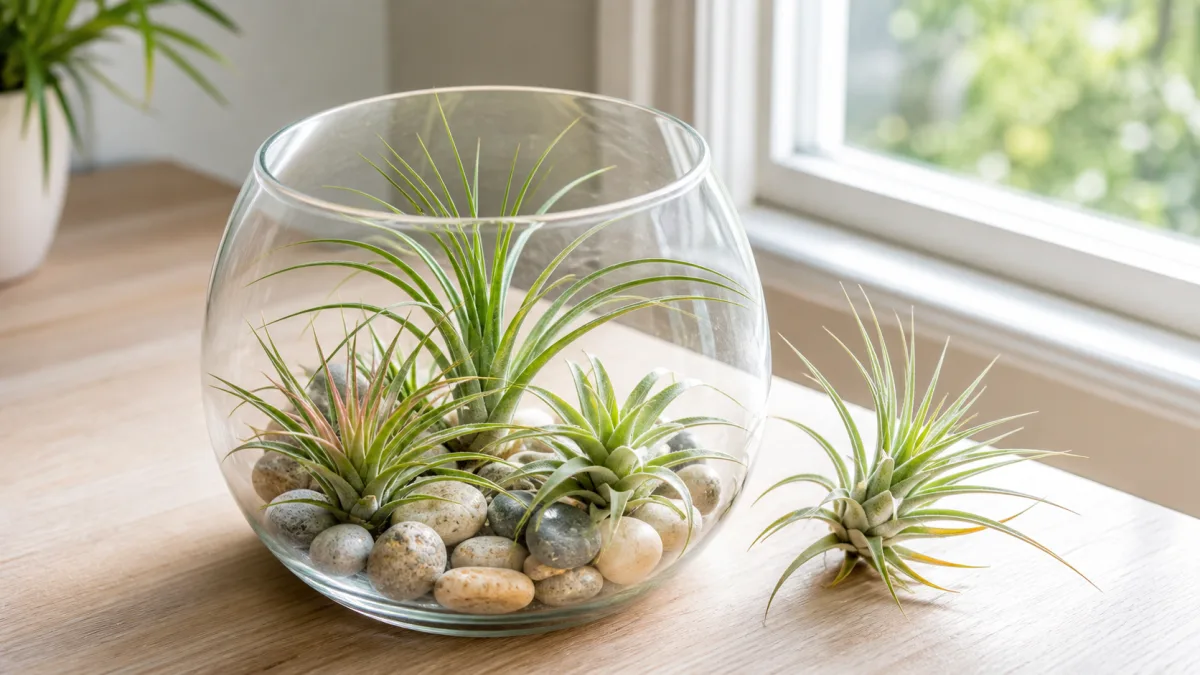
Terrariums can trap moisture
Glass slows airflow, especially when the container is narrow, deep, or closed. Moisture then sits around the base and crown exactly where the plant needs to dry.
Filler can stay wet
Sand, moss, shells, and stones can hold water against the base if the plant is returned too soon after watering. Decorative filler should stay dry, not act like a planting medium.
Water outside the terrarium
Remove the plant to water it, shake out extra water, and let it dry in open airflow before returning it. This one habit prevents many terrarium rot problems.
Choose open designs
Wide openings and shallow displays are easier to manage than closed jars. If you see condensation, the terrarium is holding too much moisture for routine air plant care.
Read the early signs
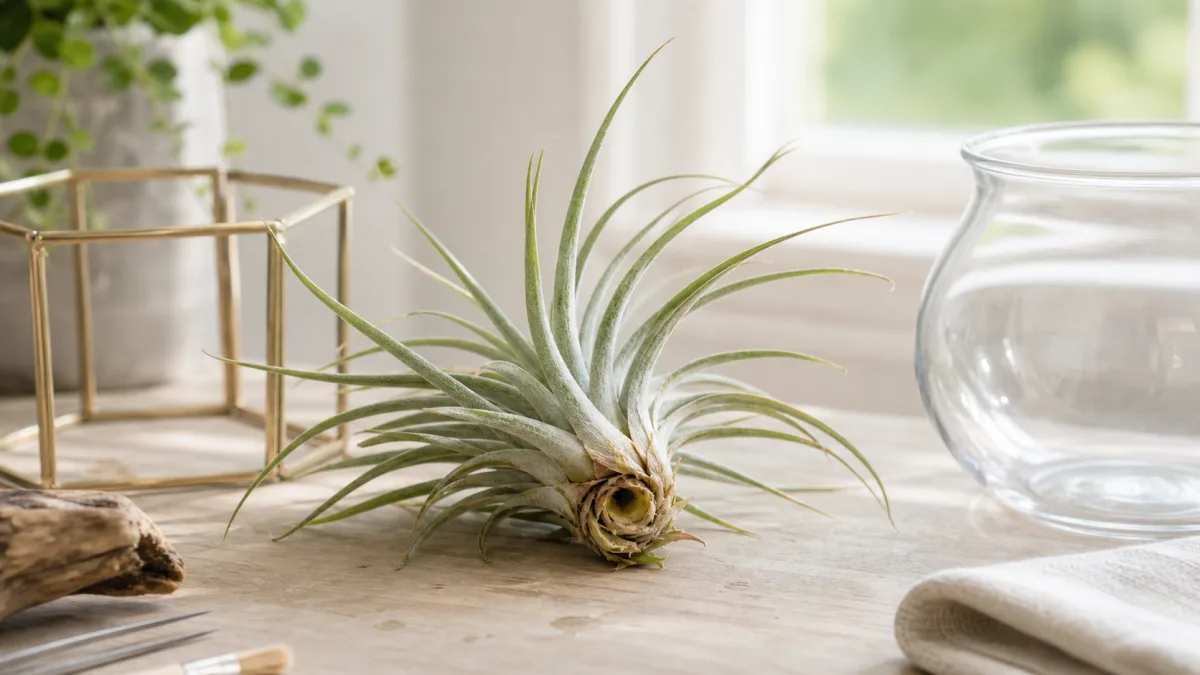
Yellowing, a dark base, loose inner leaves, or a sour smell can mean rot is beginning. Dry leaf tips are less urgent than a base that stays wet or soft.
What to change first
If a terrarium plant is declining, stop watering inside the container, remove damp filler, and move the plant into brighter airflow until the base is fully dry.
Avoid sealed event displays
Closed glass can work briefly for styling, but it is risky as daily care. After display use, move the plant back to an open holder where drying is predictable.
Rebuild the terrarium safely
Use dry filler, fewer plants, a wide opening, and removable placement. A simpler terrarium is easier to keep alive than a packed arrangement.