What makes an air plant beginner-friendly
Look for plants that are sturdy, easy to remove from displays, and simple to inspect after watering. Avoid choosing only by decoration style.
Good starter types
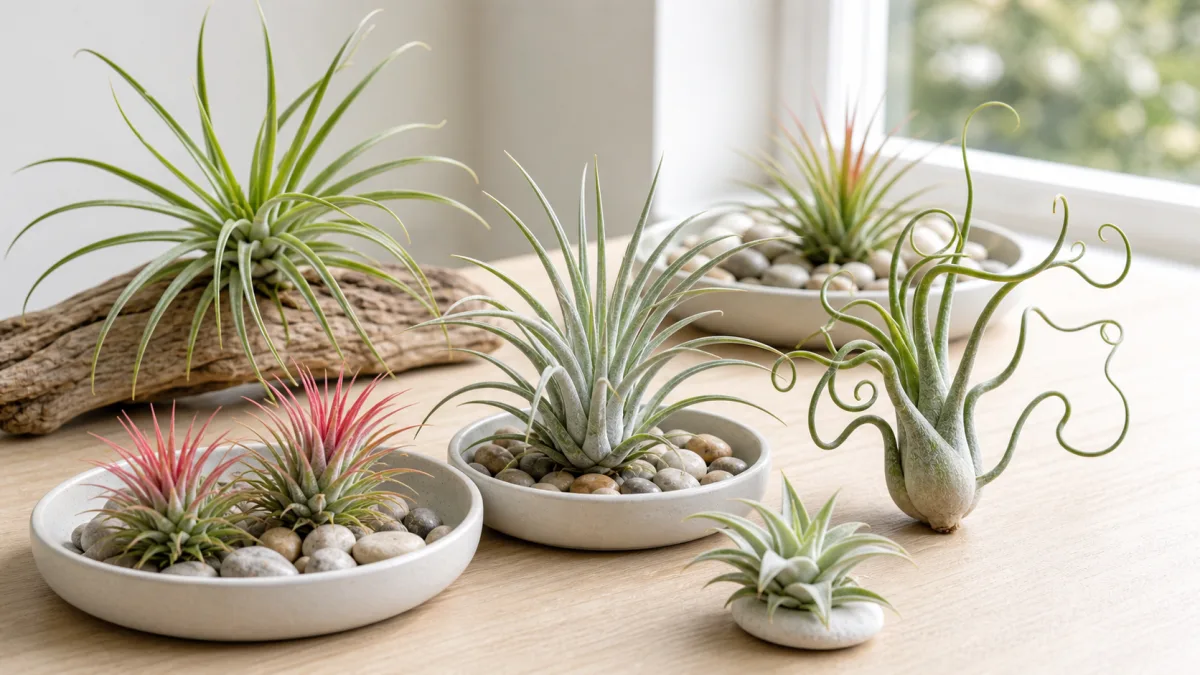
Ionantha is small and common, stricta is adaptable, caput-medusae has a memorable shape, and xerographica can be rewarding when you dry its crown carefully.
Buy healthy plants
Choose plants with firm leaves, no soft dark base, and no sour smell. Some dry tips can be cosmetic, but a collapsing base is a warning sign.
Match the plant to your home
Dry homes, humid bathrooms, bright windows, and dark offices all change the care routine. The best beginner plant is one you can place and water correctly.
Start with simple displays
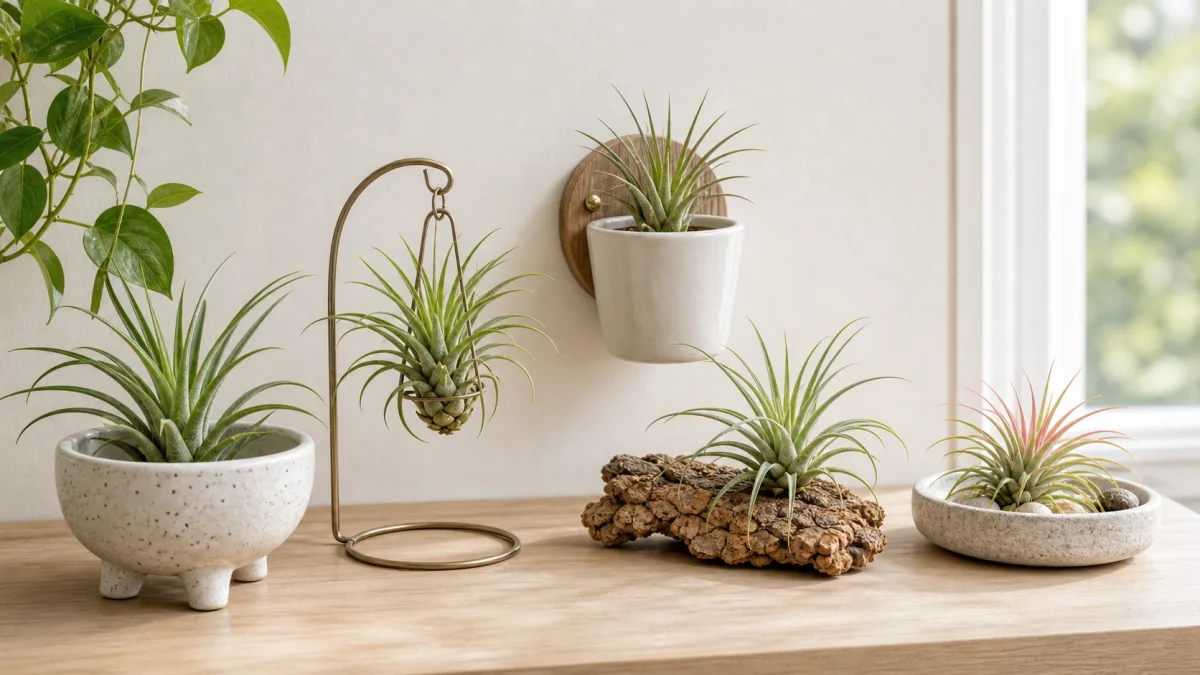
Beginner plants are easier to learn from in open holders, shallow dishes, or cork displays. Save sealed glass or complex arrangements until the care routine is stable.
Avoid difficult first buys
Skip plants glued deep into shells, sealed in glass, or already soft at the base. A rare plant in a risky display is harder than a common healthy plant in open air.
Learn with one or two plants
A small starter collection makes it easier to notice how each plant responds to watering and light. Too many new plants at once can hide routine problems until several decline.
Choose for care access
The best beginner plant is one you can remove, soak or rinse, shake dry, and inspect. Care access matters more than unusual shape or dramatic color.