Start with a healthy plant
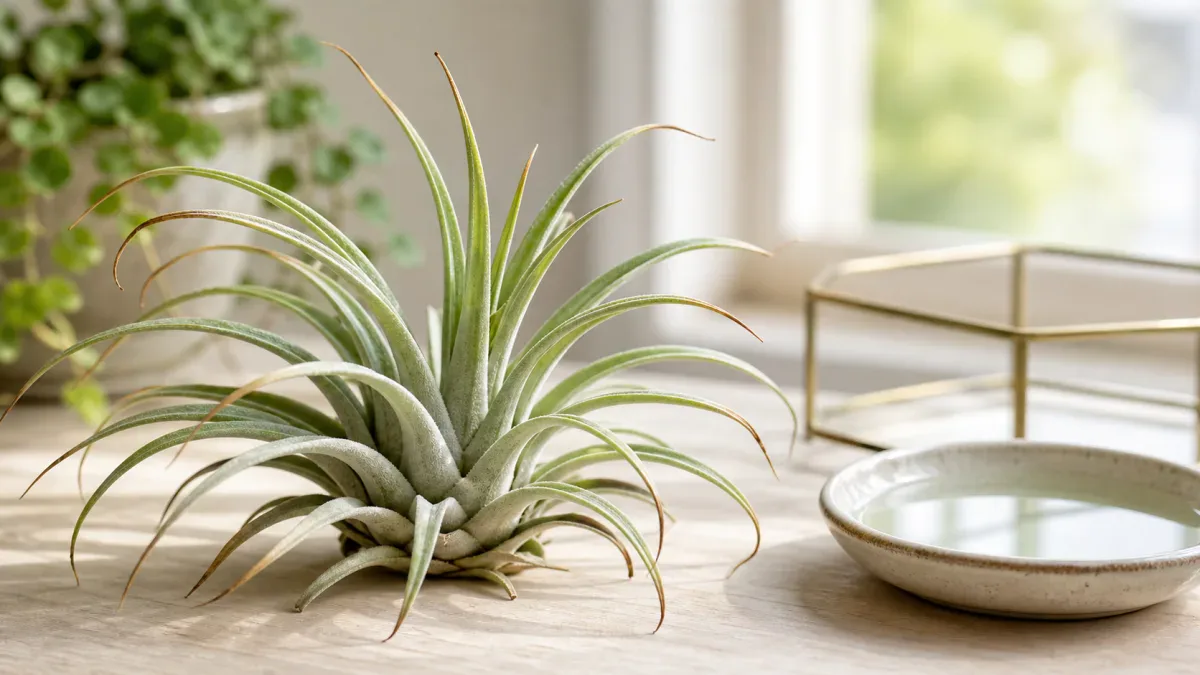
Fertilizer works best as light support for a plant that is already receiving useful light, regular hydration, and complete drying. Do not feed a plant that is rotting, newly arrived, severely dry, or sitting in weak light.
Use a weak solution
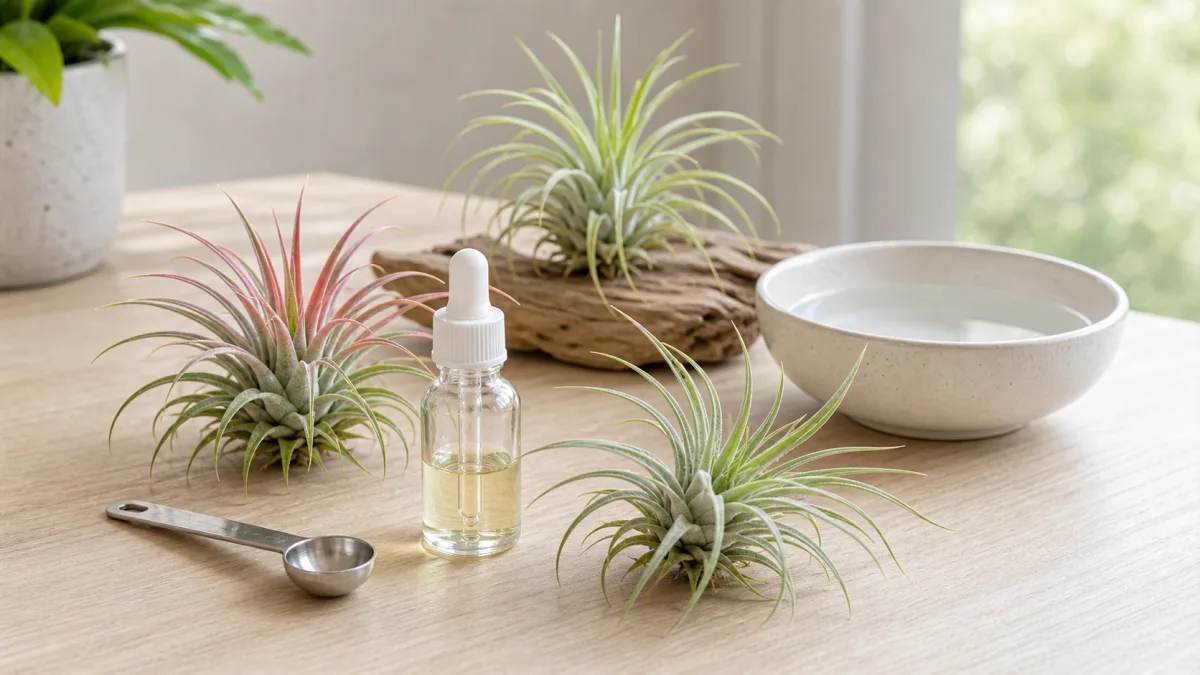
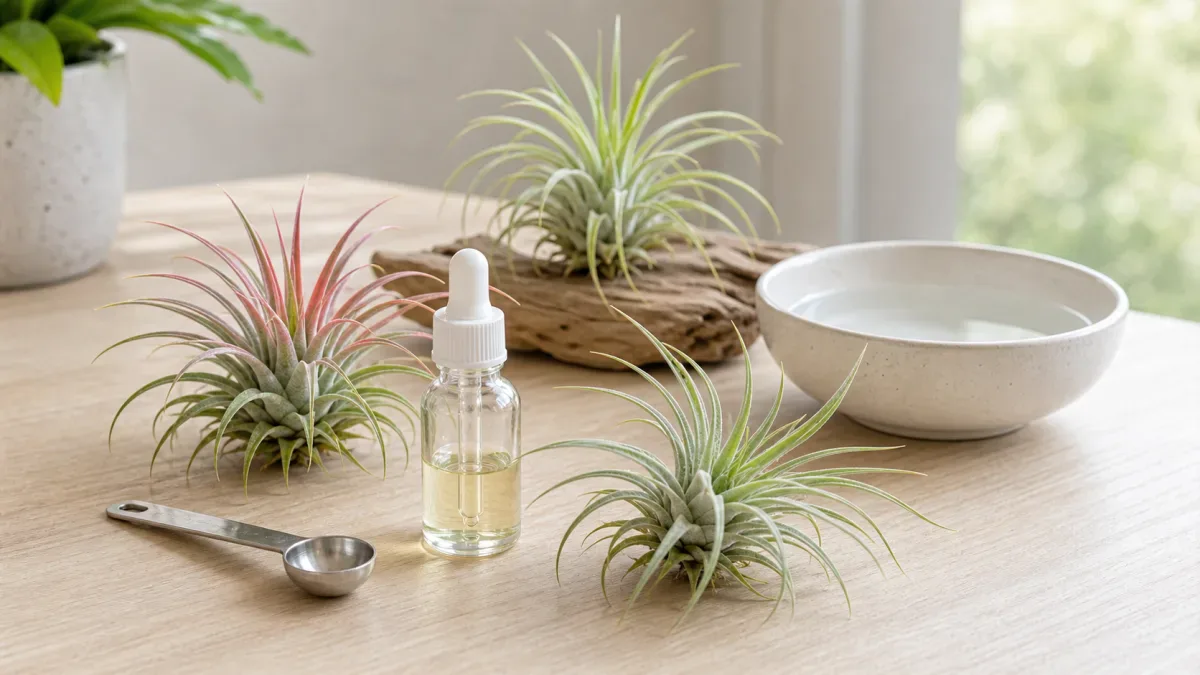
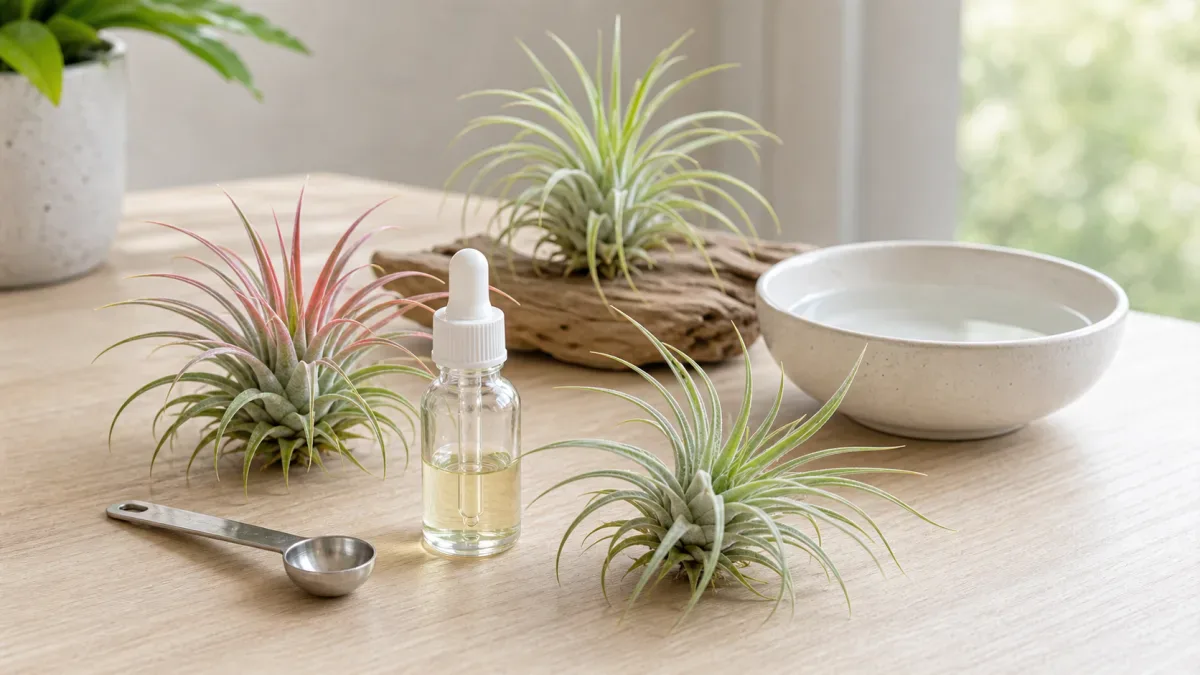
Choose a product made for air plants or bromeliads when possible. Mix it weaker than a general houseplant dose, especially for a first feeding.
Add it to watering
Use fertilizer during a normal soak, dunk, or rinse instead of creating a separate complicated routine. Keep the session simple so the plant still gets hydrated and rinsed evenly.
Dry like normal
Shake out trapped droplets and dry the plant in open airflow. Fertilizer water should not sit in crowns, bulbous bases, glass, shells, or holders.
Watch the next few weeks
If tips brown, residue appears, or the plant declines after feeding, reduce strength and feed less often. Review water quality, light, and drying before assuming the plant needs more nutrients.
Keep the schedule modest
Many beginner routines only need occasional feeding during active growth. Less fertilizer is usually safer than trying to push fast growth. For timing, compare how often to fertilize air plants before increasing the dose.
Watch for fertilizer burn
If symptoms look like fertilizer burn, pause feeding and rinse gently at the next watering. Recovery usually depends on better dilution, cleaner rinsing, and faster drying rather than adding more nutrients.