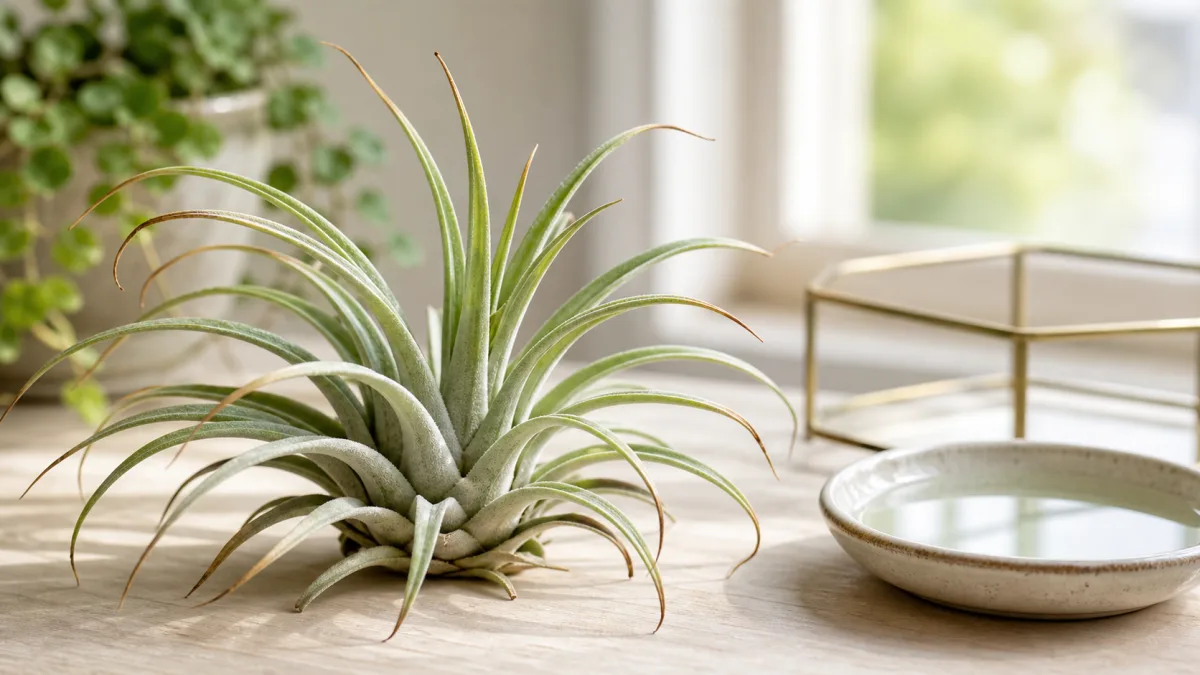
Brown tips are common
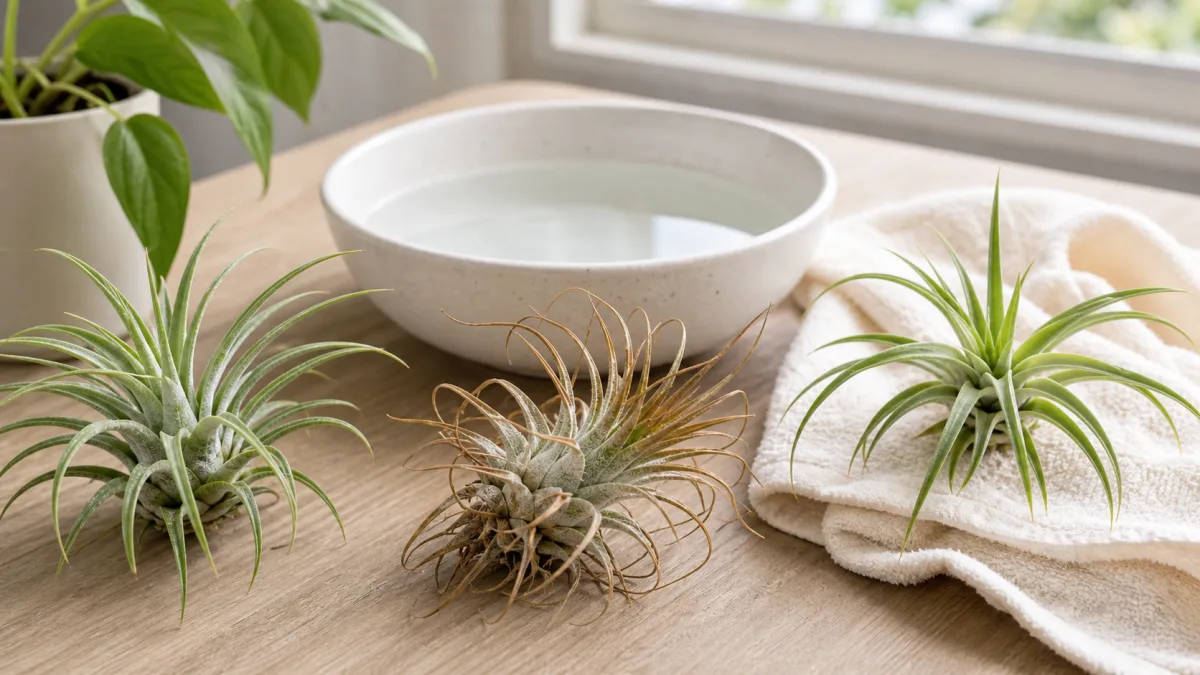
Brown tips do not always mean the whole air plant is dying. Tip browning is often a stress sign at the oldest or driest part of the leaf, while a soft dark base is more urgent.
Dryness and low humidity
If tips are crisp and the leaves curl inward, the plant may be drying faster than your routine hydrates it. Review how often to water and whether the room is hot, bright, or dry.
Sun and heat stress
Harsh direct sun can scorch exposed tips and edges. Move the plant to bright indirect light if browning appears on the side facing a hot window.
Water and fertilizer residue
Hard water, salt-softened water, or strong fertilizer can leave residue that burns tips over time. Use clean water and dilute fertilizer lightly, if you fertilize at all.
After soaking
Brown tips after soaking can happen when the plant was already stressed, when water quality is poor, or when the plant stayed wet too long afterward. Drying still matters after a good soak.
What to do first
Do not cut every brown tip immediately. Stabilize light, watering, and drying first. Trim only dry cosmetic tips with clean scissors if they bother you.
When brown tips spread
If browning moves down the leaf, appears with yellowing, or comes with a weak base, treat it as a bigger care problem. Review recent soaking, sun exposure, fertilizer, and whether the plant dried fully.
Prevention routine
Use clean water, gentle light, complete drying, and a stable watering rhythm. Brown tips are easier to prevent when you change one care factor at a time instead of chasing every small mark.