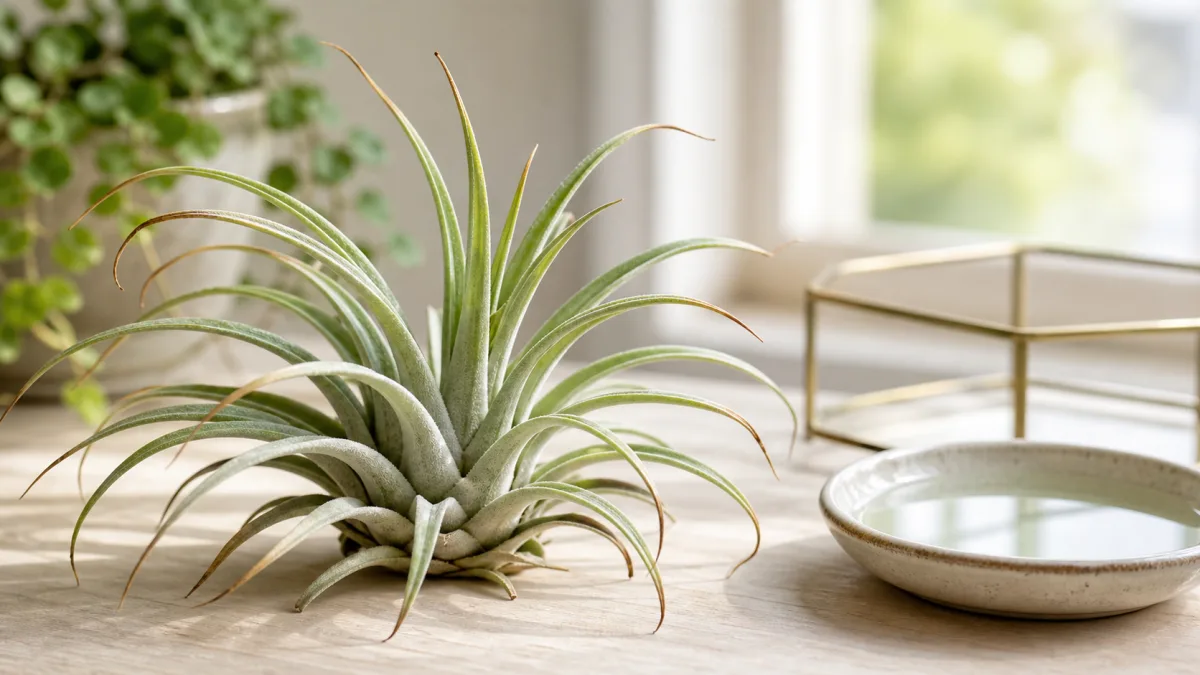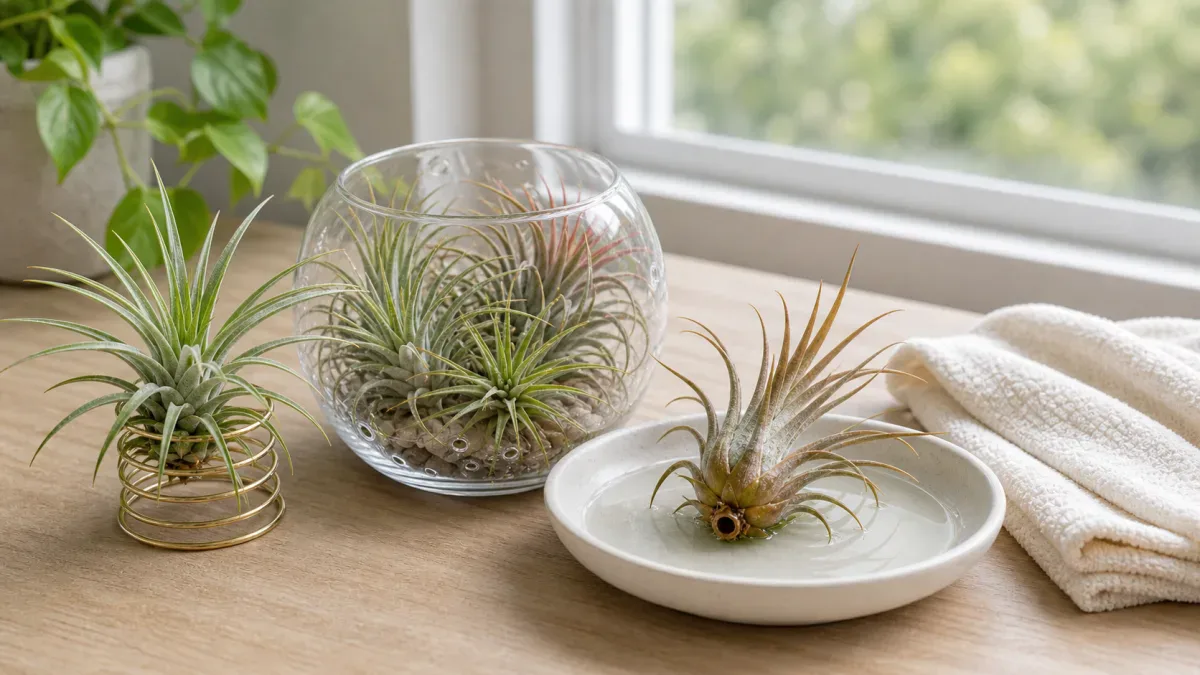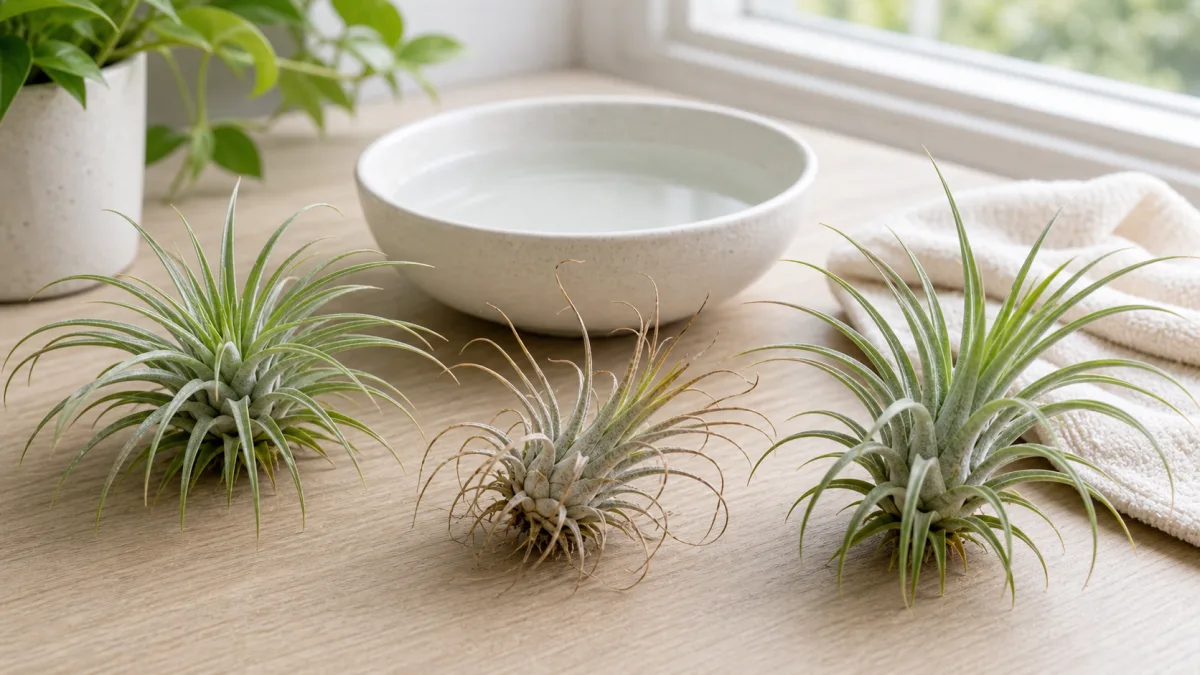
Signs of underwatering
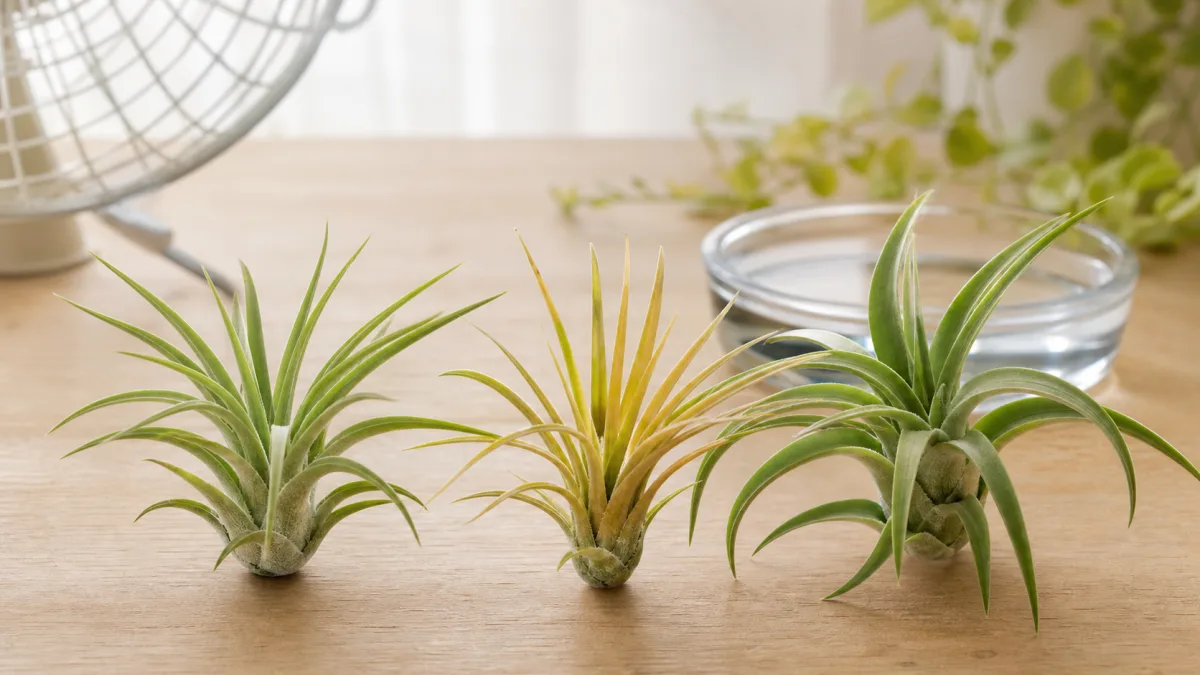
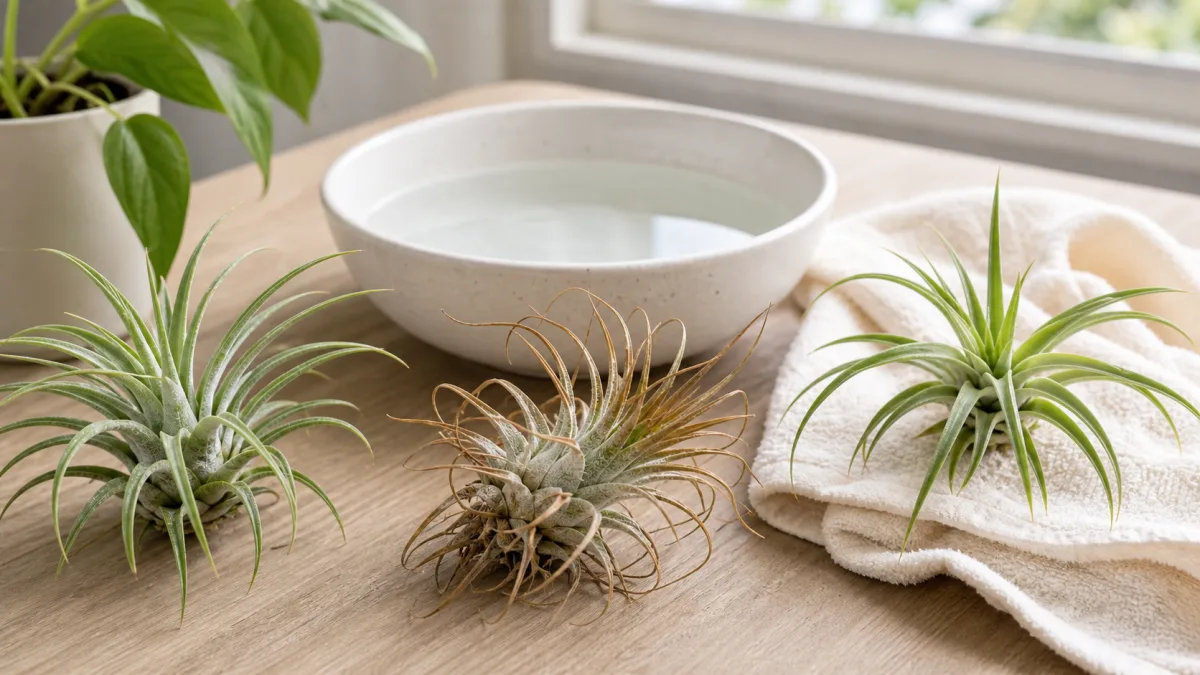
An underwatered air plant may curl inward, feel thin, look dull, or have crispy tips. Some species curl naturally, so compare the plant with its normal shape and recent watering history.
Check the base first
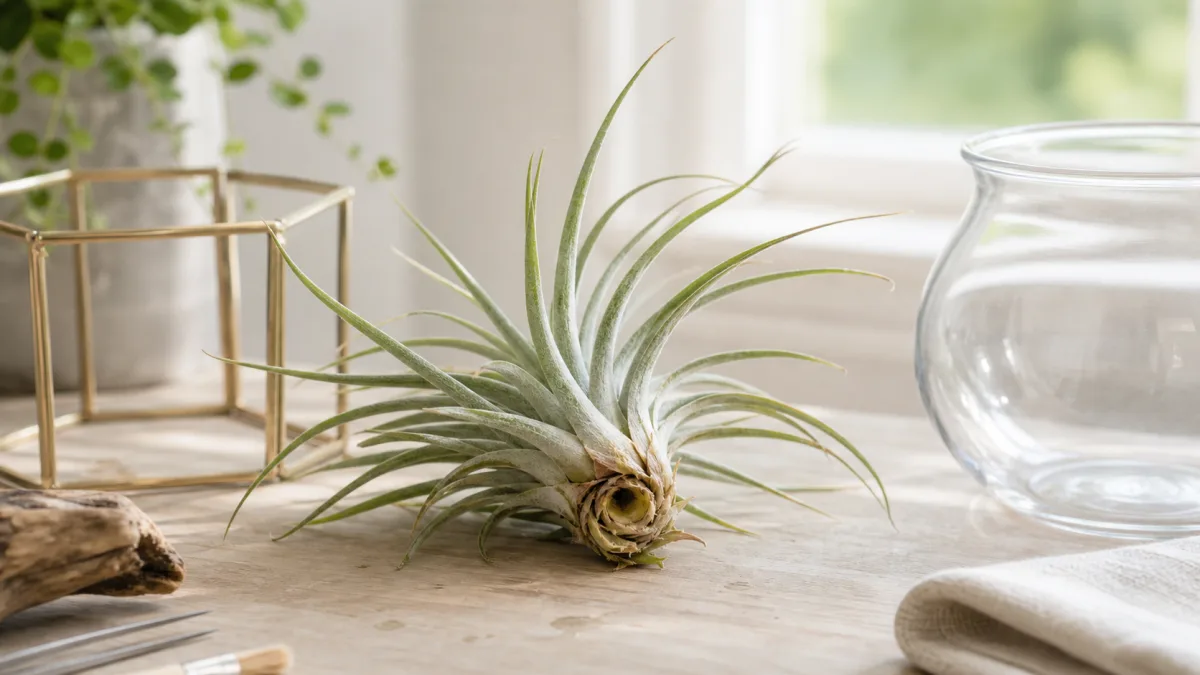
Dry leaves and a firm base usually point toward dehydration. A soft, dark, sour-smelling base points toward rot, which needs drying and airflow rather than another soak.
Rehydrate carefully
Start with a normal soak or rinse, then let the plant dry fully in open airflow. A severely dry plant may need a longer rescue soak, but do not make long soaking the new routine automatically.
Adjust the routine
If underwatering returns, review how often to water, room humidity, light, and airflow. Hot windows, dry heating, and strong airflow can make plants need water sooner.
Do not swing too far
The common mistake is overcorrecting with constant soaking. The goal is hydrated leaves followed by complete drying, not keeping the plant wet.
Recovery signs
A recovering plant may feel firmer and look less curled over the next day or two. Old dry tips may not turn green again, but new decline should slow.
Prevent repeat dryness
After the plant improves, set a simple inspection rhythm. Check leaf curl, weight, and room conditions before watering, especially during heating season, hot weather, or bright window placement.
When curling is normal
Some air plants naturally have curled or twisting leaves. Underwatering is more likely when the curl is new, the plant feels thin, and the leaves look dull or papery compared with its normal state.