Tap water can work
Many keepers use tap water after chlorine has dissipated or after treating it appropriately. The main issue is local water quality, especially hardness and dissolved minerals.
Distilled water is not magic
Distilled water has very low minerals. It can help avoid mineral buildup, but it should not distract from light, watering, and drying basics.
Avoid softened water
Salt-softened water is not a good choice for air plants. If your household uses a salt-based softener, use another source for soaking and misting.
Watch the plant
If tips brown despite good hydration and light, review mineral levels, fertilizer strength, and watering frequency. Brown tips are not always a water-source problem.
Compare consistency
The best water source is one you can use consistently without leaving residue, salt, or unpredictable additives. Switching water constantly makes troubleshooting harder.
Consider rainwater carefully
Clean rainwater can be useful, but avoid dirty runoff from treated roofs or contaminated surfaces. Store it in a clean covered container.
Practical choice
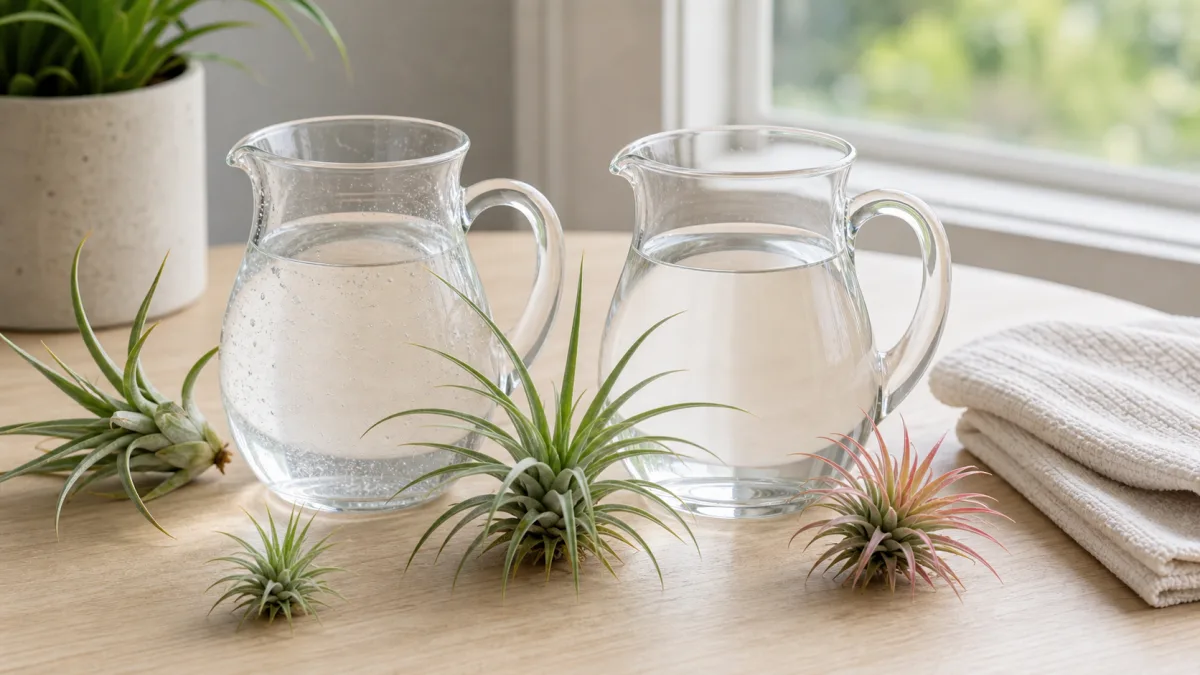
Use clean rainwater, dechlorinated tap water, aquarium water, or distilled water when appropriate. The best option is one you can use consistently while still drying the plant fully.
Drying still matters most
Even ideal water can cause problems if it sits in the crown or base. Water quality helps, but it does not replace shaking, airflow, and open displays.
Best next step
Choose one dependable water source and use it consistently for several weeks. If the plant improves, keep the routine stable; if tips keep browning, review light, drying, fertilizer strength, and mineral buildup together.
Common water-source mistake
Do not switch water sources after every small symptom. Brown tips can come from dryness, heat, sun stress, fertilizer, or slow drying, so changing only the water may miss the real cause.