Why beginner plants are different
The easiest air plants are usually common, sturdy Tillandsia that tolerate normal indoor routines. They are not automatically impossible to kill, but they give beginners more room to learn watering, light, and drying.
Good beginner traits
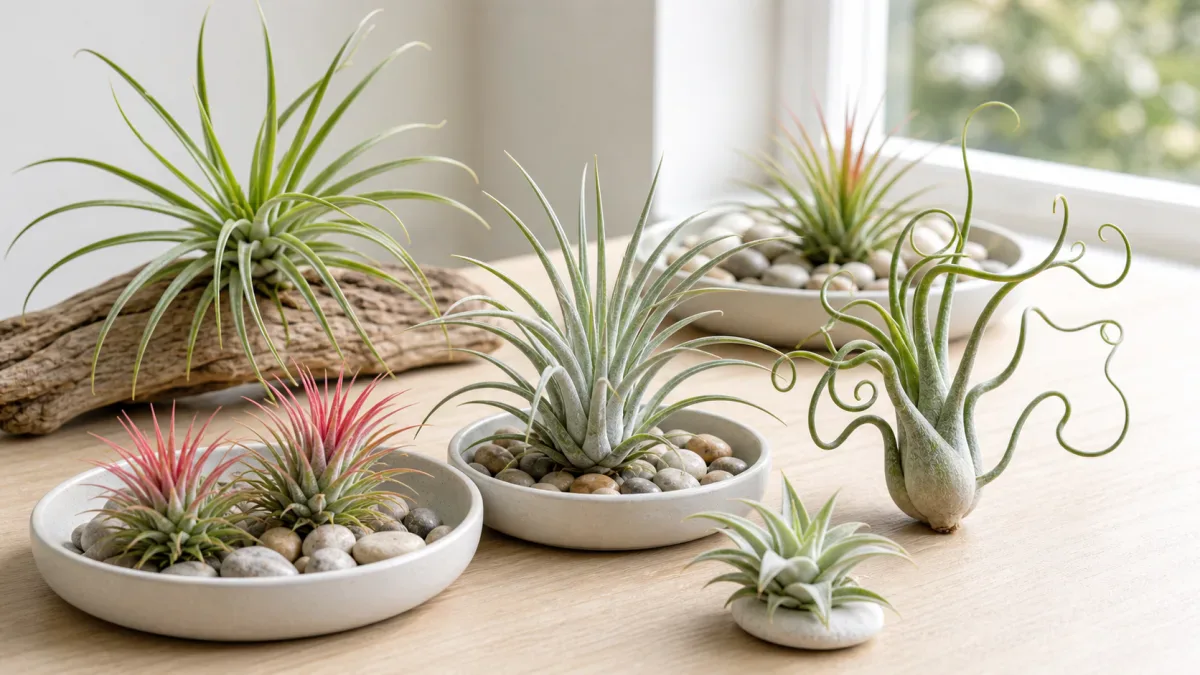
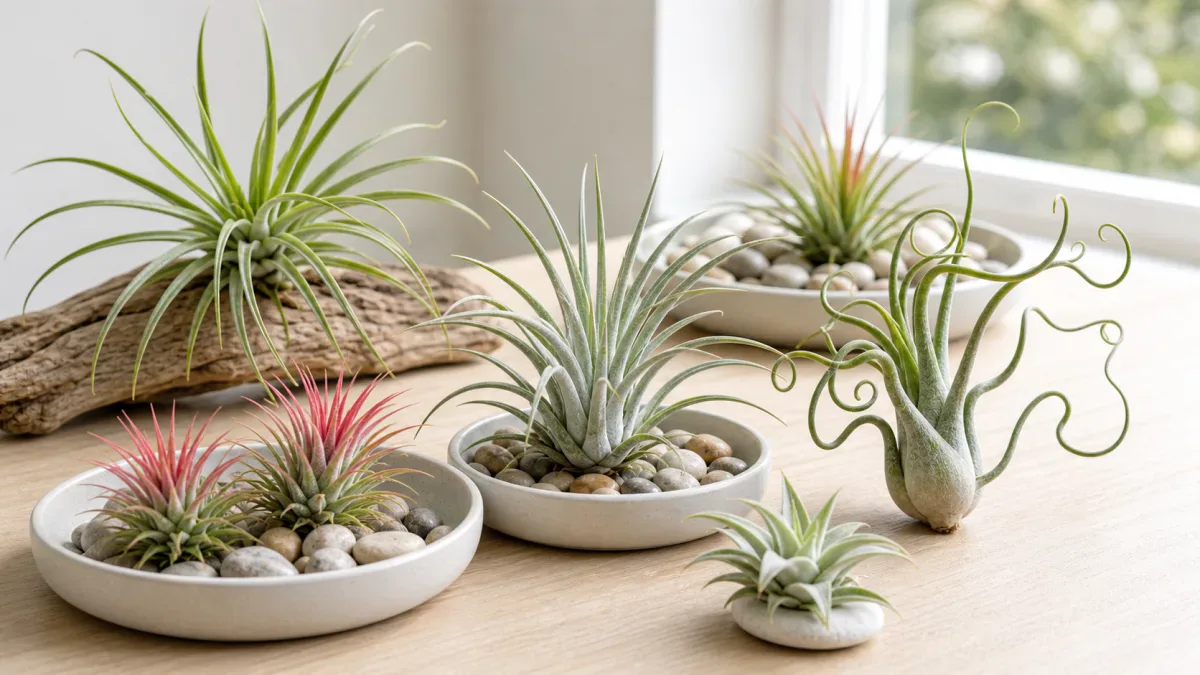
Look for plants with open shapes, firm leaves, and a base you can inspect after watering. Ionantha, stricta, and many medium green-leaved air plants are easier to monitor than very delicate, rare, or tightly bulbous forms.
What to avoid at first
Avoid plants that arrive soft, brown at the base, or glued permanently into a display. Very tiny plants, very dry imported plants, and expensive collector types are less forgiving while you are still building a care routine.
How to choose your first setup
Start with two or three inexpensive plants in open holders. Keep them in bright indirect light, water them on a predictable rhythm, and compare how each plant dries in your home.
Match the plant to your room
A bright dry window, humid bathroom, and dim office all favor different choices. Easy does not mean the same plant works in every location.
Keep displays boring at first
Open dishes, cork, or simple wire stands teach better care than sealed terrariums or narrow decorative holders. Once the care routine is stable, styling can get more adventurous.
Best next step
Once you can keep common plants firm and growing for several months, try a larger xerographica, a mounted display, or a more unusual Tillandsia type.
Beginner success signs
Look for firm leaves, a stable base, steady color, and complete drying after watering. Slow growth is normal, so do not judge success only by visible size change.