Dry homes change hydration
Dry homes can make air plants lose moisture faster, especially near heaters, air conditioning, bright windows, or strong airflow. The plant may need water sooner than it would in a humid room.
Watch the leaves
Thin, curled, dull, or papery leaves can point toward dryness. Compare the plant with its normal shape because some Tillandsia naturally curl or twist.
Water deeper when needed
In a dry home, occasional soaking or rinsing may hydrate better than light misting alone. Use misting as a touch-up, not as proof that the plant received enough water.
Do not skip drying
Even in a dry home, the crown and base should dry fully after watering. A dry room reduces risk, but tight holders and bulbous bases can still trap water.
Placement matters
Avoid placing air plants directly above heat vents or against very hot window glass. bright indirect light is useful, but heat stress can make leaves crisp faster.
Adjust by season
Winter heating and summer air conditioning can both lower indoor humidity. Recheck the routine when the room changes rather than using one watering calendar all year.
Helpful display choices
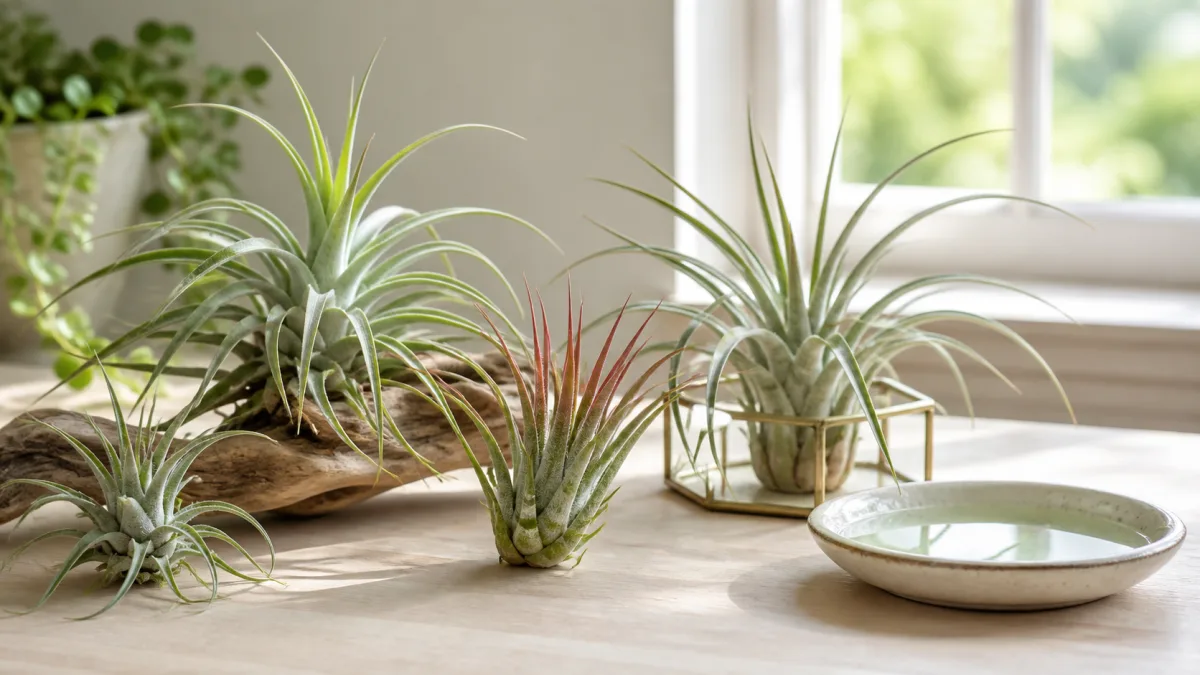
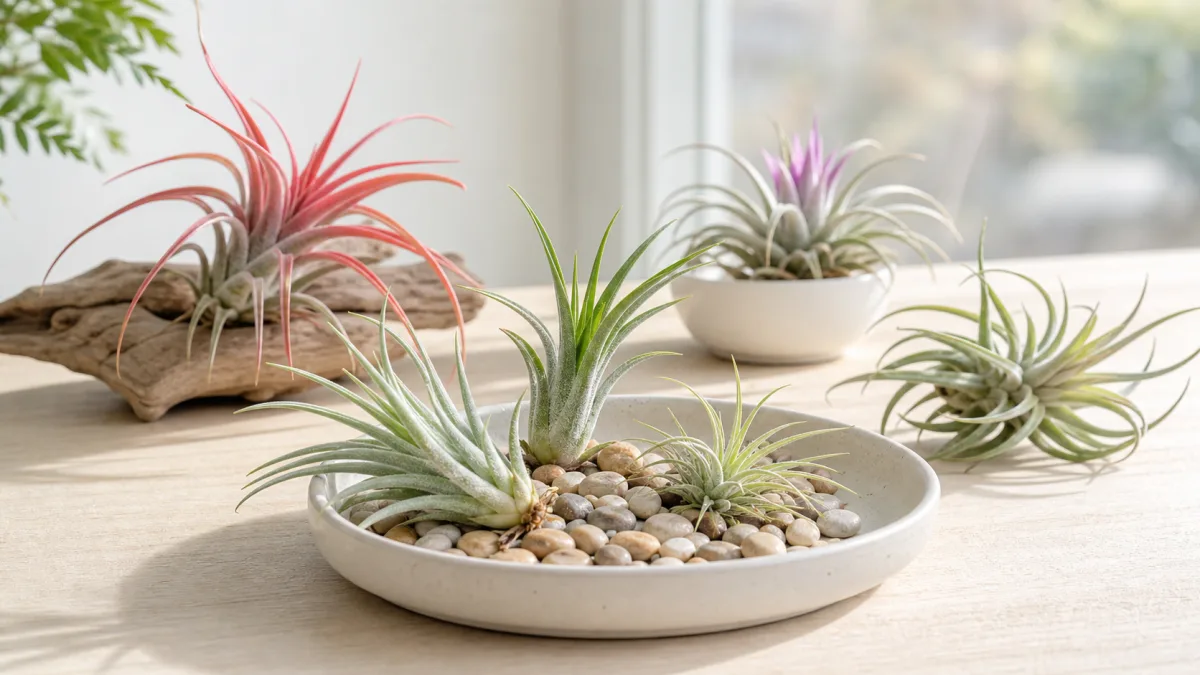
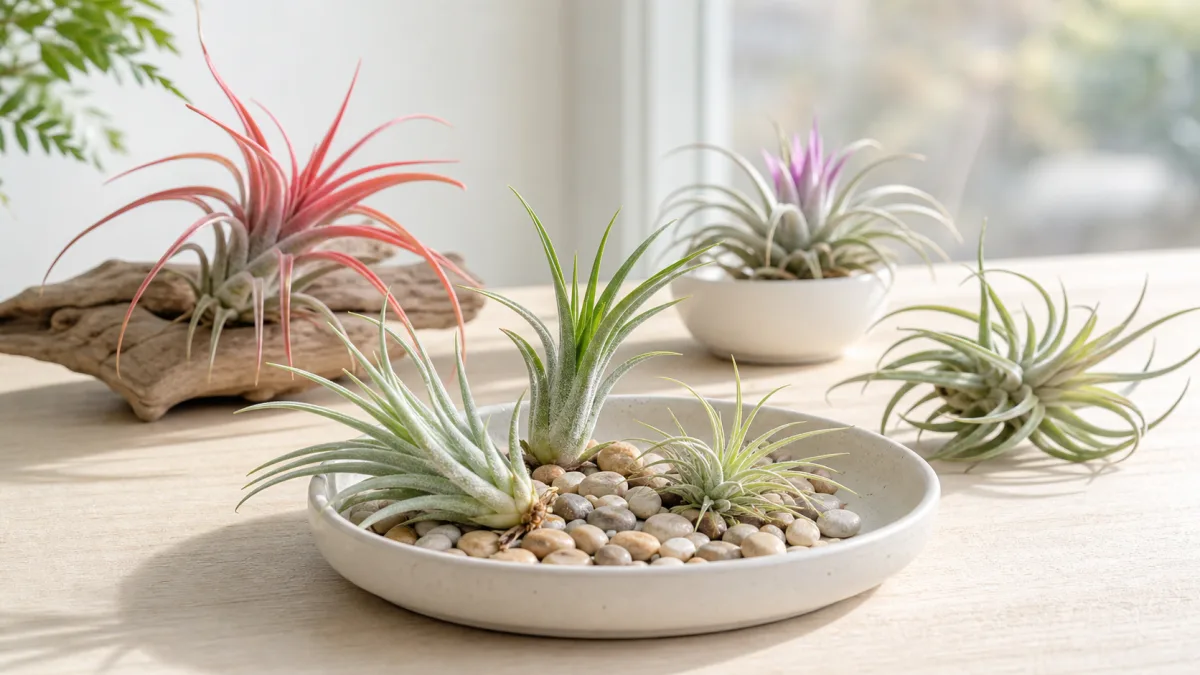
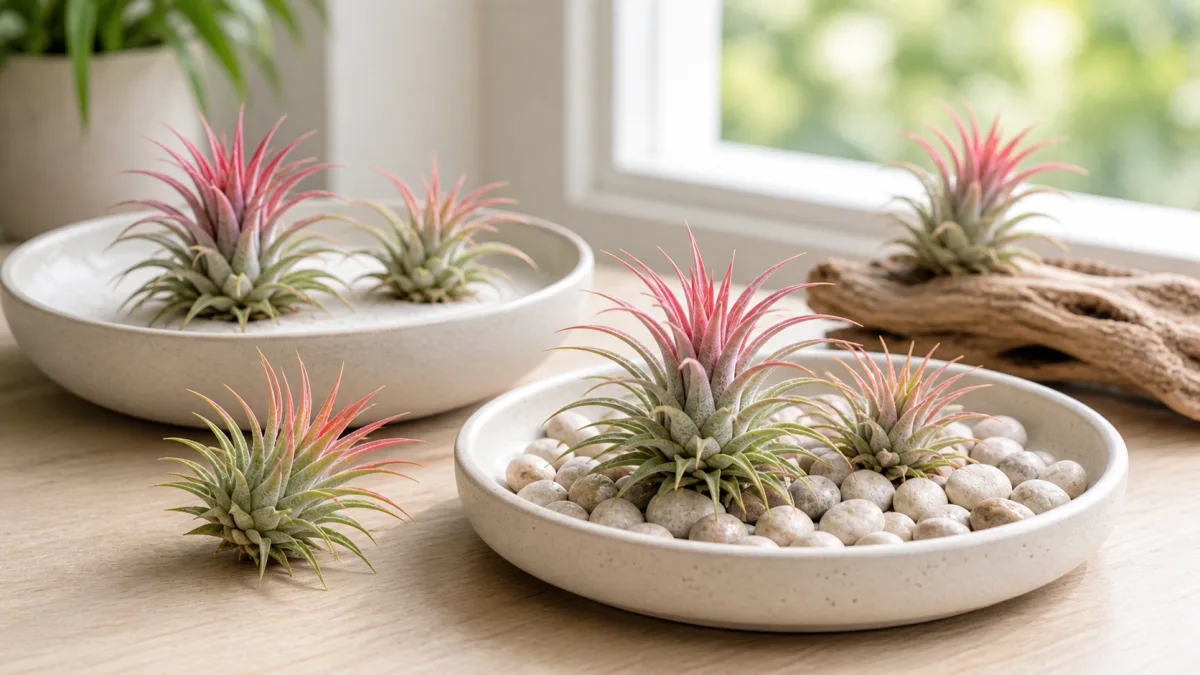
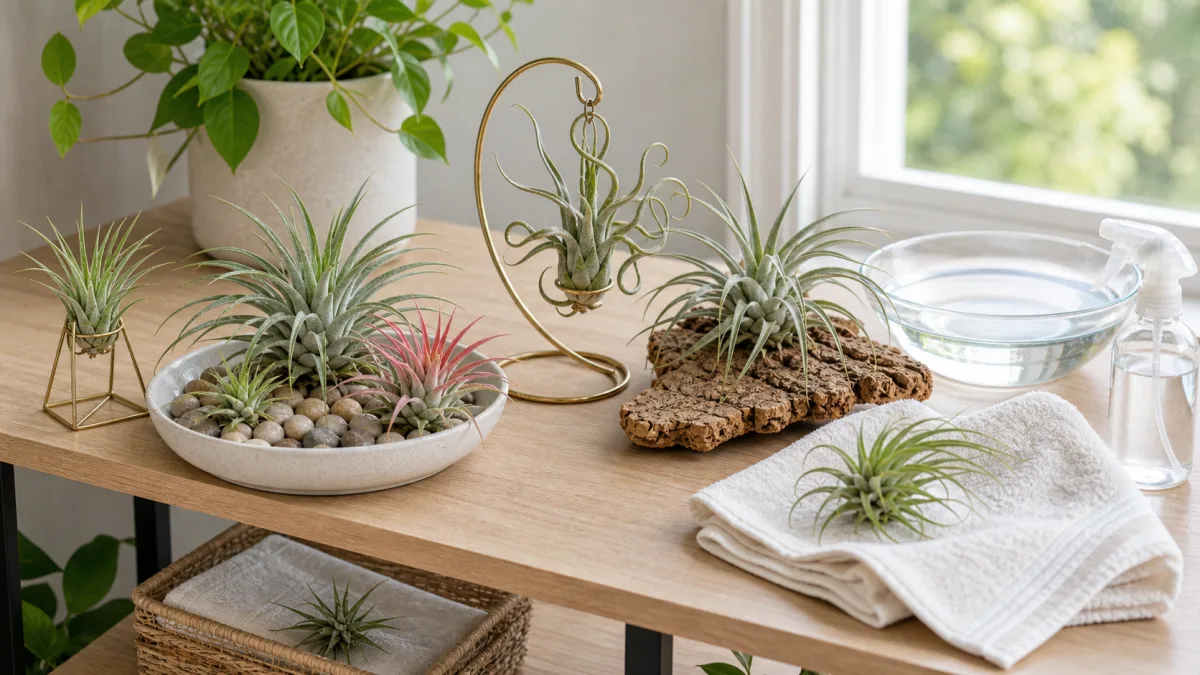
Open holders, shelves, cork, and removable displays are easier to water and inspect. Closed globes can hide dryness and make it harder to soak properly.
When to worry
If a plant stays curled and papery after watering, review soak length, water quality, and whether the room is too hot or bright. If the base is soft instead, treat it as a rot risk.